Tracks
Aragon Guide: A Beginner View of the Aragon GP
New to MotoGP? Our Aragon MotoGP guide explains the dramatic MotorLand Aragón circuit, its famous Corkscrew, and why it’s a technical rider favourite.
Aragón Grand Prix
MotorLand Aragón
A modern, sweeping circuit in the Spanish desert with a long, dramatic back straight and a famous downhill final sector — a track that rewards a strong front end and hard braking.
Schematic layout · not to scale
Watch the end of the long back straight. The bikes reach one of their highest speeds of the year, then brake hard into a tight left — it's the biggest stop on the lap and the best place to pass. Follow that corner.
A Modern Masterpiece in the Spanish Desert
Welcome to MotorLand Aragón, a circuit that feels like it was dropped onto another planet. Located in the remote, rugged region of Teruel in north-eastern Spain, Aragón is a modern marvel known for its dramatic elevation changes, technical corners, and one of the longest straights on the entire MotoGP calendar.
Unlike some of the older, historic tracks, Aragón was built specifically for modern racing. Opened in 2009, it was designed by the famous circuit architect Hermann Tilke, but with significant input from Spanish racing star Pedro de la Rosa to ensure it was a true rider’s challenge. Its place on the calendar is a testament to its quality, having been voted the best Grand Prix of the year by the teams in its very first season.
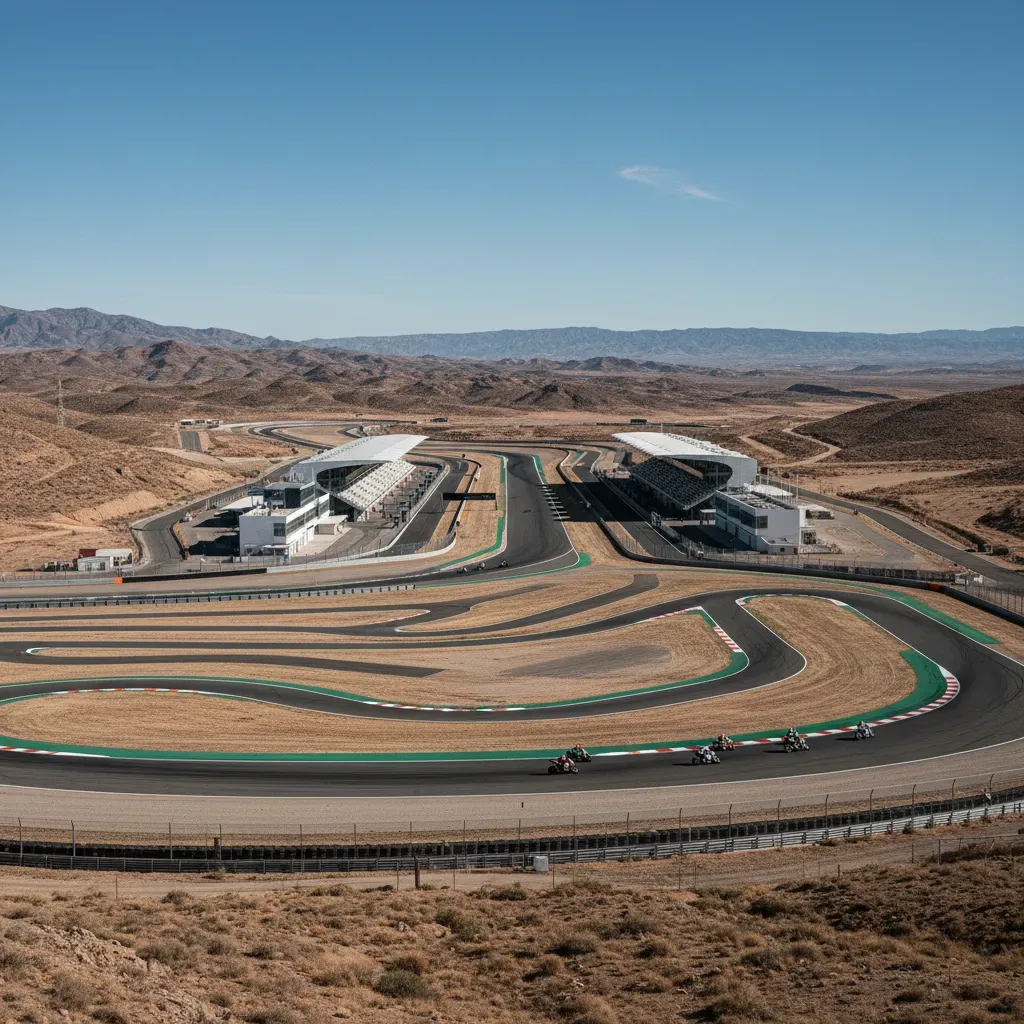
Location and Atmosphere: High-Tech Meets High Plains
The first thing that strikes you about Aragón is its setting. The landscape is dry, rocky, and vast, giving the whole event a unique, almost cinematic feel. The circuit itself is a ribbon of pristine black tarmac cutting through earthy brown and green tones, a stark contrast between cutting-edge technology and ancient, windswept terrain.
Despite its remote location, the atmosphere is electric. This is another home race for the many Spanish riders on the grid, and the passionate local fans flock to the grandstands, creating a fantastic buzz. You’ll see flags for riders like Alex Rins, who took a brilliant victory here in 2020, waved with immense pride.
Key Corners to Watch
Aragón is a complex circuit that flows beautifully, but a few sections stand out as truly special. It’s also one of the few tracks on the calendar that runs anti-clockwise, which can be a different physical challenge for the riders.
The Back Straight into Turn 16
Get ready for pure, raw speed. Between Turn 15 and Turn 16 is a colossal back straight, stretching for nearly a full kilometre. Here, the bikes will hit speeds well over 340 km/h (210 mph), their engines screaming at maximum revs.
But what goes fast must slow down. At the end of this straight is Turn 16, a tight left-hand hairpin (a corner that doubles back on itself, like the shape of a hairpin). This creates one of the best overtaking spots on the track. Riders brake incredibly late and hard, trying to dive up the inside of their rivals. Watch for bikes getting squirmy as riders wrestle them from top speed down to first gear in a matter of seconds.
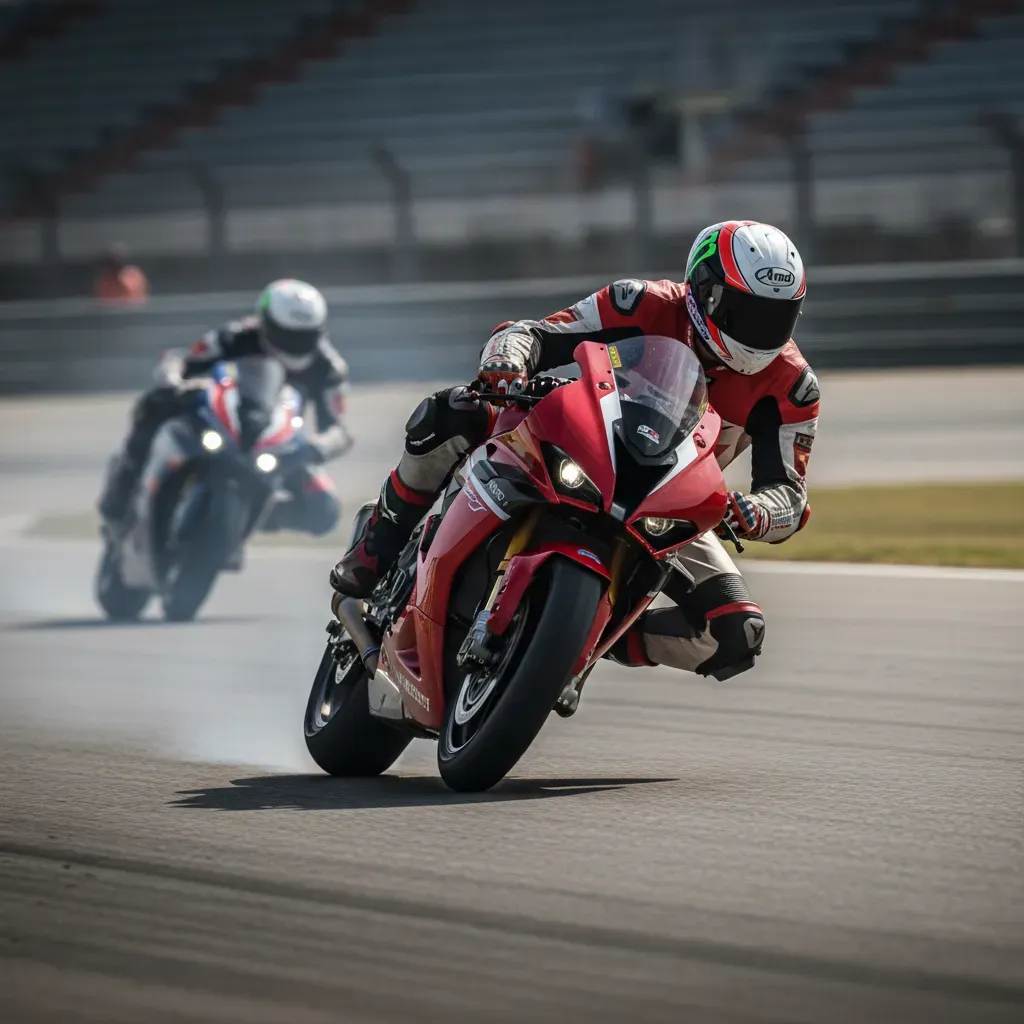
The ‘Corkscrew’ at Turns 8 & 9
This is Aragón’s signature section and a true test of bravery. As riders approach Turn 8, the track drops away from them. It’s a completely blind entry, meaning they have to turn in without being able to see the corner’s exit. They are relying entirely on instinct, memory, and track markers.
They flick the bike left for Turn 8 and then immediately right for Turn 9, all while plunging downhill. It’s like riding a rollercoaster on two wheels. The change in elevation is so steep that the front wheel can go light, and it requires immense precision to get the line right. It’s a spectacular piece of track to watch, showcasing incredible rider skill.
Race Characteristics: A Test of Compromise
Aragón is what’s known as a technical circuit. Its layout demands a bit of everything from the bike and rider. The long back straight requires a powerful engine and good stability, but the 17 corners—many of them linked together in flowing sequences—demand a bike that is agile and can change direction quickly.
This means setting up the bike is a compromise. Do you set it up for pure straight-line speed and sacrifice some cornering ability, or do you focus on the turns and hope you can defend on the straight? This strategic choice often separates the winners from the rest of the pack. The constant elevation changes also make it physically demanding, testing rider fitness over a full race distance.
Beginner-Friendly Viewing Tips
If you’re watching on TV, keep a close eye on the onboard cameras through the Turn 8 and 9 ‘Corkscrew’. The camera view really highlights how blind the entry is and how steeply the track falls away. You get a real sense of what the rider is experiencing.
Also, focus on the graphics showing the speed trap on the back straight, and then watch the braking into Turn 16. The sheer violence of the deceleration is incredible, and it’s where many races at Aragón are won and lost. Seeing a rider bravely outbreak another into that corner is one of MotoGP’s best sights.
Quick Takeaways
- A Modern Marvel: MotorLand Aragón is a new circuit, designed with input from riders to be challenging and exciting.
- Speed and Skill: The track is a mix of a very long back straight for top speed and technical, flowing corners that test rider precision.
- The Famous ‘Corkscrew’: Turns 8 and 9 are a blind, downhill chicane that is one of the most thrilling sections in all of MotoGP.
- Overtaking Hotspot: The heavy braking zone at the end of the back straight (Turn 16) is the prime place to watch for passes.
- A Rider’s Favourite: Its anti-clockwise direction and varied layout make it a favourite for its technical challenge.