Jargon Buster
MotoGP Lean Angles are Insane: Here’s Why
Ever wondered how MotoGP riders get their elbows on the ground? We explain the physics-defying lean angle and why it’s key to going incredibly fast.
That Can’t Be Real, Can It?
You’re watching your first MotoGP race. The bikes scream down a long straight, hitting speeds that would make a fighter jet blush. Then, they approach a corner. Instead of slowing to a sensible pace, the rider throws the bike sideways until they are practically horizontal with the ground, their helmet just inches from the tarmac. It looks impossible. It looks like a crash. But it’s not.
This is the magic of the MotoGP lean angle, one of the most visually spectacular parts of motorcycle racing. It’s a combination of physics, technology, and unbelievable human skill that separates these riders from mere mortals.
Jargon Buster: Lean Angle
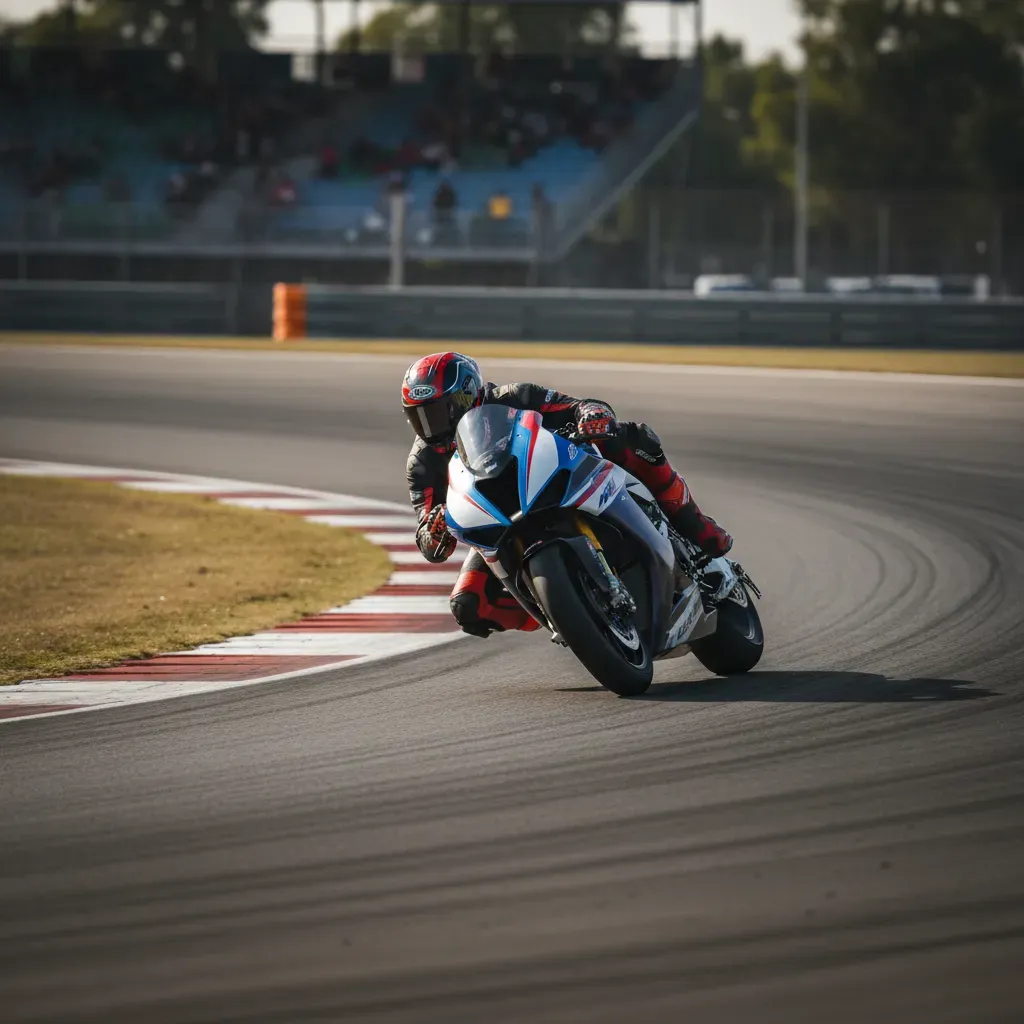
Lean Angle is the degree to which a motorcycle tilts from being upright (vertical) towards the inside of a corner. Think of it as how far over the rider can tip the bike without it falling. While a normal road rider might feel daring at 35 or 40 degrees, MotoGP riders can exceed an astonishing 65 degrees.
When will I hear this term?
Commentators will shout about it constantly, especially during slow-motion replays of a rider navigating a tricky corner. Modern TV broadcasts often feature on-screen graphics that show the bike’s lean angle in real-time, ticking up to mind-boggling numbers as the rider dives into a turn.
Why does it matter?
In short: speed. To get around a corner quickly, a motorcycle has to lean. The faster you want to go, the more you have to lean. A greater lean angle allows the rider to maintain a higher cornering speed, which is crucial for a fast lap time. Shaving even a fraction of a second off in each corner adds up to a huge advantage over a race distance.
How is that even possible?
Leaning a 160kg machine over at 200km/h until your shoulder is scraping the ground defies common sense. It’s made possible by a holy trinity of factors: tyres, technology, and talent.
1. Tyres That Are Basically Glue
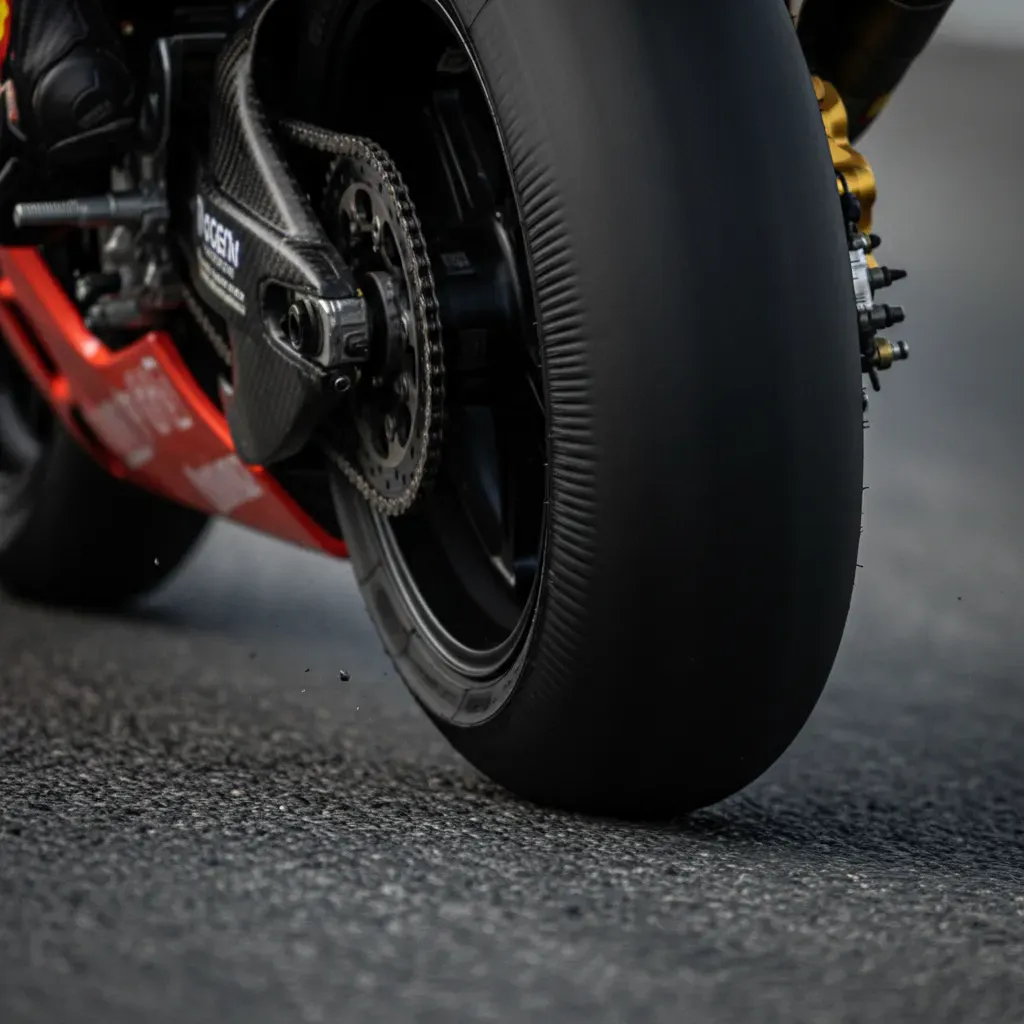
MotoGP tyres are nothing like the ones on your car or road bike. They are masterpieces of engineering, designed for one thing: grip. The rubber compound is incredibly soft and sticky, especially when it gets hot. The shape of the tyre is also key. It’s not flat, but curved, providing a large patch of rubber (called a contact patch) to grip the track even when the bike is leaned over at an extreme angle. The edge of the tyre, or ‘shoulder’, is where all the magic happens in the corners.
2. Incredibly Smart Electronics
Modern MotoGP bikes are packed with sophisticated electronics that act as a safety net for the rider. Systems like traction control constantly monitor what the wheels are doing. They can instantly reduce the engine’s power if they detect the rear tyre is about to lose grip and spin, which would cause a massive crash, especially at high lean angles. This electronic assistance gives the rider the confidence to push right to the absolute limit of the tyres.
3. Superhuman Rider Skill
Technology can only do so much. Ultimately, it’s the rider’s job to control this delicate dance with physics. They use their entire body to influence the bike’s behaviour. By hanging off the side of the bike, they lower the combined centre of gravity of the bike and rider. This clever technique means the bike itself doesn’t have to lean quite as much for a given speed, which helps keep the tyre gripping effectively. It takes incredible core strength, precision, and a feel for the bike that is almost supernatural.
Putting It All Together: The Elbow Down
When you see a rider with their knee, elbow, and sometimes even their shoulder scraping along the tarmac, you are witnessing the peak of this technique. They are using their body as a sensor, feeling for the limit of grip. Some riders are famous for their extreme, almost acrobatic, lean angles, saving the bike from slides that would send anyone else flying.
Imagine a rider entering one of the long, sweeping corners at a famous track like Silverstone or Phillip Island. They brake ferociously, tip the bike in, and hold it at over 64 degrees of lean for seconds at a time, their elbow slider leaving a trail on the asphalt. It’s not just for show; it’s the physical embodiment of pushing a machine to its absolute performance limit.
Quick Takeaways
- Lean Angle is how far a bike tilts into a corner. In MotoGP, this can be over 65 degrees, which is nearly horizontal.
- A greater lean angle allows a rider to carry more speed through a turn, which is essential for a fast lap time.
- It’s made possible by a combination of super-sticky tyres, advanced electronic aids, and incredible rider skill and body positioning.
- When you see a rider’s elbow or shoulder on the ground, you are seeing the absolute limit of motorcycle racing performance.