Jargon Buster
MotoGP Practice Sessions Explained (FP1 & Practice)
Ever wonder what happens on a Friday at a MotoGP weekend? Discover how Free Practice 1 and the crucial afternoon Practice session shape the entire race.
The Busiest Day You Don’t See
When you think of a MotoGP race weekend, you probably picture the roar of engines on Sunday, the packed grandstands, and the fight for the chequered flag. But the battle for victory doesn’t start on Sunday, or even Saturday. It begins on Friday, a day dedicated almost entirely to practice.
But this isn’t like a band rehearsal, where riders just go round and round to remember which way the corners go. Friday practice is a high-tech, high-pressure science experiment conducted at over 200 miles per hour. It’s where the groundwork for the whole weekend is laid.
More Than Just Learning the Track
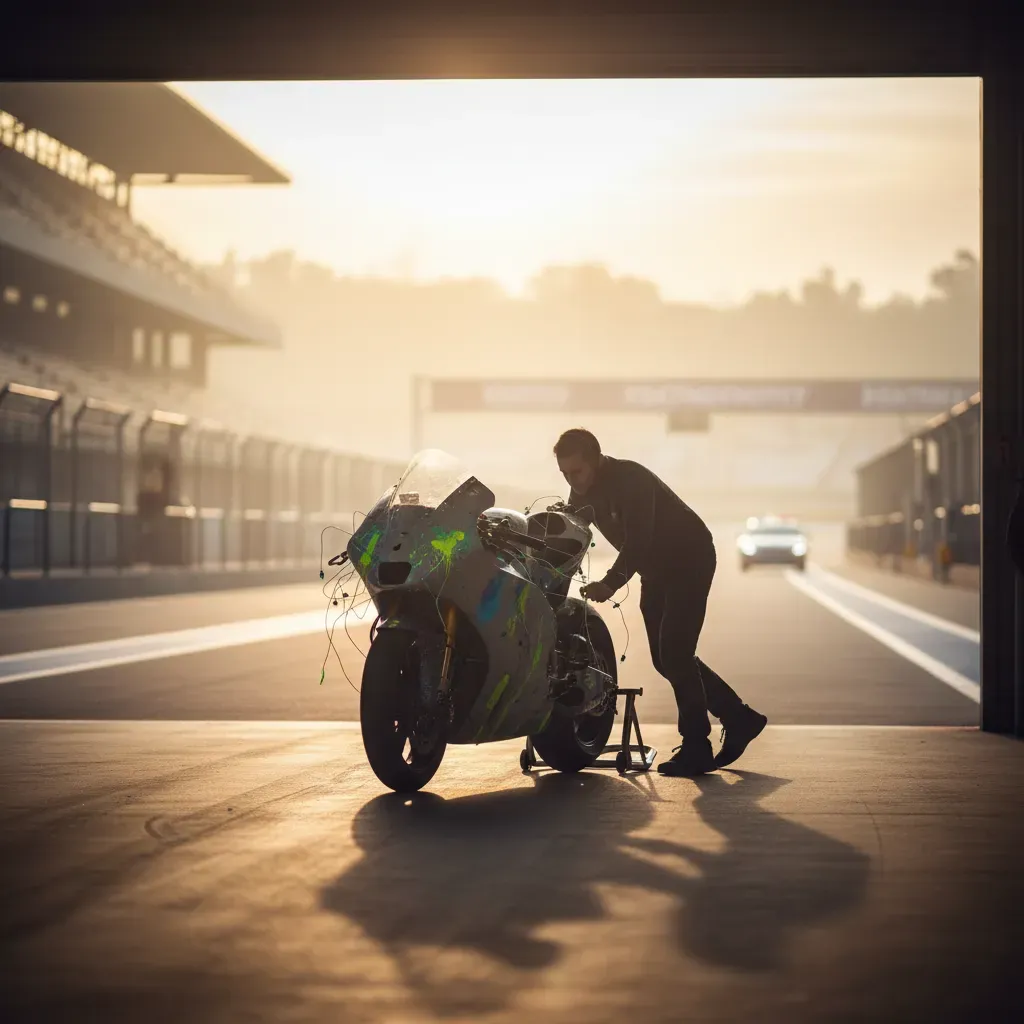
A MotoGP bike is an incredibly complex machine. Getting it to work perfectly at one specific circuit is a huge challenge. The goal of practice is to find the ideal ‘setup’ for the bike.
A bike setup is the unique combination of settings for the suspension, electronics, and tyres that makes the bike fast, stable, and easy for the rider to control at that particular track. A good setup inspires confidence; a bad one can leave even the best rider struggling.
Teams spend Friday sessions tweaking everything. They adjust the suspension to cope with bumps, change the engine’s electronic behaviour to control wheelies, and test different tyre compounds – the specific rubber mix of the tyre. A ‘soft’ compound gives amazing grip but wears out quickly, while a ‘hard’ compound lasts longer but offers less grip. Finding the right balance is key.
A Day of Two Halves
Friday is split into two main sessions, each with a very different purpose and level of intensity.
Free Practice 1 (FP1)
The first session of the weekend is a 45-minute run in the morning called Free Practice 1, or FP1. This is the initial shakedown. Riders get their first feel for the track surface, checking for grip levels and any new bumps since they last visited.
Teams use this time to verify the bikes are working correctly after being transported and rebuilt. The lap times aren’t critical here; it’s all about gathering data and getting comfortable before the real pressure begins.
Practice (The Important One!)
In the afternoon, there’s a longer, 60-minute session that is simply called ‘Practice’. Don’t let the simple name fool you; this is arguably one of the most important sessions of the entire weekend, and the tension ramps up significantly.
This is because the results from this single session have a direct impact on Saturday’s QualifyingThe timed sessions that set the starting order, split into Q1 and Q2 for the front rows.Read the full guide →. It’s the first time the stopwatch truly matters, and it dictates who has an easy path and who has a difficult fight ahead.
Why ‘Practice’ is a Gateway to Glory
The entire point of Saturday’s track action is Qualifying. This is the session that decides the starting order for the races. Starting at the front of the grid is a massive advantage, while starting at the back is a huge handicap.
The afternoon Practice session on Friday determines who gets a head start in that process. The ten riders who set the fastest single lap times during this one-hour window are rewarded with a golden ticket. They advance directly into the main, final qualifying shootout, known as Qualifying 2 (Q2), where the top 12 grid spots are decided.
Anyone outside that top ten is in trouble. They are forced into a preliminary qualifying session on Saturday called Qualifying 1 (Q1). Only the fastest two riders from that cut-throat session get to advance and join the others in Q2. For everyone else, their qualifying is over, and they are guaranteed to start the race from 13th place or worse.
A Real-World Example: The Search for Pace
Think about a team like Honda HRC Castrol. If their riders, like Joan Mir and Luca Marini, are struggling to find speed, these Friday sessions become absolutely vital. It’s their main opportunity to test new parts or radical setup changes to try and find a breakthrough.
For them, the goal in the afternoon Practice session isn’t necessarily to be the fastest overall, but to find enough pace to sneak into that crucial top 10. Achieving that would be a huge success, guaranteeing them a spot in Q2 and a chance to fight for a good starting position, which can completely change the outlook of their weekend.
How to Watch Practice Like a Pro
When you watch the afternoon Practice session, keep an eye on the timing screen. For the first 45 minutes, riders will be doing longer runs, testing their pace on older tyres to simulate race conditions. But in the final 10-15 minutes, everything changes.
This is when you’ll see the ‘time attack’. Teams will fit brand new, soft tyres that offer maximum grip for just one or two laps. Riders come out of the Pit laneThe slow lane beside the track where teams work on the bikes and riders enter and exit.Read the full guide → and give it everything they’ve got to set one perfect, blisteringly fast lap. The timing screen lights up with personal bests as everyone fights to secure their place in the top 10 and avoid the danger of Q1.
Quick Takeaways
- Friday in MotoGP is dedicated to two practice sessions: the morning ‘Free Practice 1’ and the crucial afternoon ‘Practice’.
- These sessions are used by teams to find the perfect bike ‘setup’ by testing suspension, electronics, and different tyre compounds.
- The afternoon Practice session is vital because the 10 fastest riders automatically advance to the main Q2 qualifying shootout on Saturday.
- Riders outside the top 10 in Friday’s Practice must go through an extra, high-pressure Q1 session on Saturday.
- The final minutes of the afternoon Practice session feature a ‘time attack’ where riders use soft tyres to set their fastest possible lap time.