Jargon Buster
What is a MotoGP Pit Board?
Ever seen a mechanic hang over the pit wall with a big sign? That’s a pit board. Discover what it is, what the codes mean, and why it’s vital.
The Old-School Text Message of Motorbike Racing
Imagine trying to read a text message while travelling at 200 miles per hour. That’s essentially what a MotoGP rider does every lap. Their ‘text’ doesn’t come from a phone, but from a simple, low-tech tool held out by their team: the pit board.
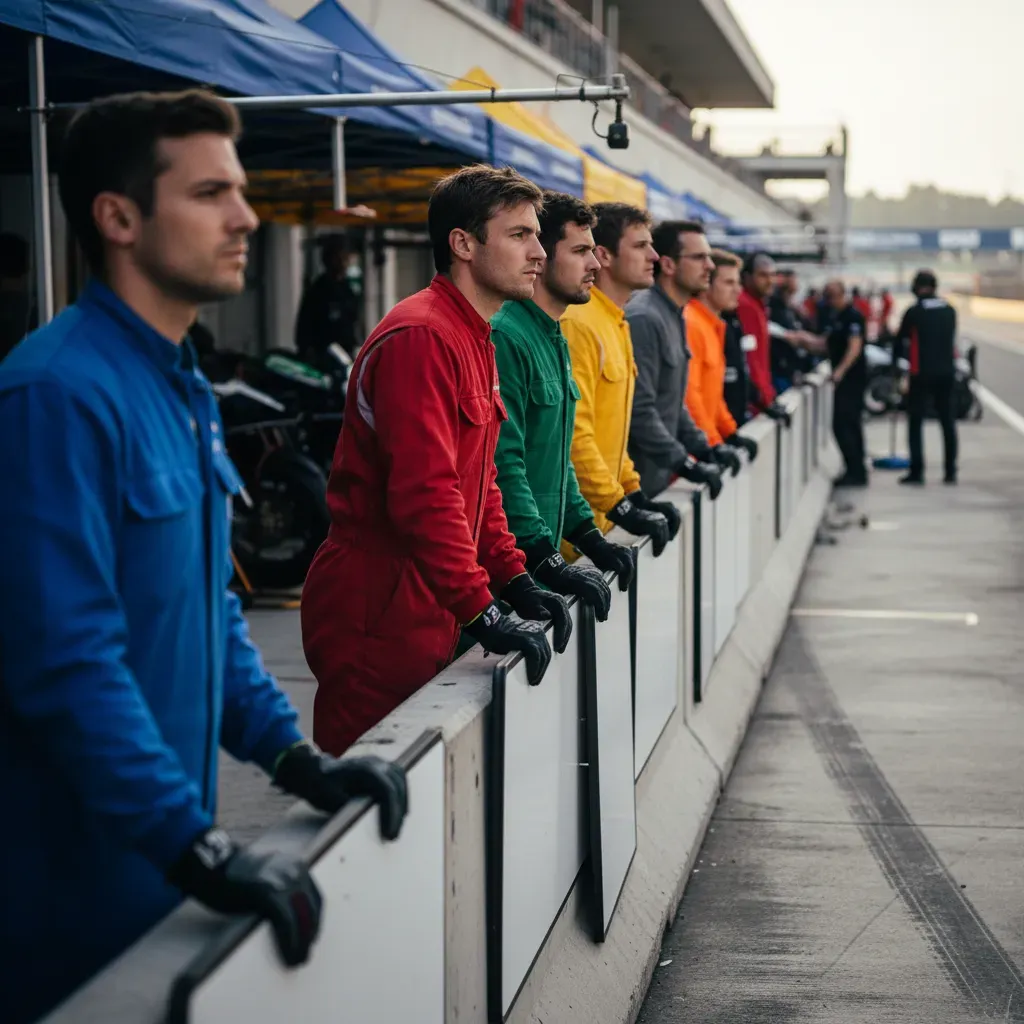
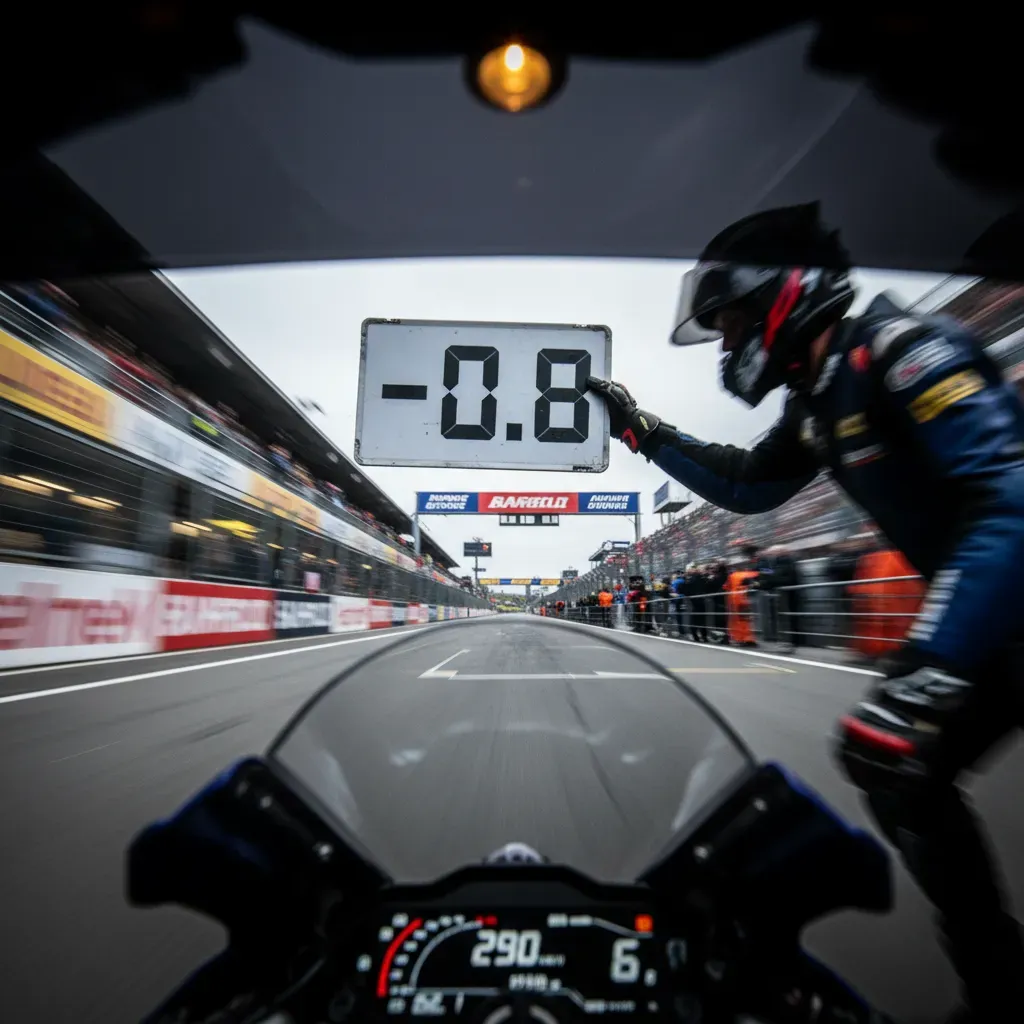
It’s one of the most iconic sights in motorsport. As a rider flashes past the start/finish straight, a mechanic leans precariously over the pit wall, holding a large board aloft for a split second. This is the team’s lifeline to its rider, a vital link in the chaos of a race.
Jargon Buster: The Pit Board
The Pit Board: A large, hand-held sign used by a race team to show basic information to their rider during a race.
When will I hear about it?
You’ll see the pit board in action every single lap of a Grand Prix. Commentators will often mention the information being shown, especially during tight battles. For example, they might say, “His team are showing him ‘+0.3’ on the board, so he knows the gap is coming down.”
Why does it matter?
In a sport defined by cutting-edge technology, the pit board is beautifully simple. A rider is completely isolated on the bike, with the roar of the engine and the wind making normal communication impossible. They have no radio link to their team like in some other motorsports.
The pit board is the primary way the team can give the rider crucial updates. Is the rider behind catching up? How many laps are left? Has a rival crashed out? This information can completely change a rider’s strategy, telling them when to push harder or when to manage their pace and tyres.
What information does it show?
The information is always short and sweet, using a simple code of letters and numbers that a rider can read in a fraction of a second. Here are the most common messages:
- Gaps to other riders: This is the most common use. A ‘+’ sign means the rider behind, and a ‘-‘ sign means the rider in front. For example,
+0.2means the rider chasing you is just two-tenths of a second behind.-1.5means the rider you are chasing is 1.5 seconds ahead. - Laps Remaining: Usually shown as ‘L’ followed by a number, like
L5, to count down the final laps of the race. - Rider Position: ‘P’ followed by a number, like
P1orP3, confirms the rider’s current position in the race. - Instructions: Sometimes the team needs to give a direct order.
PITorBOXtells the rider to come into the Pit laneThe slow lane beside the track where teams work on the bikes and riders enter and exit.Read the full guide → immediately. This might be due to a problem with the bike, a change in weather, or to serve a penalty. - Bike Settings: You might see something like
MAP 2. This is an instruction for the rider to change their ‘engine mapping’ – a pre-set electronic setting that alters the bike’s power delivery and fuel consumption.
Common Confusions: Why not just use radio?
This is a great question. Unlike Formula 1, MotoGP does not allow live voice radio between the pit wall and the rider. The reasons are complex, involving safety (riders need total concentration) and a desire to keep the focus on rider skill rather than team strategy from the garage.
Riders do have dashboard messages now, which can display text sent by the team. However, the pit board remains vital. It’s a huge, unmissable visual cue in the same place every lap. A rider can glance at it without taking their eyes too far off the track, whereas reading a small dashboard can be a bigger distraction. It’s also a reliable backup if the electronic system fails.
An Example in Action
Imagine a rider leading a race with three laps to go. They feel comfortable and are managing their pace. As they come past the pits, their mechanic holds out a board showing +0.1 and L3. In that instant, the rider knows everything they need to: the rival behind has closed the gap to almost nothing, and there are only three laps left to defend.
This single piece of information triggers a change in strategy. The rider knows they can no longer conserve their tyres; they must push to their absolute limit for the final few miles. The pit board just turned a cruise to the finish into a nail-biting fight for victory.
A Human Connection
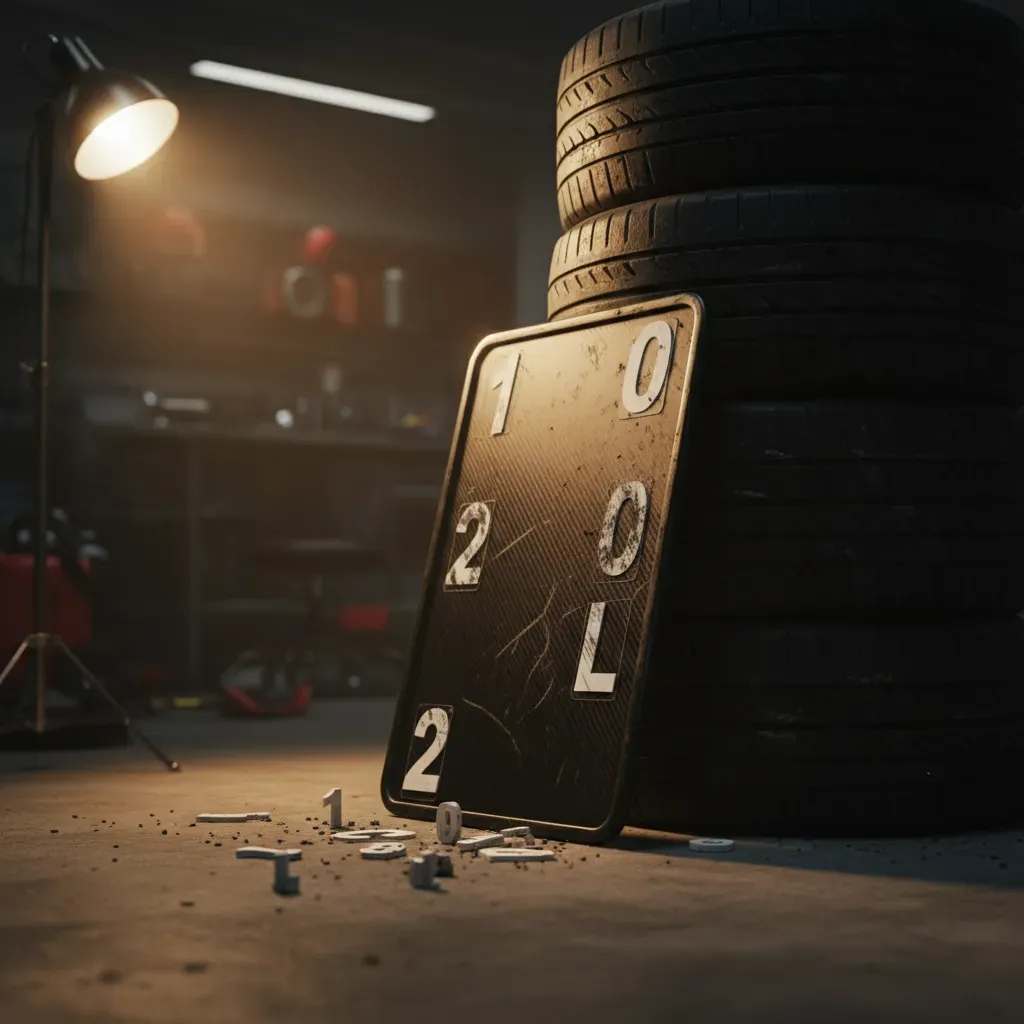
The pit board isn’t just a tool; it’s a symbol of the teamwork at the heart of MotoGP. It’s a physical, human act. The person holding that board, known as the ‘board man’, has to have perfect timing and clarity, ensuring the message is steady and visible for that fleeting moment. It’s a small but crucial role in a multi-million-pound operation, connecting the rider to the team with a simple message of support and strategy.
Quick Takeaways
- The pit board is a large sign used by MotoGP teams to communicate simple, vital information to their rider during a race.
- It shows information like the time gap to other riders (+ for behind, – for in front), laps remaining (L5), and instructions (PIT).
- MotoGP does not use live voice radio, so the pit board and dashboard messages are the only ways for the team to ‘talk’ to the rider.
- Despite modern dashboard technology, the pit board remains an iconic, reliable, and instantly readable tool for race strategy.