Jargon Buster
What is the ‘Dry Line’ in MotoGP?
Ever wondered what the ‘dry line’ is in MotoGP? Learn what this narrow, grippy path is, why it’s crucial in wet races, and why it’s so dangerous to leave it.
That Slippery, Scary, All-Important Line
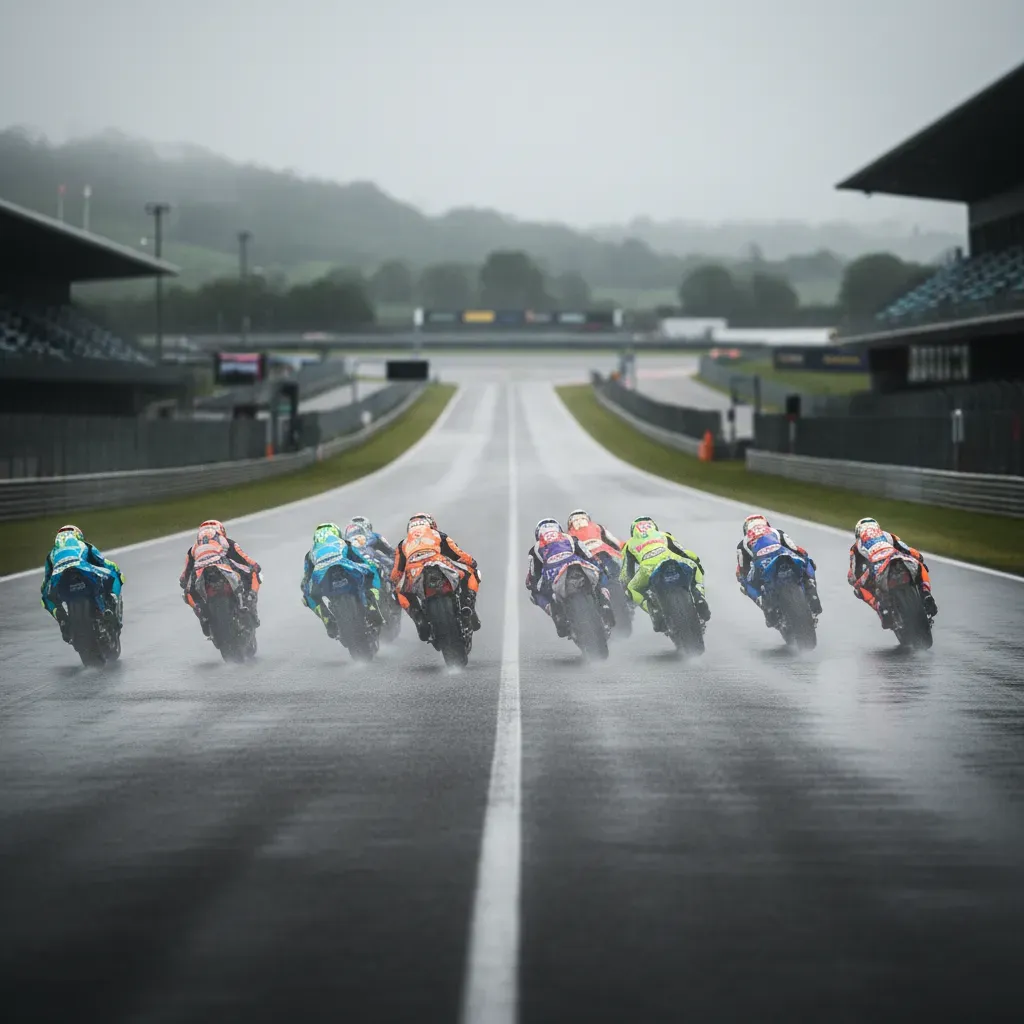
Picture this: it’s been raining all morning at the racetrack, but the storm has passed. The sky is brightening, but the circuit is soaked. The riders head out on track, and something strange begins to happen. A single, thin, light-grey ribbon starts to appear on the dark, wet tarmac. This, my friend, is the famous ‘dry line’.
It’s one of the most exciting and nerve-wracking situations in motorsport. A race on a ‘drying track’ is often more dramatic than a full-wet or full-dry race, and it’s all because of this one narrow path of safety.
Jargon Buster: The Dry Line
The Dry Line: A dry line is the single, narrow path on a damp racetrack that dries out first because all the bikes are using the same route.
Think of it like a path worn into a grassy field. If everyone walks the same way, the grass gets flattened and a clear trail appears. On a racetrack, the fastest route around is called the ‘racing line’. After it rains, all the riders try to stick to this exact same racing line.
As these incredibly powerful bikes thunder over the same strip of tarmac again and again, two things happen. First, their slick racing tyres generate enormous heat, which acts like a powerful hairdryer on the track surface. Second, the tyres physically push the standing water aside, a bit like a squeegee on a window. This combination of heat and water displacement dries out that specific path much faster than the rest of the circuit.
Why It’s a Game-Changer
The difference between being on the dry line and off it is like the difference between walking on a dry pavement and stepping on a sheet of ice. It’s that dramatic.
On that narrow, metre-wide strip of dry tarmac, a MotoGP bike has enormous grip. The tyres work perfectly, and the rider can lean the bike over, brake hard, and accelerate with confidence. But just a few inches to the left or right, the track is still damp, cold, and incredibly slippery. If a tyre touches that damp patch, especially when the bike is leaned over in a corner, the grip can vanish instantly.
This creates a terrifying high-wire act. Riders have to be incredibly precise, placing their bikes on this tiny ribbon of safety lap after lap, at speeds often exceeding 200 miles per hour. One tiny mistake, one moment of lost concentration, and they’re off the line and onto the ‘ice’, which usually results in an immediate crash.
The Art of the Overtake
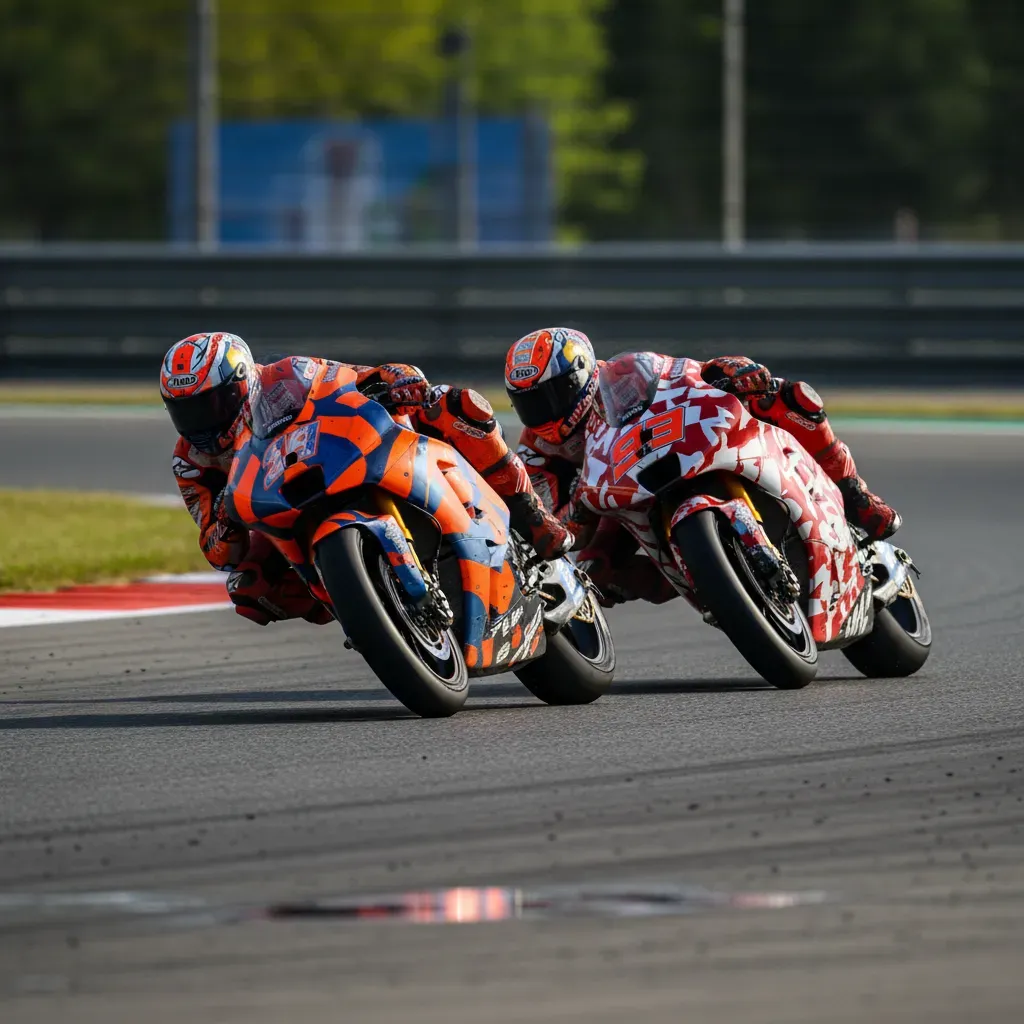
So, if everyone has to stay on the same tiny line, how does anyone overtake? Very, very carefully.
This is what makes watching a race on a drying track so tense. To pass the rider in front, you have to leave the safety of the dry line and venture out onto the slippery, damp part of the track. It’s a huge gamble. The rider attempting the pass has to brake earlier and be much gentler with their controls, all while hoping the bike doesn’t lose grip and send them flying.
You’ll often see riders trying to ‘cross over’ the line, diving onto the wet part on the brakes to get inside for a corner, then trying to get back onto the dry line as quickly as possible on the exit. Races at famously unpredictable circuits like Assen in the Netherlands have produced legendary battles where riders fight tooth and nail for control of the same piece of tarmac. It’s a breathtaking display of bravery and skill.
A Test of Nerves
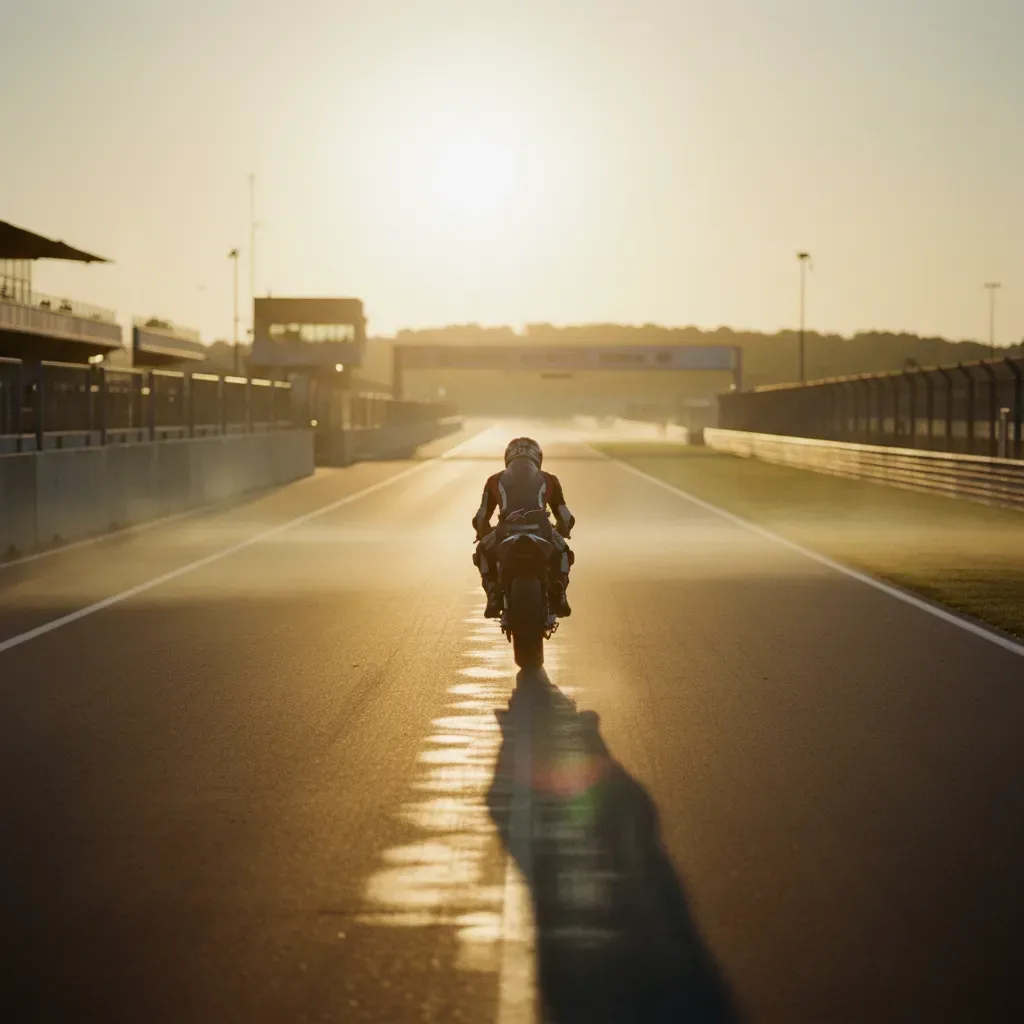
The dry line isn’t static; it gets wider as the track continues to dry. But in those critical moments when it’s just a single bike-width wide, it transforms the race into a strategic chess match at 200 mph. It punishes the smallest error with brutal consequences but rewards the brave and the precise. Next time you see a damp track, watch for that tell-tale grey ribbon appearing, and you’ll know you’re in for a treat.
Quick Takeaways
- The ‘dry line’ is a narrow path on a damp track that dries first due to the heat and pressure from the race bikes.
- This line offers massive grip, while the surrounding damp track is extremely slippery, making it very dangerous to stray from the line.
- Riders must be incredibly precise to stay on the dry line, especially through corners.
- Overtaking is a high-risk gamble, as it requires a rider to deliberately move onto the treacherous wet part of the circuit.