Tracks
Catalunya Track Guide: A Beginner’s View of the Catalan GP
Our beginner’s guide to the Catalan GP in Barcelona. Discover the famous corners, party atmosphere, and why tyre wear makes this race a modern classic.
Catalan Grand Prix
Circuit de Barcelona-Catalunya
A well-known test venue the riders have lapped thousands of times — a long main straight into a hard first corner, then a flowing middle sector where tyre wear often decides the race.
Schematic layout · not to scale
Watch Turn 1. The bikes fire down the long main straight and pile into a tight right — braking side-by-side three or four abreast, it's the classic overtaking spot and a first-lap flashpoint. Follow that corner.
Sun, Speed, and Spanish Passion
Welcome to the Circuit de Barcelona-Catalunya, a track that’s as much a sun-drenched festival as it is a world-class racetrack. Located just outside the vibrant city of Barcelona, this circuit is famous for its electric atmosphere, fuelled by passionate local fans cheering on their home heroes.
The Catalan Grand Prix is a classic on the MotoGP calendar. It’s a place of high drama, legendary battles, and a layout that tests every single aspect of a rider’s skill and a bike’s performance. It’s the perfect blend of flat-out speed and technical challenge.
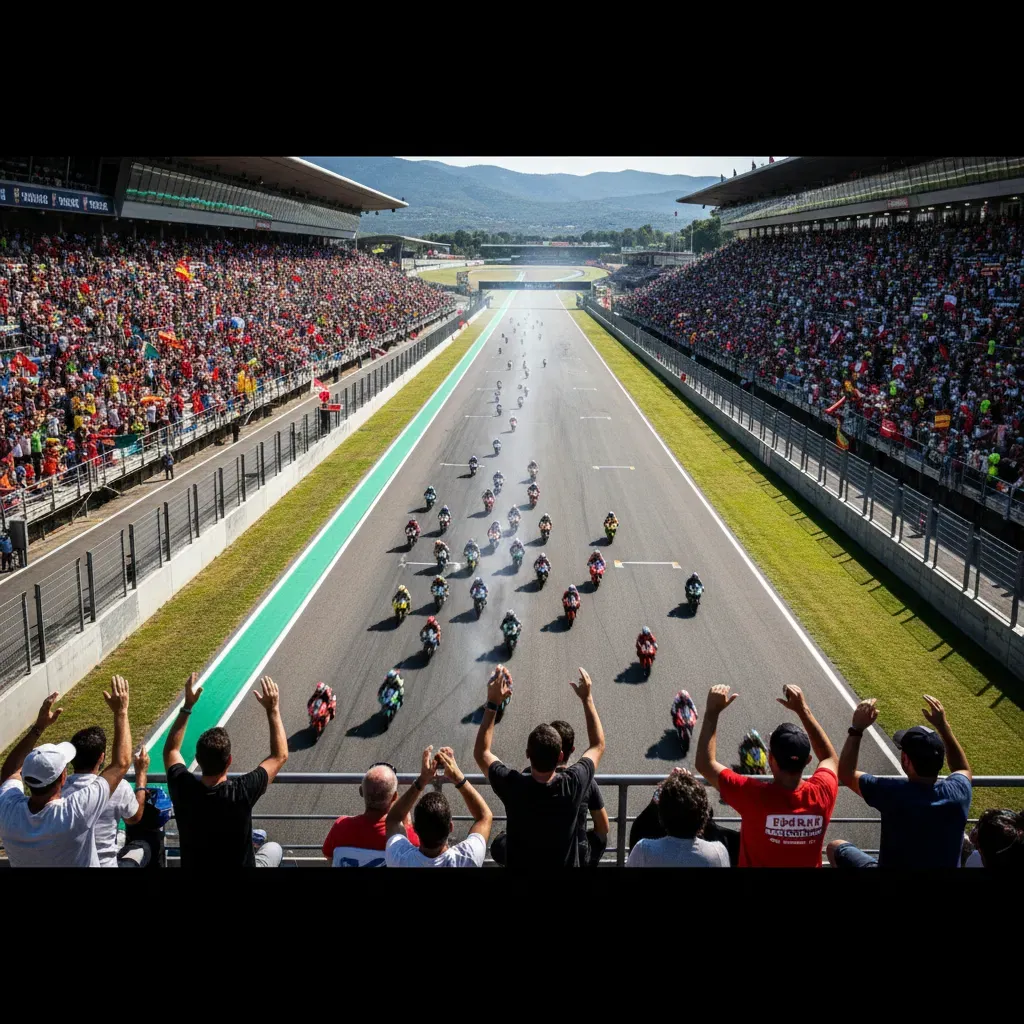
The Vibe: A Motorsport Fiesta
Imagine the buzz of a major festival combined with the roar of 1000cc prototype motorcycles. That’s Catalunya. The circuit is vast, with huge grandstands packed with fans waving flags and sounding air horns, creating a wall of sound that follows the riders around the track.
Because it’s a home race for so many top riders, like Marc and Alex Marquez, Maverick Viñales, and Aleix Espargaro, the support is incredibly personal and intense. The Spanish fans live and breathe motorcycle racing, and their energy is absolutely contagious, making this one of the most memorable race weekends of the year.
Decoding the Circuit: Key Corners to Watch
The Circuit de Barcelona-Catalunya is 4.6 kilometres (about 2.9 miles) of sweeping curves and hard braking zones. It’s known as a ‘complete’ circuit because it has a bit of everything, but a few sections truly define its character.
The Endless Main Straight
The first thing you’ll notice is the colossal main straight, stretching over a full kilometre. Here, bikes reach speeds well over 345 km/h (215 mph). This is the best place to witness the raw power of a MotoGP machine.
It’s also a prime spot for SlipstreamThe pocket of calmer air directly behind another bike. Sitting in it means less wind resistance — so you can carry more speed for free.Read the full guide →, a tactic where a rider tucks in behind the bike in front to reduce air resistance and gain a speed advantage, before pulling out at the last second to try and overtake. The mad dash into Turn 1 at the end of this straight is pure, heart-in-your-mouth action.
Turn 3: The Ultimate Test of Confidence
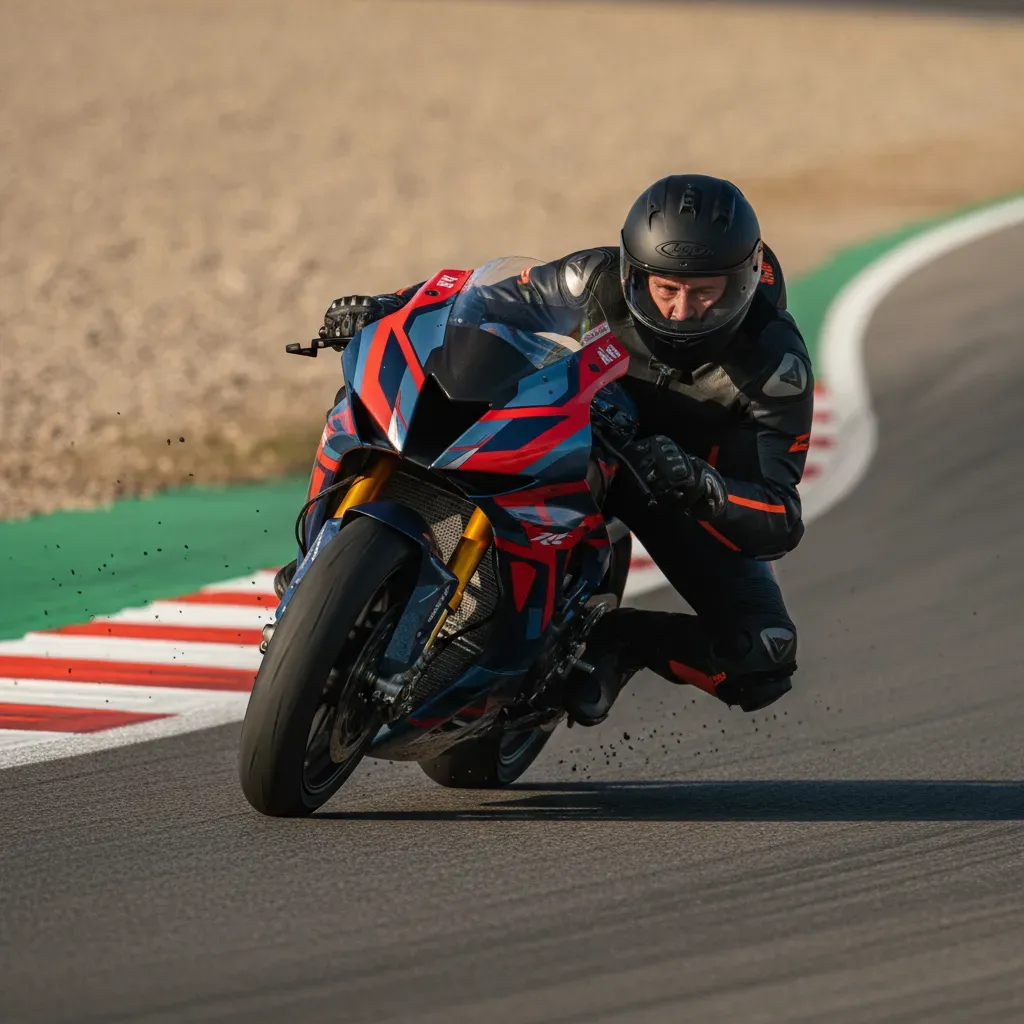
After the tight first couple of corners, the track opens into the magnificent Turn 3. This isn’t just a corner; it’s a very long, incredibly fast, sweeping right-hander that riders take at astonishing speeds. It goes on and on, demanding immense bravery and precision.
Riders are leaned over on the edge of their tyres for a long time, putting huge strain on the right-hand side of the front tyre. This corner is a brilliant place to see just how much trust the riders have in their machines, and it’s a key part of what makes this track so tough on tyres.
The Final Sector & Turn 10 Hairpin
The final part of the lap is a stark contrast to the fast, flowing sections. It becomes slower and much more technical, demanding pinpoint accuracy. The centrepiece is Turn 10, a very tight corner known as a hairpin. Think of it like a 180-degree turn that forces riders to brake incredibly hard, slow right down, and then accelerate hard out of the corner.
This corner, nicknamed ‘La Caixa’, is a classic overtaking spot. It’s tricky because if a rider brakes just a little too late, they will run wide and lose a lot of time. A good exit from here is vital for a fast lap time, making it a critical point on the track, especially on the final lap of the race.
Race Day: What to Expect
Races at Catalunya are often a strategic game of chess played at 200 mph. The biggest factor is almost always tyre management. The track surface is quite abrasive (meaning it has a rough texture) and the long, fast corners generate a lot of heat in the rubber.
This means a rider can’t just push at 100% for the entire race. The winner is often the one who is smartest with their tyres, saving them for a final push in the last few laps. Watch for riders who look smooth and controlled – they are often the ones looking after their rubber the best.
A Moment in Time: Rossi vs. Lorenzo, 2009
If you want to understand the magic of Catalunya, look no further than the 2009 race. Teammates Valentino Rossi and Jorge Lorenzo fought tooth-and-nail for the entire race, swapping the lead multiple times. It all came down to the very last corner of the very last lap.
Everyone thought Lorenzo had it won, defending the inside line. But Rossi produced a moment of genius, diving up the inside in a move nobody thought was possible to snatch victory by a whisker. It’s still considered one of the greatest overtakes in MotoGP history and perfectly captures the drama this circuit can create.
Tips for Watching Your First Catalan GP
When you’re watching on TV, keep an eye on the start. The charge down the long straight into the tight Turn 1 is always chaotic and exciting. Also, pay attention to the riders’ body language in the final laps. You can often see who has used up their tyres and is struggling for grip.
Most of all, soak in the atmosphere. Listen to the roar of the crowd when a Spanish rider makes a pass, and appreciate the incredible skill it takes to master this beautiful but brutal circuit. It’s a true highlight of the MotoGP season.
Quick Takeaways
- Location is Key: Situated near Barcelona, the circuit is famous for its massive, passionate crowds and incredible party atmosphere, especially with so many Spanish riders on the grid.
- A Track of Contrasts: It combines one of the longest straights in MotoGP with fast, flowing corners like Turn 3 and a tight, technical final sector.
- Tyre Management is Everything: The abrasive surface and long corners mean tyres wear out quickly. The smartest, smoothest rider often wins, not just the fastest.
- Prime Overtaking: The best place to see passes is into Turn 1 after the huge main straight, and the tight Turn 10 hairpin near the end of the lap.