Tracks
Jerez Track Guide: A Beginner’s View of the Spanish GP
Our jargon-free Jerez MotoGP guide for beginners. Discover the famous corners, the incredible ‘fiesta’ atmosphere, and why the Spanish GP is a season highlight.
Spanish Grand Prix
Circuito de Jerez–Ángel Nieto
A tight, twisty Andalusian favourite with almost no long straights — a stadium-like circuit where corner speed, tyre management and a huge, roaring crowd define the weekend.
Schematic layout · not to scale
Watch the final corner, the Lorenzo curve. A long, slow left onto the main straight — get a run out of here and you can slipstream to the line, which is why so many last-lap moves happen right there. Follow that corner.
More Than a Race, It’s a Fiesta
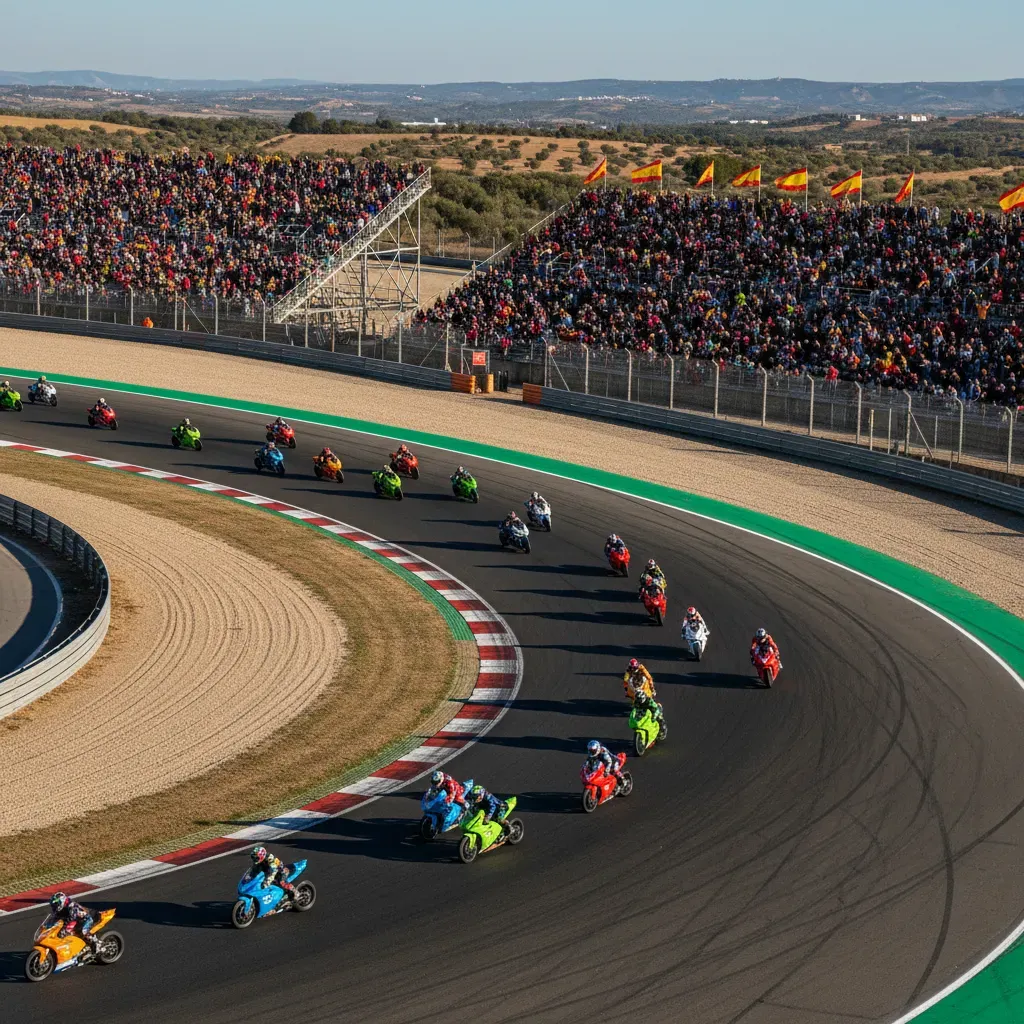
Welcome to the Circuito de Jerez-Ángel Nieto, the heart of Spanish motorcycling. Forget everything you think you know about a sporting event. The Spanish Grand Prix at Jerez isn’t just a race; it’s a massive, weekend-long party, or ‘fiesta’, where the passion for MotoGP is louder and more colourful than anywhere else on Earth.
Nestled in the sun-drenched sherry-producing region of Andalusia in southern Spain, the track becomes a temporary city. Tens of thousands of fans create a cauldron of noise, with air horns, chainsaws (without the blades!), and chanting providing a constant, electric soundtrack from Friday morning until the final chequered flag on Sunday.
The Track: A Twisty Andalusian Challenge
Jerez is famous for its tight and twisty layout. Unlike some circuits with huge, long straights where bikes can reach their absolute maximum speed, Jerez is a technical puzzle. It’s a series of medium-speed corners linked by short straights, demanding a motorcycle that is agile and can change direction in the blink of an eye.
This layout creates incredibly close racing, as outright horsepower isn’t the only key to victory. Let’s look at the three corners that define this iconic circuit.
Turn 1: Expo ’92
After the riders blast down the start-finish straight, they have to brake incredibly hard for Turn 1, a fast and sweeping right-hand corner. It’s a real test of bravery, as they tip the bike into the corner while still scrubbing off huge speed. A good start can be won or lost right here.
Turn 6: Dry Sac
One of the most thrilling parts of the track is the approach to Turn 6. Riders fly down a short straight before plunging downhill into a tight right-hand corner. Braking while the track is falling away from you is incredibly difficult and a prime spot for riders to make a mistake or attempt a brave overtaking move.
Turn 13: The Jorge Lorenzo Corner
This is it. The most famous corner at Jerez and one of the most legendary in all of MotoGP. Turn 13 is a hairpin – a very tight corner that doubles back on itself, like the shape of a hairpin. Its position as the final corner on the lap makes it the scene of countless last-lap battles.
Riders will often attempt a ‘block pass’ here, diving up the inside of their rival to block the Dry lineThe strip of track that dries first as rubber and warmth build up, giving the most grip.Read the full guide → and snatch victory just metres from the finish. It’s a high-risk, high-reward move that the Spanish crowd absolutely loves.
How a Race at Jerez Unfolds
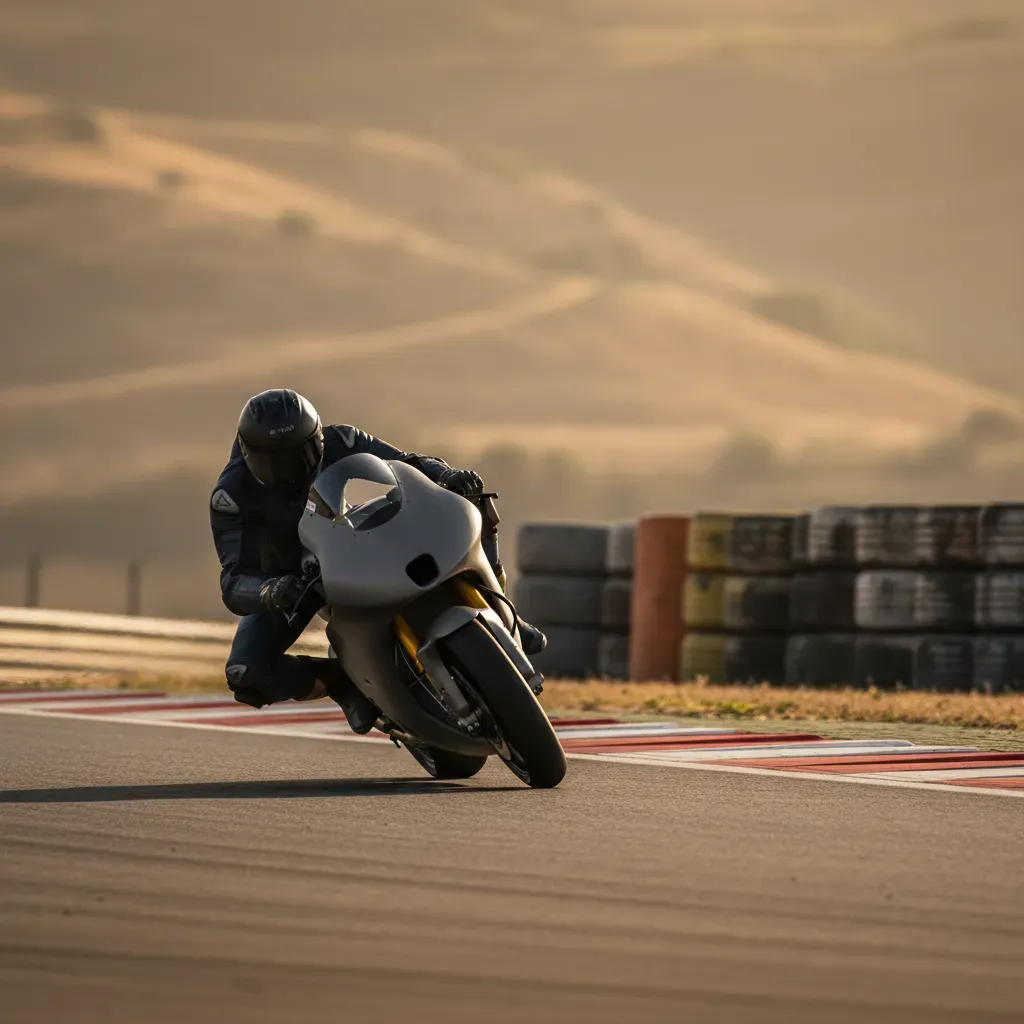
The character of the circuit dictates the type of racing we see. Because it’s so narrow and twisty, overtaking can be very difficult. This means that QualifyingThe timed sessions that set the starting order, split into Q1 and Q2 for the front rows.Read the full guide → – the timed session on Saturday that decides the starting grid – is hugely important. Starting from the front row gives a rider a massive advantage.
Another huge factor is the Andalusian heat. The track surface can get incredibly hot, which causes the tyres to wear out very quickly. The winning rider is often the one who is smoothest and best at preserving their tyre grip for a final push in the last few laps.
A Beginner’s Viewing Guide
If you ever get the chance to go, the best place to watch is from the huge grandstands that surround the final sector of the lap. From here, you can see the bikes tackle several corners, including the legendary final hairpin. You are guaranteed to witness some incredible skill and, very likely, some last-lap drama.
Keep an eye out for the Spanish heroes. For riders like Marc Marquez, Jorge Martin, and exciting young star Pedro Acosta, this is their home race. The roar from the crowd whenever they pass is something special, and that support gives them an extra surge of motivation to perform in front of their home fans.
Quick Takeaways
- Jerez is famous for its incredible ‘fiesta’ atmosphere, with massive, passionate crowds creating a unique cauldron of noise and colour.
- The final corner, a tight hairpin named after Jorge Lorenzo, is one of the most famous in MotoGP and is a legendary spot for last-lap battles.
- The track is tight and twisty, meaning an agile bike and a good qualifying position are often more important for victory than raw top speed.
- The intense Spanish heat makes tyre management a critical skill, with riders needing to save their grip for the end of the race.
- It’s the home Grand Prix for a huge number of Spanish riders, whose fans give them incredible support all weekend.