Beginner Guides
More Than Speed: The Strategy and Drama of MotoGP
Discover the hidden MotoGP strategy behind the speed. Learn about tyre management, fuel maps, and the mind games that decide a world champion.
More Than Speed: The Strategy and Drama of MotoGP
When you first watch a MotoGP race, it’s an assault on the senses. The scream of engines, the blur of colour, and bikes leaning at impossible angles. It looks like a simple contest of pure speed and bravery. But that’s only half the story.
Beneath the surface, MotoGP is a high-speed chess match. Every single lap is filled with tactical decisions, technical management, and intense psychological battles. Winning isn’t just about having the fastest bike; it’s about having the smartest strategy.
The Tyre Tightrope Walk
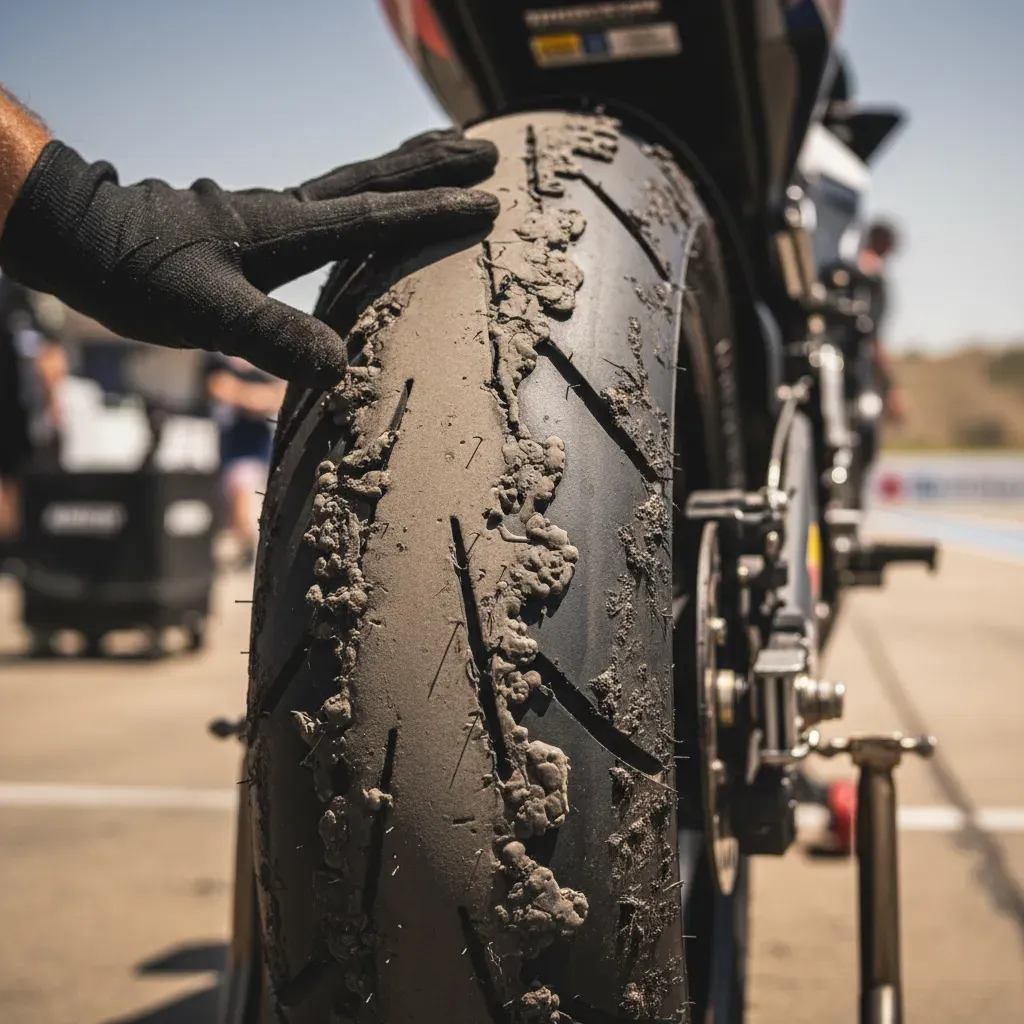
Imagine trying to run a marathon in shoes that wear out as you go. That’s essentially the challenge a MotoGP rider faces with their tyres. The black rubber circles connecting the bike to the track are the single most important performance factor, but they don’t last forever.
This wearing-out process is called Tyre degradationThe gradual loss of grip as a tyre wears and overheats through a race.Read the full guide →, which simply means the tyres lose grip as the race goes on. A rider who pushes too hard at the start might find their tyres are worn out by the end, leaving them struggling to turn and accelerate while their rivals cruise past.
Riders and their teams must choose different types of tyres (compounds) before the race – softer ones that offer amazing grip but wear out quickly, or harder ones that last longer but offer less grip. The art is in managing them. A rider has to know exactly when to push and when to conserve their rubber, hoping to have just enough grip left for a final attack in the last few laps.
The Brain in the Bike: Fuel and Engine Maps
Just like a road car, a MotoGP bike has a limited amount of fuel in its tank. If you run out, your race is over. This means riders can’t just keep the engine on maximum power for the entire 45-minute race.
To manage this, they use something called an engine map. Think of it as a personality setting for the engine. A rider can switch between different maps using buttons on their handlebars. One map might deliver aggressive, maximum power, perfect for an overtake, but it will use a lot of fuel.
Another map might offer smoother, gentler power delivery, which saves fuel and is easier on the rear tyre. Riders will constantly flick between these maps during a race, balancing the need for outright speed with the need to make it to the finish line. It’s a constant calculation of risk versus reward.
The Battle of Minds
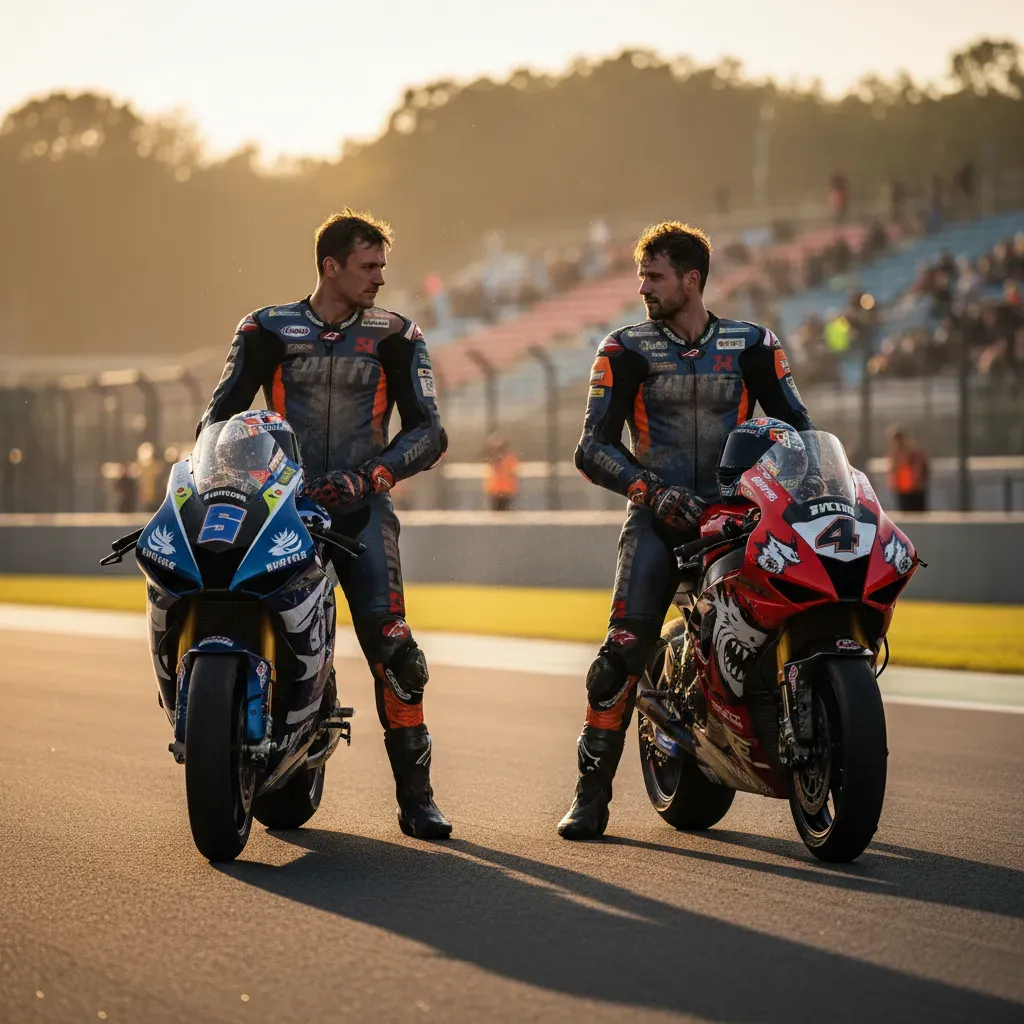
MotoGP is not just a physical contest; it’s a mental one. When two riders are locked in a championship fight, like the intense rivalry we’ve seen between contenders like Marco Bezzecchi and Jorge Martin, the battle often starts long before the lights go out.
This psychological warfare can take many forms. A rider might deliberately follow their rival closely during PracticeSessions before qualifying where riders set up the bike; the combined times decide who goes straight to Q2.Read the full guide → sessions, not to learn from them, but simply to apply pressure and let them know they’re being watched. It’s a way of saying, ‘I’m always here’.
They might also play games in the media, making comments that sound confident and relaxed to project an image of strength, hoping to plant a seed of doubt in their rival’s mind. In a sport where thousandths of a second matter, the smallest lapse in concentration caused by this pressure can lead to a race-losing mistake.
It Takes a Team: The Rider and Crew Chief
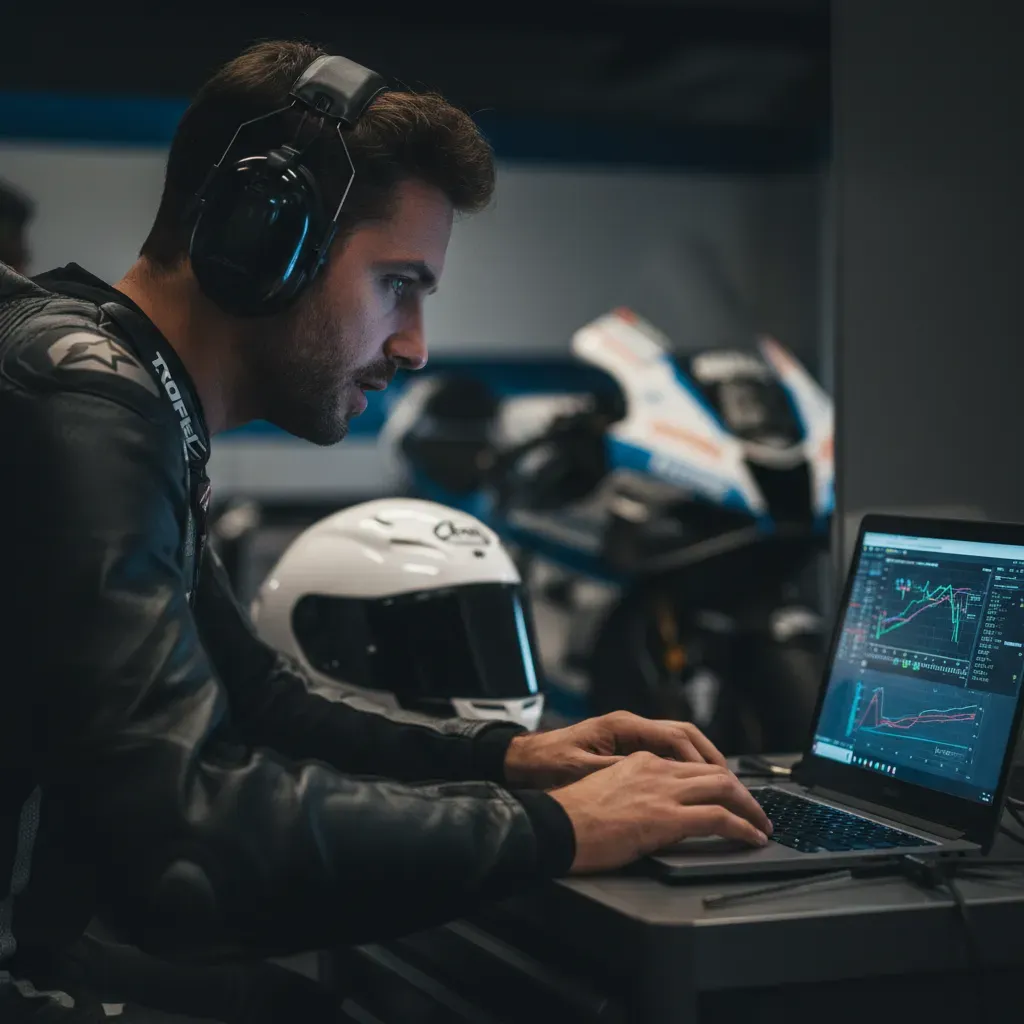
While the rider is the star of the show, they are just one part of a huge team effort. Perhaps the most important relationship in the garage is between the rider and their crew chief. The crew chief is the head engineer assigned to that rider, acting as their technical right-hand person and strategist.
A rider might come into the Pit laneThe slow lane beside the track where teams work on the bikes and riders enter and exit.Read the full guide → and say, “The bike won’t turn properly in slow corners.” They describe the feeling, the behaviour. The crew chief’s job is to translate that feeling into a concrete technical change – an adjustment to the suspension, a change in electronics, or a different bike setup.
This relationship is built on immense trust. The crew chief must understand their rider completely, not just as an athlete but as a person, to give them a bike that inspires confidence. They are the master tactician, helping to decide on tyre choice and race strategy. A strong rider-crew chief partnership is often the foundation of a championship-winning team.
So, the next time you watch a race, look beyond the incredible speed. Watch for the rider who seems to get stronger at the end, the one whose tyres have lasted the distance. Think about the silent calculations of fuel and power, the intense mind games between rivals, and the invisible bond with the team in the garage. You’ll see that MotoGP is so much more than a race; it’s a beautiful, complex and dramatic sport of strategy.
Quick Takeaways
- MotoGP is a strategic sport where managing resources is as important as raw speed.
- Riders must conserve their tyres throughout the race (managing degradation) to be strong in the final laps.
- Engine maps allow riders to change the bike’s power delivery to save fuel or attack rivals.
- Mind games and psychological pressure between championship contenders are a huge part of the battle.
- The relationship between a rider and their crew chief is vital for translating feedback into a winning bike setup.