Jargon Buster
MotoGP Tech: What is a Swingarm?
What is a motorcycle swingarm? Our jargon-free guide explains this key MotoGP part, how it affects rear grip and tyre life, and why teams spend millions on it.
The Unsung Hero of the Rear Wheel
When you watch a MotoGP bike rocket out of a corner, you’re seeing a symphony of technology at work. The engine is roaring, the electronics are managing the power, and the rider is performing a delicate dance of balance and control. But connecting all that power to the track is a crucial, and often overlooked, piece of engineering: the swingarm.
You’ll hear commentators mention it when a rider is struggling for grip, or when a team brings a new update to the track. Understanding what it is and what it does is a key step to appreciating the incredible complexity of these racing machines.
What is a Swingarm?
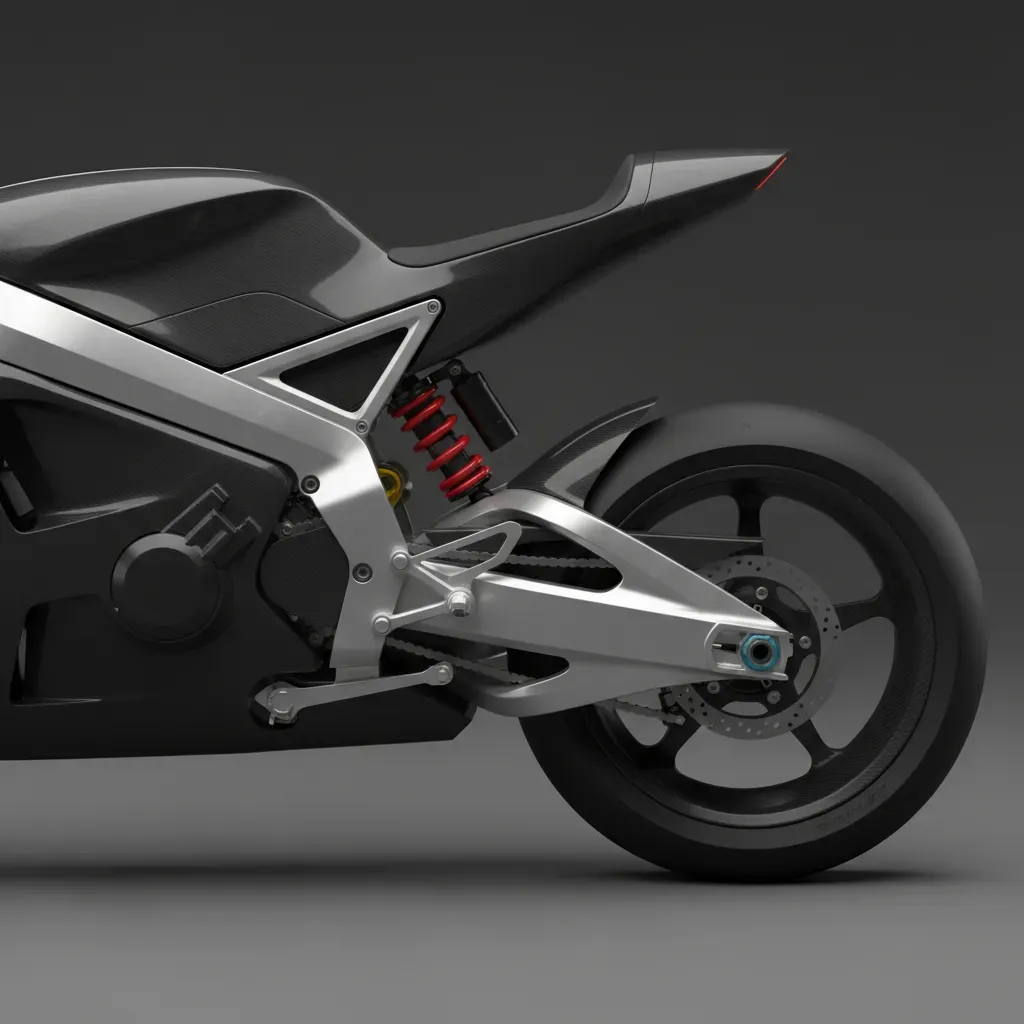
A motorcycle swingarm is the part that holds the rear wheel and connects it to the main frame of the bike. Think of it as a moving bridge between the engine’s power and the tyre’s grip. It’s not bolted on rigidly; it pivots up and down on a large bearing where it meets the frame.
This pivot is the whole point. It allows the rear suspension—the big spring and damper you see tucked away under the rider’s seat—to absorb bumps and imperfections in the track. As the wheel hits a bump, the swingarm pivots upwards, the suspension compresses, and the tyre stays pressed firmly against the tarmac. Without this movement, the bike would be incredibly rigid and bounce all over the place.
The Million-Pound Pivot
In the world of MotoGP, a swingarm isn’t just a simple metal bracket. It’s an incredibly sophisticated component, usually crafted from either aluminium or exotic carbon fibre. Factories spend millions of pounds and thousands of hours designing, testing, and building them. Why? Because its behaviour has a massive impact on how the bike performs.
The secret lies in finding the perfect balance between two opposing forces: stiffness and flex.
Stiffness vs. Flex: The Ultimate Balancing Act
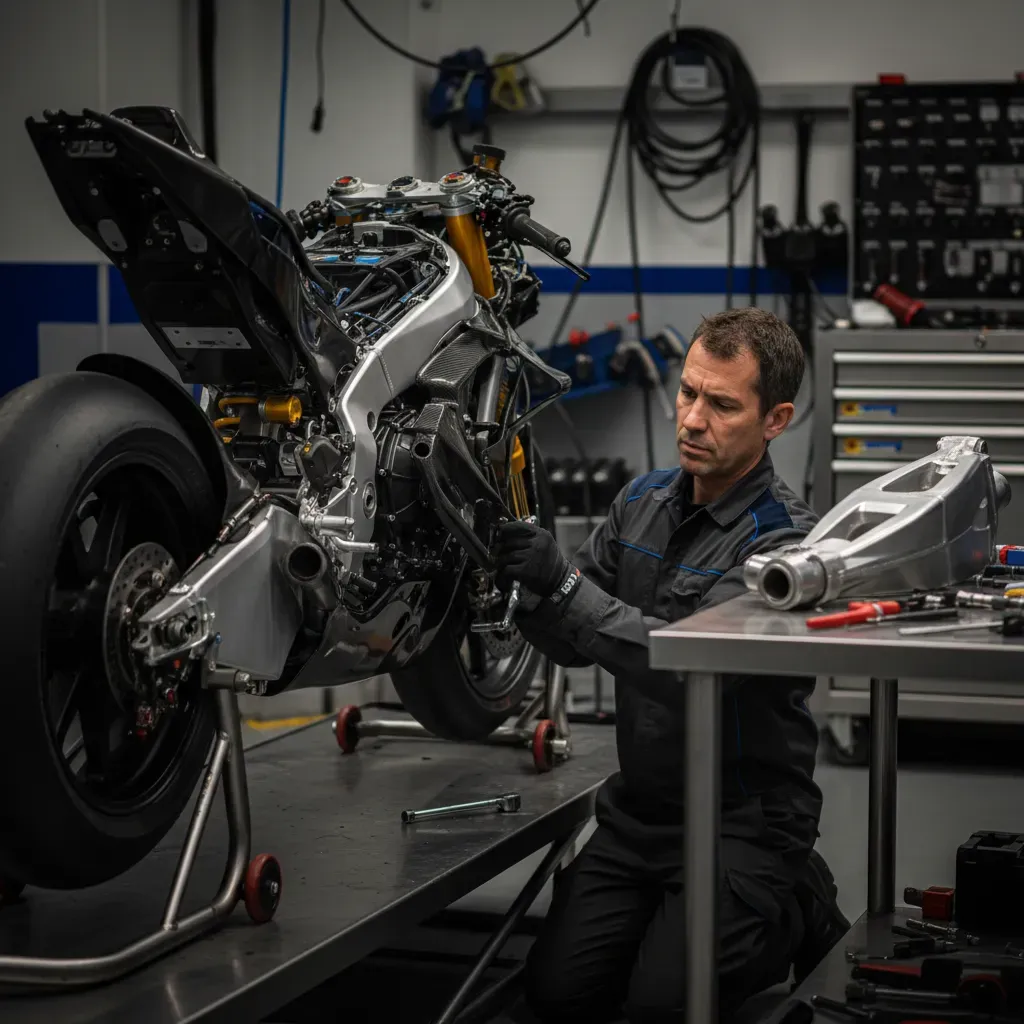
Stiffness is exactly what it sounds like: how much the swingarm resists bending and twisting. A stiff swingarm provides excellent stability when the rider is hard on the brakes or accelerating in a straight line. It keeps the rear wheel perfectly aligned with the front, making the bike feel precise and responsive.
But too much stiffness can be a bad thing. It can make the bike feel harsh and prevent the rider from getting any ‘feel’ from the rear tyre, making it difficult to sense when the grip is about to run out.
This is where flex comes in. We’re not talking about a wobbly, uncontrolled bend. This is ‘tuned flex’—a tiny, precisely engineered amount of give. When a bike is leaned over at an extreme angle in a corner, the main suspension is already working hard. This little bit of flex in the swingarm acts like a secondary form of suspension, helping the tyre maintain contact with the track and absorb tiny bumps. It’s what gives a rider the confidence to push to the absolute limit.
The Black Magic of Bike Setup
Finding the right stiffness-to-flex ratio is a dark art in MotoGP. A team like Aprilia, with a championship contender like Marco Bezzecchi, won’t just have one swingarm design. They will arrive at a circuit like Aragon with several different options—some stiffer, some with more flex, some made of carbon, others of aluminium.
A track with long, fast, flowing corners might require a stiffer swingarm for maximum stability. In contrast, a bumpier track with lots of hard acceleration zones might favour a swingarm with more flex to help find that all-important grip. The riders will test them back-to-back in PracticeSessions before qualifying where riders set up the bike; the combined times decide who goes straight to Q2.Read the full guide → sessions, trying to find the one that gives them the best feeling and the fastest lap time.

Next time you see mechanics swarming a bike in the garage and quickly covering up the rear end with screens, there’s a good chance they are swapping out this critical component. It’s one of the biggest secrets in the PaddockThe fenced-off working area behind the pits where teams, hospitality and motorhomes are based.Read the full guide → and a key performance differentiator between the factories.
Ultimately, the swingarm is the crucial link that translates the brutal power of a 300-horsepower engine into forward motion. It’s a beautifully engineered piece of kit that has to be strong enough to handle immense forces, but delicate enough to communicate the limits of grip back to the rider.
Quick Takeaways
- The swingarm is the part of the chassis that holds the rear wheel and connects it to the bike’s main frame via a pivot.
- Its primary job is to allow the rear suspension to move up and down, keeping the tyre in contact with the track over bumps.
- In MotoGP, swingarms are highly engineered from carbon fibre or aluminium to have a perfect balance of stiffness (for stability) and flex (for grip and rider feel).
- Teams bring multiple swingarm designs to each race weekend to fine-tune the bike’s behaviour for that specific circuit.