Jargon Buster
The MotoGP Warm-Up Lap Explained
What is the MotoGP warm-up lap? Our jargon-free guide explains why riders weave from side to side on this crucial lap before the race starts.
What is the MotoGP Warm-Up Lap?
Warm-Up Lap (also called the Formation Lap): A single, slow lap that riders complete around the track immediately before the race begins.
Imagine the scene. The bikes are lined up on the starting grid, engines growling. The tension is electric. But before the lights go out, they all pull away for one more tour of the circuit. This isn’t the race starting early; it’s the warm-up lap.
After leaving their starting positions (their assigned ‘grid slots’), the entire field follows a safety car around the track at a much slower pace than they would race at. Once they complete the lap, they return to their original grid slots, ready for the real start. It might look like a simple parade, but this single lap is one of the most critical parts of the race preparation.
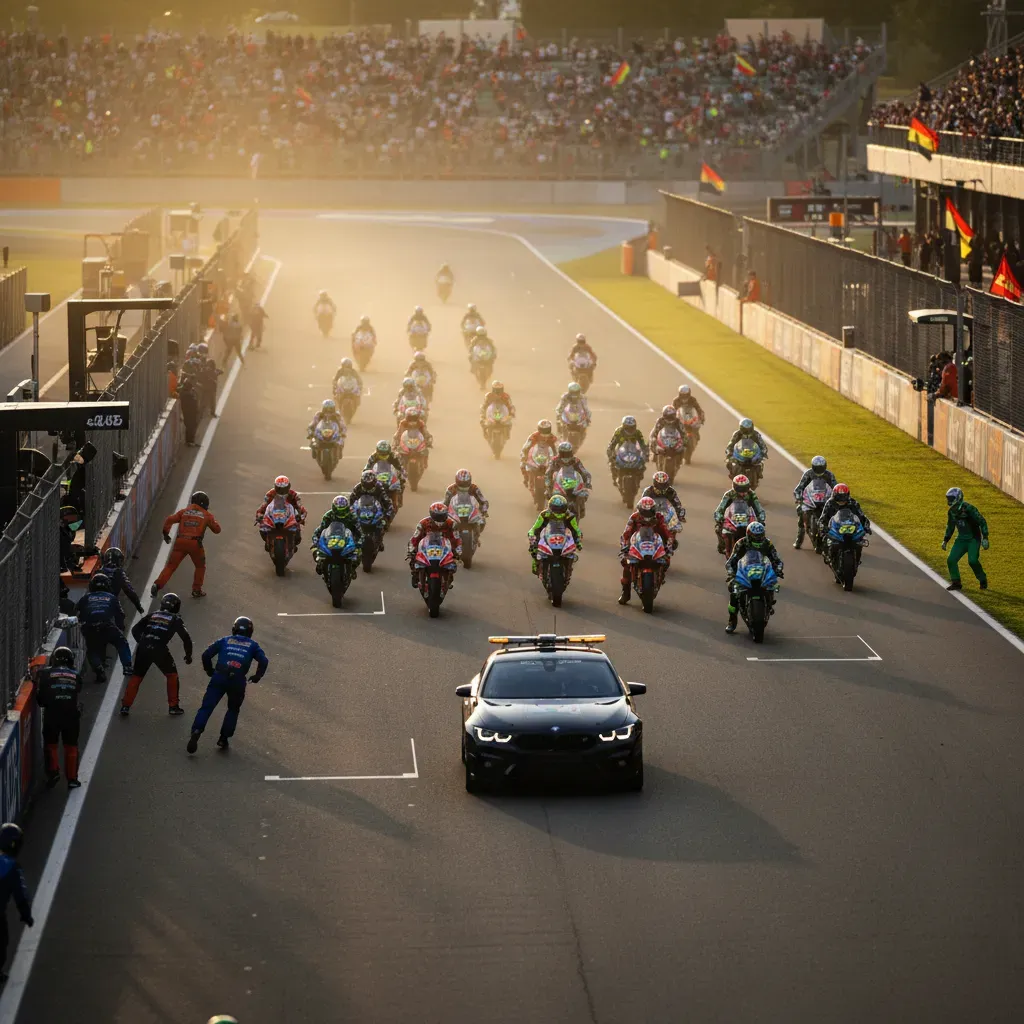
Why This ‘Slow’ Lap is So Important
The warm-up lap serves several vital functions that can make or break a rider’s race before the first corner has even been taken. It’s all about preparation, checks, and getting a feel for the conditions in the final moments before battle commences.
1. Waking Up the Tyres
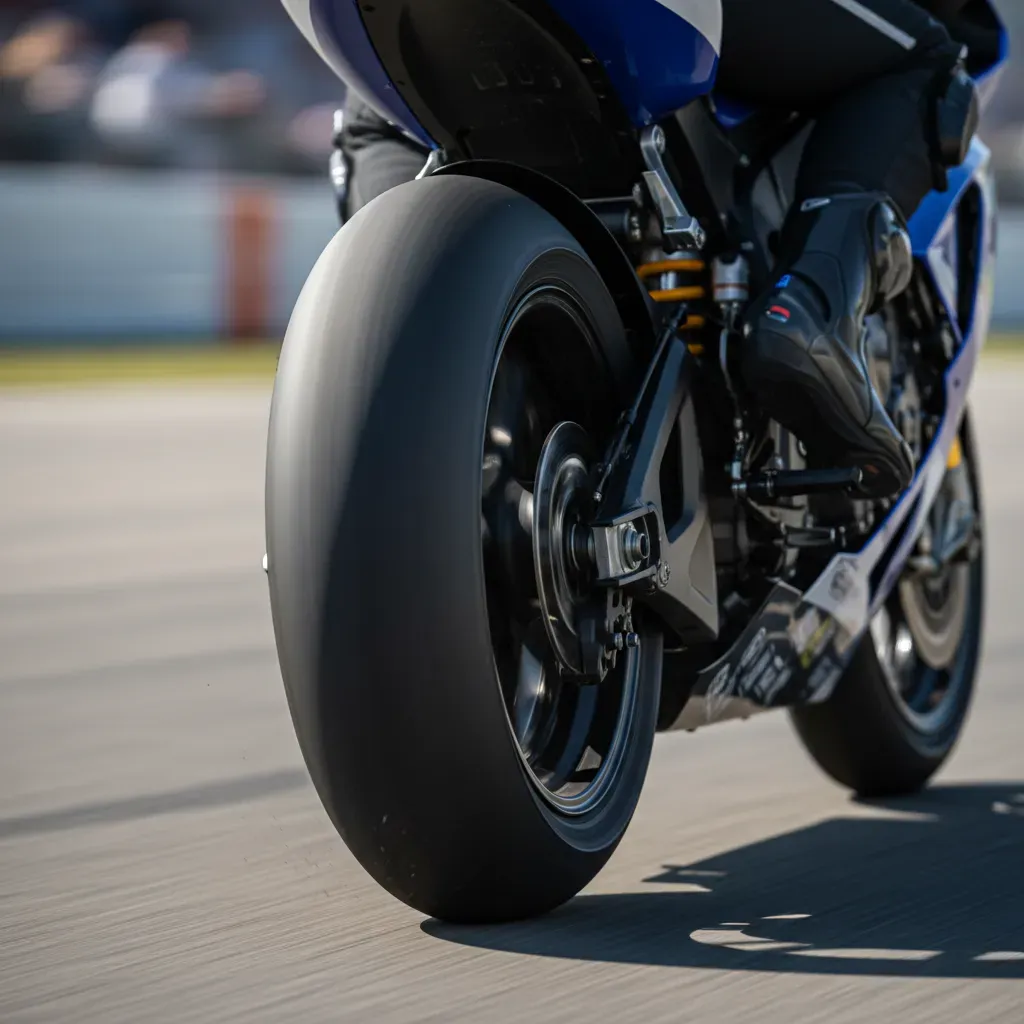
This is the number one reason for the warm-up lap. A MotoGP bike uses incredibly specialised tyres that only work properly when they are very, very hot. When cold, a brand-new race tyre has about as much grip (its ability to stick to the tarmac) as hard plastic. It’s slippery, unpredictable, and completely unsafe for racing.
To get heat into them, riders need to physically work the rubber. During the warm-up lap, you’ll see them weaving aggressively from side to side, almost like a slalom skier. This forceful bending and flexing of the tyre carcass creates friction, which in turn generates heat. The goal is to get the tyre surface hot and sticky, ready to provide maximum grip for the violent acceleration off the start line and the hard braking for Turn 1.
2. A Final Systems Check
These motorcycles are multi-million-pound prototypes, packed with complex electronics and finely tuned mechanical parts. The warm-up lap is the rider’s last chance to check that everything is working exactly as it should. It’s a final shakedown before pushing the machine to its absolute limit.
During this lap, the rider will test the feel of the brakes, get a sense of the engine’s throttle response, and ensure the gearbox is shifting smoothly. If something feels even slightly ‘off’, this is their last opportunity to signal a problem, though at this stage, there’s very little the team can do besides a last-second software adjustment or, in a disaster scenario, pulling the bike off the grid.
3. Reading the Track Conditions
A race circuit is a living thing. Its character can change dramatically based on the weather. A bit of morning rain might have left a damp patch under the trees, or a rise in temperature could make the surface greasier than it was in morning PracticeSessions before qualifying where riders set up the bike; the combined times decide who goes straight to Q2.Read the full guide →. The wind direction might have shifted, which can affect a bike’s stability on the long straights.
The warm-up lap gives the rider a real-time, up-to-the-minute report on the state of every single corner. They are mentally logging grip levels, looking for any potential hazards, and finalising their strategy for the opening corners of the race based on this fresh information.
What to Watch For as a Fan
The warm-up lap is full of small but fascinating rituals. As you watch the bikes tour the circuit, keep an eye out for a few key things that tell a bigger story about the preparation.
The Aggressive Weave
The most obvious behaviour is the violent weaving. This isn’t for show. The more a rider throws the bike from side to side, the more energy they are putting into the tyres. Some riders are more aggressive than others, which can give you a small insight into their strategy or how critical they feel tyre temperature is at that particular track.
Practice Starts
As the riders come back around to the grid, many will pull slightly to the side of their grid slot and perform a practice launch. They’ll rev the engine, dump the clutch, and accelerate for just a few metres. This helps them gauge the grip available on the start line and get a feel for the clutch’s biting point, all in the name of perfecting their race start.
Reforming the Grid
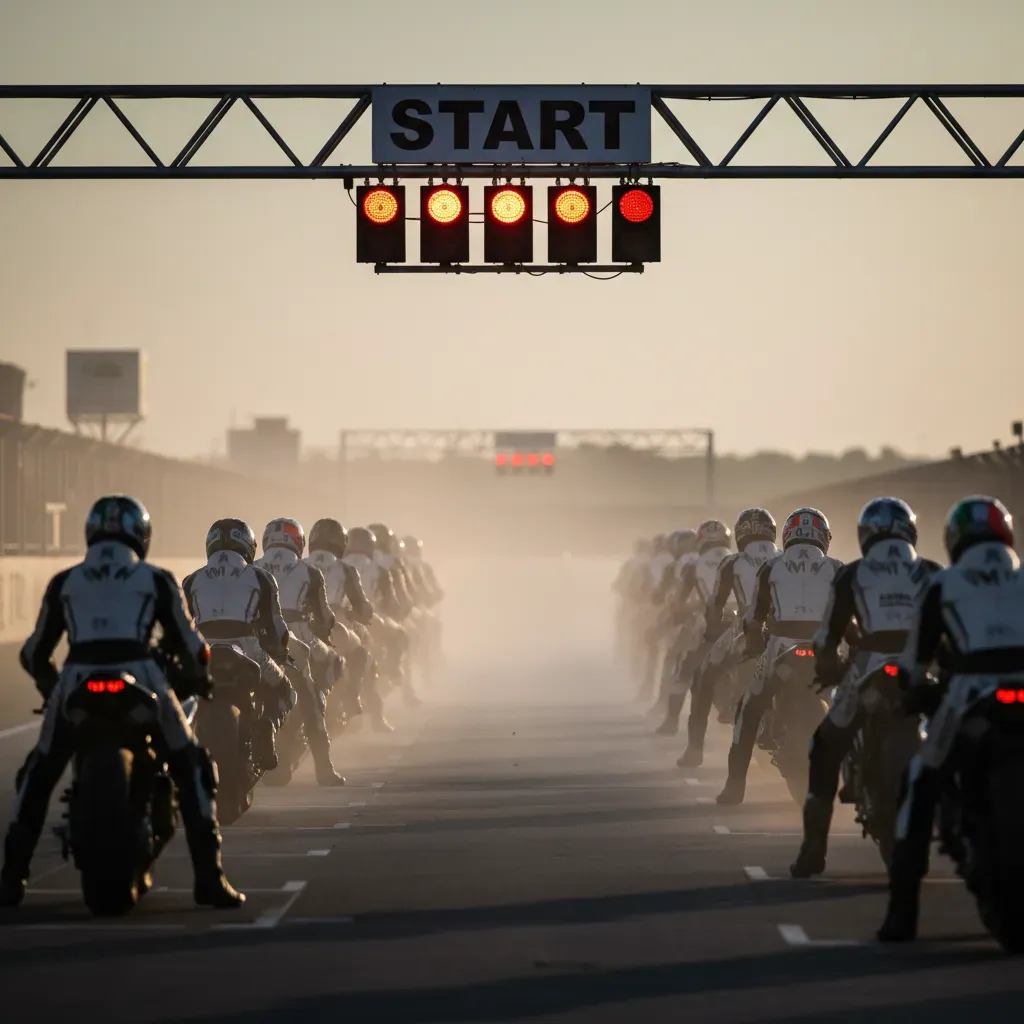
Watch the organised chaos as all the bikes file back into their exact starting positions. This is often the most tense moment of the entire broadcast. You’ll see the riders making final adjustments to their helmets and visors, and you can almost feel the concentration as they stare down the track towards the starting lights. The warm-up is over; the real race is about to begin.
Quick Takeaways
- The warm-up lap (or formation lap) is a single, slow-speed lap completed by all riders just before the race starts.
- Its main purpose is to generate heat in the brand-new tyres, which are useless when cold. Riders weave aggressively to make the tyres hot and sticky.
- It’s also a final chance for riders to check the bike’s systems (brakes, throttle) and assess the track conditions in real-time.
- After the lap, riders reform on the grid in their original starting positions to await the red lights going out.