Jargon Buster
MotoGP Wet Tyres: Racing in the Rain
Ever wondered how MotoGP riders race in the pouring rain? Our jargon-free guide explains wet tyres, how their grooves work, and why they’re essential for grip.
When the Heavens Open, the Real Race Begins
Picture the scene: thousands of fans are packed into the grandstands, the sun is shining, and the world’s fastest prototype motorcycles are screaming around the track. Then, dark clouds gather, and a few drops of rain turn into a torrential downpour. Is the race cancelled? Not a chance. This is where MotoGP gets even more exciting.Instead of heading for cover, teams spring into action. In the Pit laneThe slow lane beside the track where teams work on the bikes and riders enter and exit.Read the full guide →, a flurry of activity begins as they prepare bikes with a special weapon for these treacherous conditions: wet tyres. Forget everything you know about racing in the dry; racing in the rain is a completely different discipline, and it all starts with the rubber.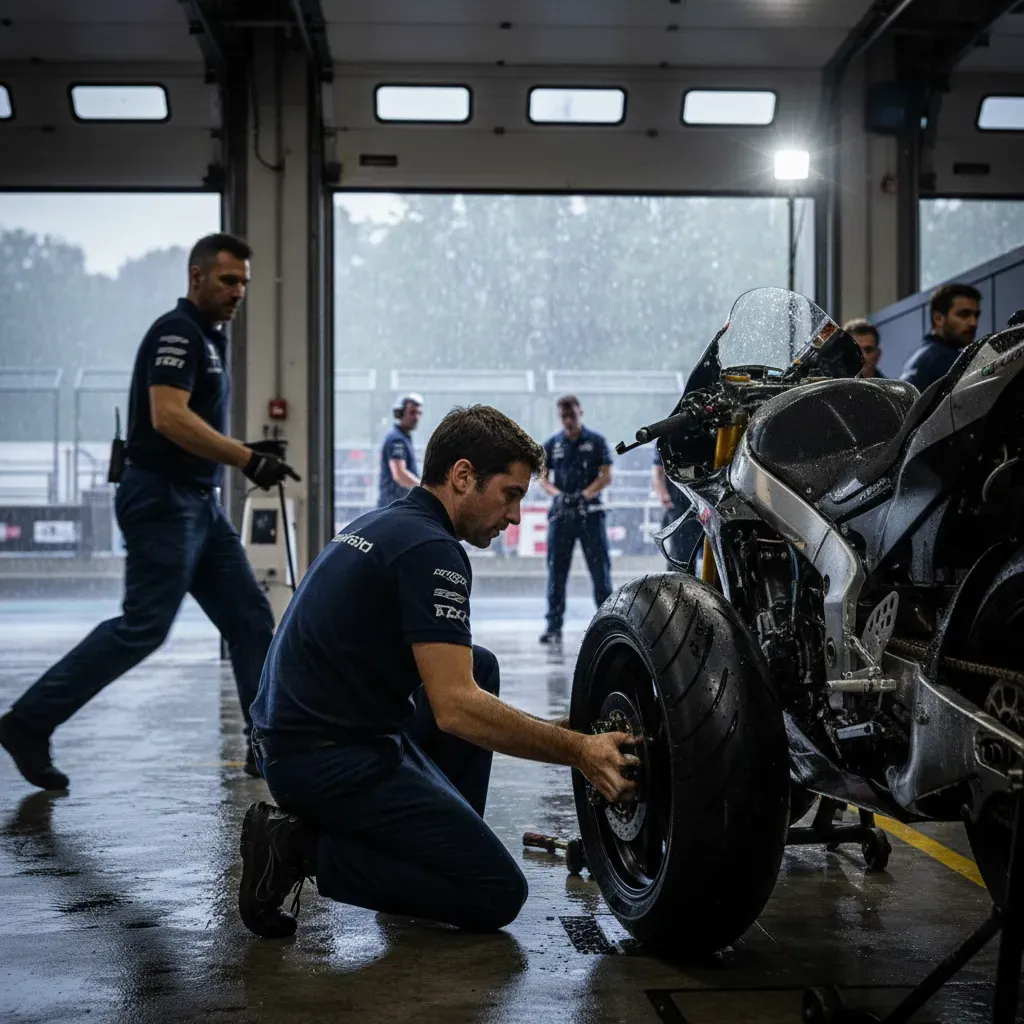
Jargon Buster: Wet Tyres
Wet Tyres are special tyres with deep grooves designed for racing on a wet track. They are the single most important piece of equipment when it starts to rain, allowing riders to maintain control when the circuit is soaked.You’ll hear commentators talk about them constantly as soon as rain is on the forecast. Unlike the smooth, Slick tyresCompletely smooth dry-weather tyres — no tread, so the maximum amount of rubber touches the track for grip.Read the full guide → used in the dry, wet tyres look more like the tyres on your road car, covered in a complex pattern of channels and grooves. This pattern isn’t for decoration; it’s a masterclass in engineering designed to do one crucial job: clear water.
How Do They Actually Work? It’s All About the Grooves
The magic of a wet tyre lies in its tread pattern. These grooves act like tiny water pumps. As the tyre rotates, the channels collect water from the track surface and forcefully eject it out from the sides, away from the tyre. This is vital for maintaining grip.
A motorcycle tyre only has a very small area of contact with the ground at any given moment, known as the contact patch. This is the small patch of rubber, roughly the size of a credit card, that is physically touching the tarmac. In wet conditions, a layer of water can get between this patch and the track, causing a terrifying phenomenon called aquaplaning, where the bike essentially floats on the water with zero grip. The rider becomes a passenger.
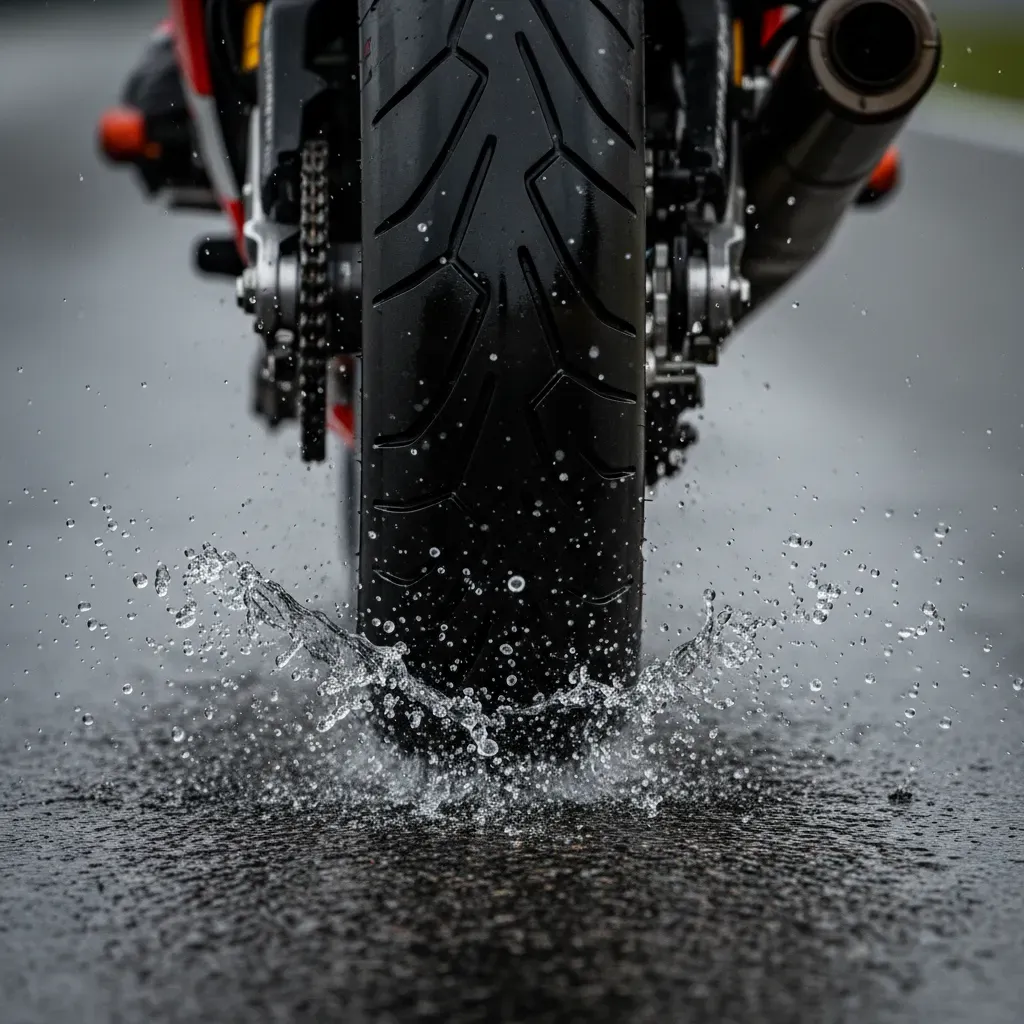
Wet tyre grooves prevent this by clearing the water away from the contact patch, allowing the rubber to bite into the tarmac. The efficiency is staggering; at top speed, a single MotoGP wet tyre can disperse dozens of litres of water every second. This is what gives riders the confidence to lean the bike over and apply the throttle even when the surface is drenched.
Furthermore, the rubber compound itself is much softer than a dry slick tyre. This allows it to generate heat more quickly and offer better mechanical grip on a cold, slippery, wet surface.
Strategy and Timing: The Flag-to-Flag Race
So, when do teams make the switch? In modern MotoGP, if a race starts dry and it begins to rain, officials will declare a ‘wet race’. This allows for what is known as a ‘Flag-to-flagA race where the weather changes and riders pit to switch bikes without the race stopping.Read the full guide →’ procedure. The race isn’t stopped. Instead, riders can choose to enter the pit lane and swap to their second bike, which will be waiting with wet tyres already fitted.
This introduces a massive element of strategy. A rider who pits too early might find the track is still too dry, which will rapidly destroy the soft wet tyres. The grooves that make them so good in the wet cause them to overheat and shred themselves on dry tarmac. Pit too late, and you risk a costly crash on slicks that have no way of clearing the water.
The decision of when to pit can win or lose a race. It’s a high-stakes gamble that tests the nerve of both the rider and the team manager on the pit wall. Watching riders pour into the pits is one of the most chaotic and thrilling parts of a wet race.
The Challenge of a Drying Track
Perhaps the trickiest condition of all is a drying track. The race may have started in the wet, but now the rain has stopped and a Dry lineThe strip of track that dries first as rubber and warmth build up, giving the most grip.Read the full guide → is beginning to appear. The wet tyres that were essential minutes ago are now becoming a liability.
As they run over the dry patches, they overheat, melt, and lose performance dramatically. You will often see riders deliberately moving off the main racing line to find puddles and wet patches, desperately trying to cool their tyres down to make them last until the chequered flag.
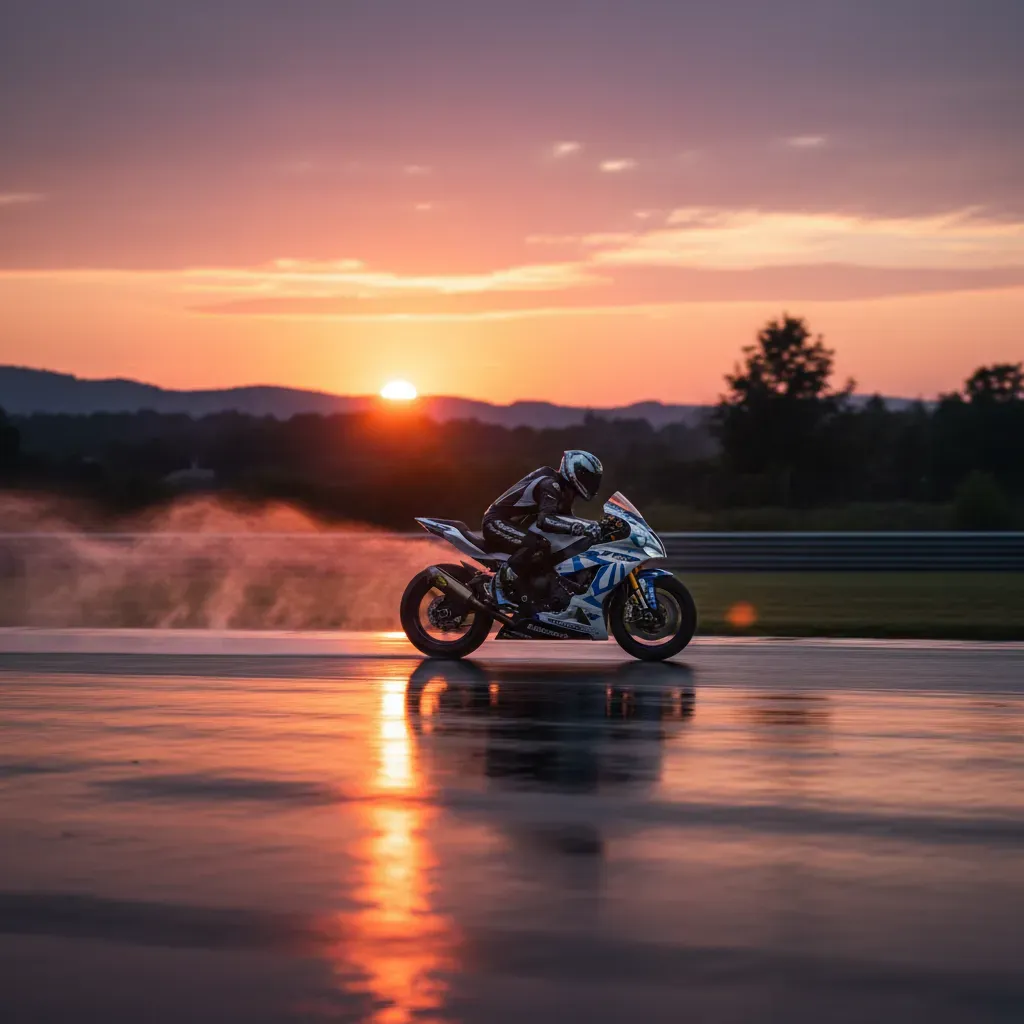
This is where rider skill truly shines. Managing tyre temperature, finding grip where others can’t, and deciding whether the track is dry enough to risk switching back to slicks are the hallmarks of a true master. Some of the most memorable races in MotoGP history have been won by riders who mastered these changing conditions.
Quick Takeaways
- Grooves are Key: Wet tyres have deep grooves (tread) to pump water away from the tyre, preventing ‘aquaplaning’ and maintaining grip on a soaked track.
- Soft Rubber Compound: The rubber used for wet tyres is much softer than dry ‘slick’ tyres, helping it warm up faster and grip a cold, slippery surface.
- Strategy is Everything: In a ‘flag-to-flag’ race, the decision of when to pit to change from slick to wet tyres (or vice versa) is a crucial strategic gamble that can decide the race winner.
- Drying Tracks are a Nightmare: Wet tyres overheat and wear out very quickly on dry tarmac, forcing riders to hunt for wet patches to cool them down.