Tracks
Sepang Track Guide: A Look at the Malaysian GP
Discover the brutal heat and thrilling racing of the Sepang circuit. Our beginner’s guide to the Malaysian MotoGP covers key corners and race day chaos.
Malaysian Grand Prix
Sepang International Circuit
A long, wide circuit and a favourite pre-season test venue — sweeping stadium corners and two big straights, all raced in extreme tropical heat and the ever-present threat of an afternoon downpour.
Schematic layout · not to scale
Watch the last corner, Turn 15. A long right that opens onto the main straight — a strong exit lets a rider slipstream past before the line, so it's where late-race moves are set up. Follow that corner.
The Toughest Test in MotoGP?
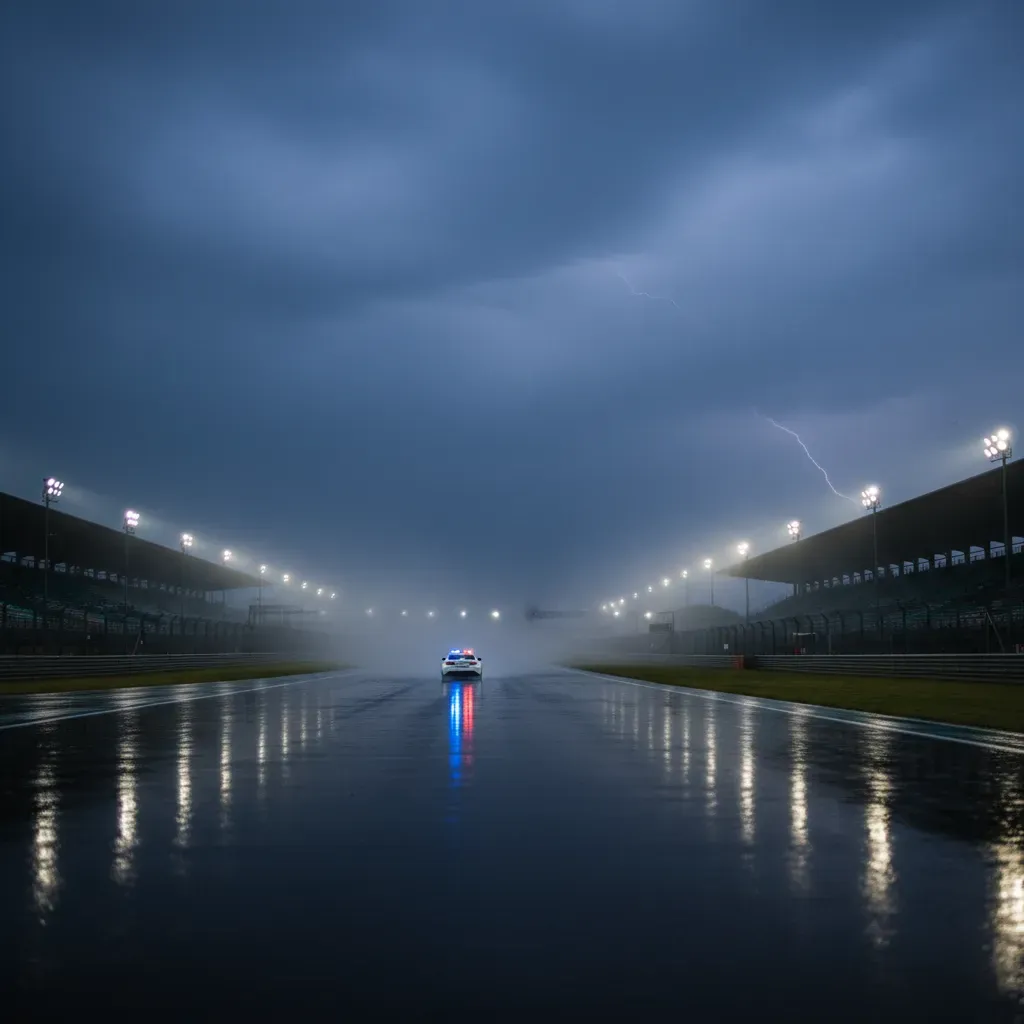
Welcome to the Sepang International Circuit, home of the Malaysian Grand Prix. Forget everything you think you know about a normal race day. Sepang isn’t just a track; it’s a battle against the elements. The heat is suffocating, the humidity is draining, and at any moment, the sky can open up with a tropical downpour of biblical proportions.
This circuit is a modern masterpiece, but its greatest challenge comes from Mother Nature. It pushes riders and their incredible machines to the absolute limit, making victory here one of the most respected on the calendar.
Location and Atmosphere: A Tropical Crucible
Located just outside Malaysia’s bustling capital, Kuala Lumpur, Sepang is famous for its grand scale. The facilities are huge, with a massive main grandstand that provides a fantastic view of the action. But the defining feature is the atmosphere – and we don’t just mean the cheering fans.
The air is thick, hot, and heavy. Riders lose several kilograms in sweat during the race, and the physical demands are immense. This extreme weather is a huge part of the story every single year, often playing a decisive role in who stands on the podium.
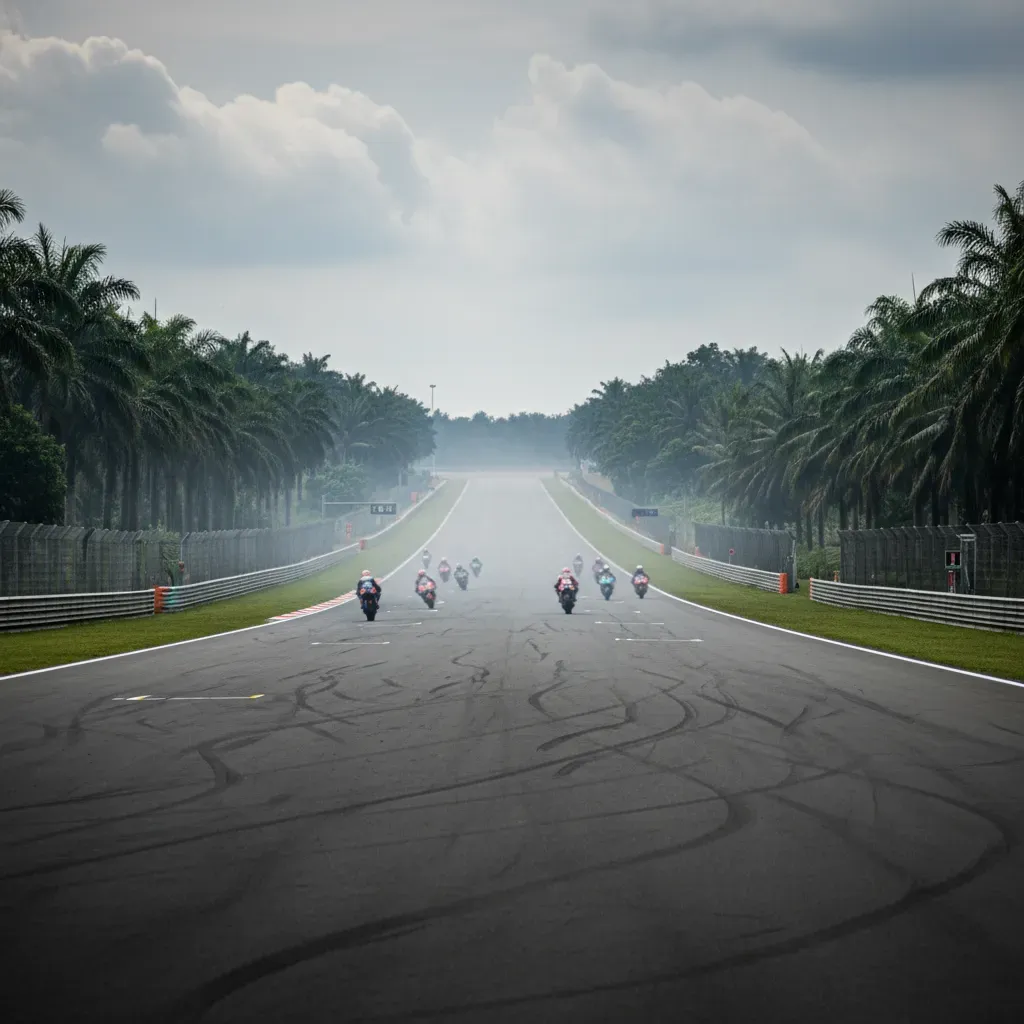
A Lap of Sepang: Speed, Strategy, and Sweat
Sepang was designed by the famous circuit architect Hermann Tilke, and it’s a brilliant blend of fast and slow sections. At 5.5 kilometres long and incredibly wide, it gives riders plenty of room to manoeuvre, which means lots of exciting overtakes.
The Two Monster Straights
The first thing you’ll notice about Sepang are its two enormous straights. One is the start-finish straight, and the other is the back straight, separated by a very slow corner. These sections are nearly a kilometre long, allowing the bikes to reach speeds well over 330 km/h (205 mph).
This is where pure engine power is king. A bike that is slow in a straight line will be a sitting duck here, vulnerable to being passed before the next braking zone. Watch how riders use the SlipstreamThe pocket of calmer air directly behind another bike. Sitting in it means less wind resistance — so you can carry more speed for free.Read the full guide → – tucking in behind another bike to reduce air resistance – to gain an advantage.
The Turn 1 and 2 Complex
After hitting top speed on the main straight, riders have to brake incredibly hard for the first corner. Turn 1 is a slow, tight right-hander that immediately flows into a fast, sweeping left-hander, Turn 2. This complex is a classic overtaking spot.
Riders often dive up the inside into Turn 1 to make a pass, but they have to be careful not to run wide and compromise their line for the much faster Turn 2. It’s a delicate dance of bravery and precision, and a mistake here can cost several positions.
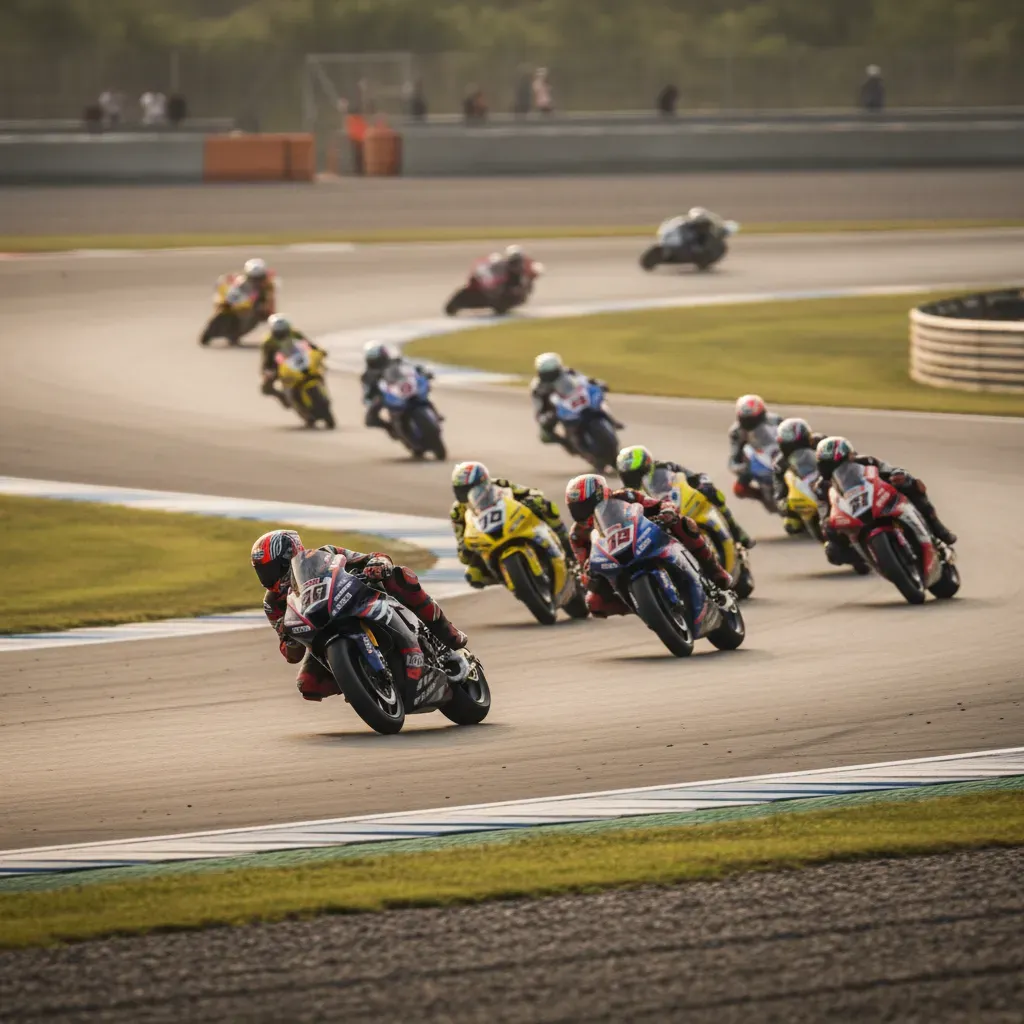
The Final Showdown: Turn 15
The final corner, Turn 15, is one of the most crucial on the entire MotoGP calendar. It’s a **hairpin**, which is a very tight, slow corner that almost doubles back on itself, like the shape of a hairpin. It’s a tricky, slightly off-camber corner that leads back onto the long start-finish straight.
Getting this corner right is vital. A good exit means you carry much more speed all the way down the straight. It’s also a legendary spot for last-lap lunges, where a brave rider can snatch victory from the jaws of defeat just moments before the chequered flag.
What to Expect on Race Day
A race at Sepang is rarely straightforward. The combination of features makes it a fantastic test of a motorcycle’s all-round performance. A team needs a bike with a powerful engine for the straights, but also one with strong brakes and nimble handling for the tight corners.
The heat doesn’t just affect the riders; it tortures the tyres (the rubber rings that are the bike’s only contact with the ground). High track temperatures cause the tyres to wear out faster, forcing riders to manage their pace carefully to survive the race distance.
And then there’s the rain. A sudden downpour can flood the track in minutes, making conditions incredibly dangerous. If it’s too wet to race safely, officials will stop the race by waving a **Red flagA flag that stops the session immediately, usually for a crash or weather.Read the full guide →**. This can cause chaos, sometimes leading to shortened races and unexpected results.
A Beginner’s Viewing Guide
When watching the Malaysian GP, keep an eye on the braking zones into Turn 1 and the final hairpin, Turn 15. These are the hotspots for action. The track’s width encourages bold moves, so expect plenty of passing throughout the field.
Here’s a fun fact: because the conditions are so consistent and challenging, Sepang is a favourite location for teams to conduct pre-season testing. This means they arrive for the race weekend with mountains of data, but the unpredictable weather can throw all that preparation out of the window.
The race also has a special significance for the American Trackhouse Racing team, as Sepang is the home race for their title sponsor. This adds a little extra motivation for them to perform well in front of the local crowd.
Quick Takeaways
- Extreme Conditions: Sepang is defined by its intense tropical heat and humidity, which punishes both riders and tyres, and the constant threat of sudden, heavy rain.
- A Track of Two Halves: The circuit is dominated by two massive straights demanding huge engine power, connected by a series of tight and flowing corners that require excellent braking and handling.
- Overtaking Paradise: Thanks to its incredible width and heavy braking zones like Turn 1 and the final Turn 15 hairpin, Sepang produces some of the most exciting, action-packed racing of the season.
- A True All-Round Test: A bike must be good at everything to win here – fast on the straights, stable on the brakes, and agile in the corners, making it a true measure of a complete MotoGP package.