Jargon Buster
What Does a Yellow Flag Mean in MotoGP?
A simple, jargon-free guide for beginners on what a yellow flag means in MotoGP. Learn why it’s a vital safety signal and what riders must do when they see one.
The Unsung Hero of Race Safety
Imagine watching a thrilling MotoGP race. The bikes are a blur of colour, riders are scraping their knees on the tarmac at impossible angles, and then, you spot it: a flash of bright yellow being waved frantically by the side of the track. What does it mean? In the high-speed world of motorcycle racing, that yellow flag is one of the most important signals a rider can see.
Simply put, a yellow flag is a warning. It’s the universal sign for ‘danger ahead’. When you see one, it means an incident has happened up the track, and riders need to be on high alert.
What is a Yellow Flag?
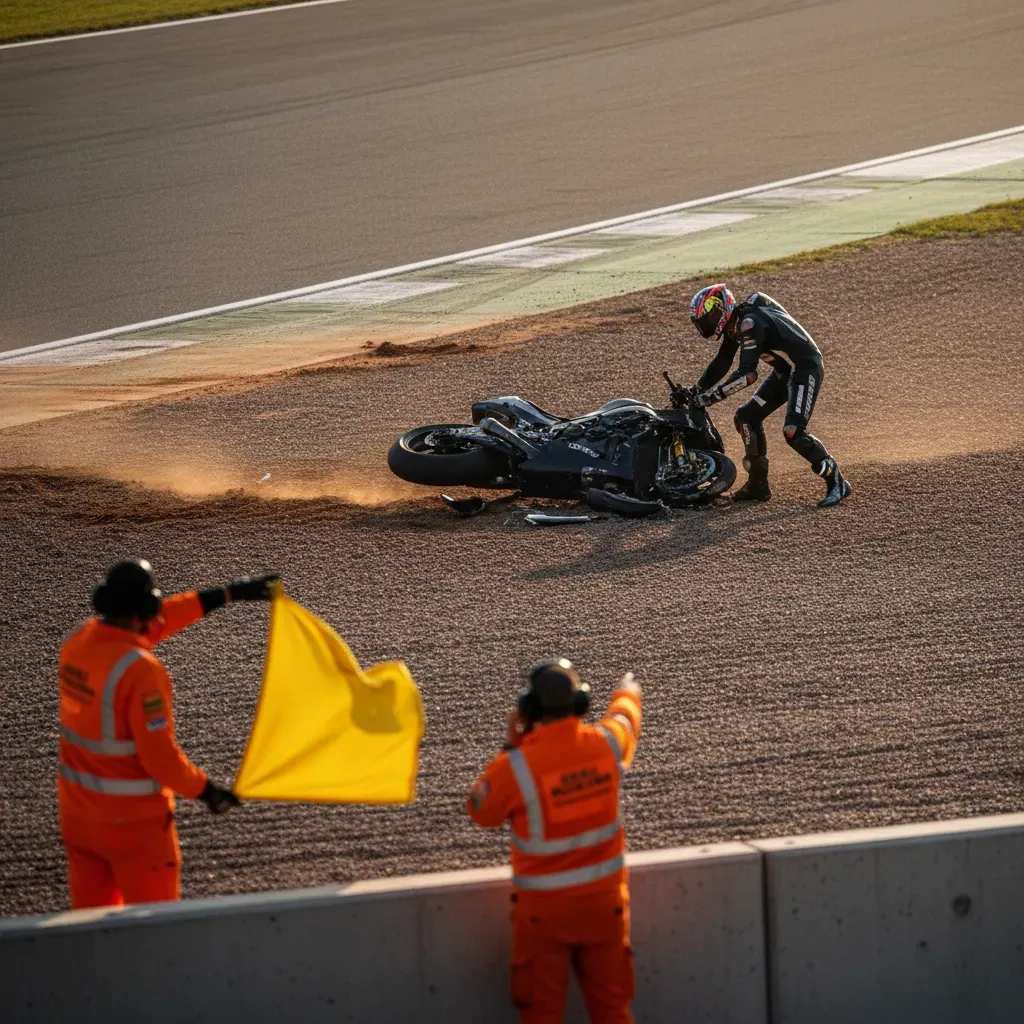
A yellow flag is a warning signal waved by a track marshal to inform riders of a hazard on the track ahead. Track marshals are the highly-trained volunteers positioned in orange overalls at posts all around the circuit. They are the eyes and ears of Race Direction, the team that manages the race, and their first job is to keep the riders safe.
The hazard could be anything from a crashed rider or their motorcycle, to debris on the racing surface, or even a sudden patch of rain on a dry track. The yellow flag is the first and fastest way to communicate this danger to a rider approaching the scene at over 200 mph.
What Must a Rider Do?
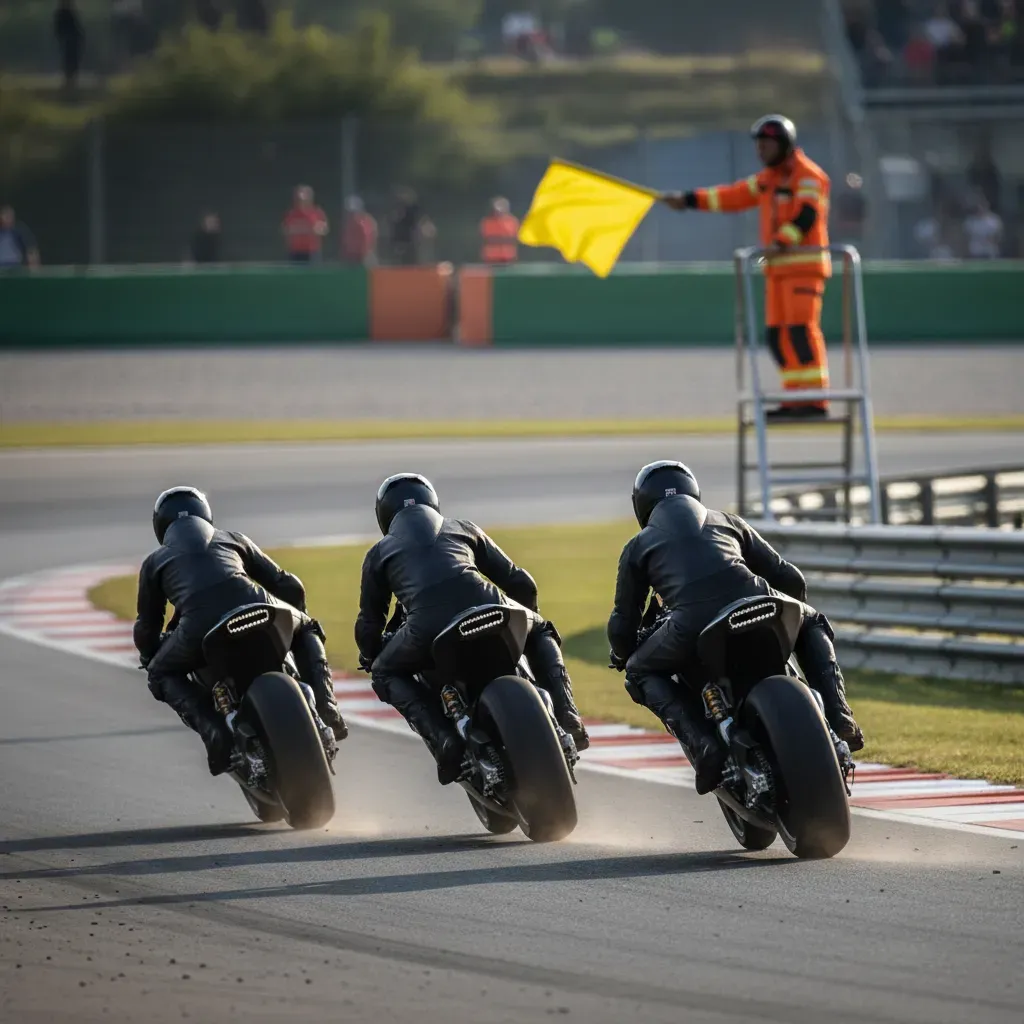
The rules for a yellow flag zone are crystal clear and non-negotiable. When a rider enters a section of the track where yellow flags are being waved, they must immediately slow down and be prepared to change their line. The ‘Dry lineThe strip of track that dries first as rubber and warmth build up, giving the most grip.Read the full guide →’ is the fastest, most efficient path around a corner, but a hazard might be right on it.
Most importantly, overtaking is strictly forbidden in a yellow flag zone. It doesn’t matter if you’re fighting for the lead on the last lap; passing another rider is completely banned until you are past the incident and see a green flag, which signals that the track is clear.
Single vs. Double Yellow Flags
You might sometimes see two yellow flags being waved at the same marshal post. This indicates a more serious situation.
- Single Waved Yellow Flag: This means there’s a hazard on or near the track. Slow down, be prepared to change your line, no overtaking.
- Two Waved Yellow Flags: This means the hazard is much more significant. The track may be partially or fully blocked. Riders must slow down considerably and be prepared to stop if necessary. Again, no overtaking is allowed.
What if a Rider Ignores the Flag?
Ignoring a yellow flag is one of the most serious offences a rider can commit. The potential consequences of failing to slow down for a hazard are huge, not just for the rider themselves, but for the crashed rider and the marshals helping them. Because of this, the penalties are severe.
If a rider is judged to have overtaken under a yellow flag or not slowed down sufficiently, they will be penalised by the FIM MotoGP Stewards. This could be a time penalty added to their final race time, an order to drop one or more positions, or even a ‘ride-through penalty’, where they must travel through the Pit laneThe slow lane beside the track where teams work on the bikes and riders enter and exit.Read the full guide → at a reduced speed, losing a significant amount of time.
A Real-World Example
Let’s paint a picture. Imagine a rider from a US-based team loses the front end of his bike at a fast corner in Japan. He and his bike slide into the gravel trap, but the bike is very close to the edge of the track. The marshals in that sector immediately begin waving yellow flags.
His own teammate is just a few seconds behind, approaching the same corner flat out. He sees the yellow flags, rolls off the throttle, and sacrifices his lap time to navigate the corner safely, giving a wide berth to the crash scene. He loses time to his rivals, but he follows the rules and, more importantly, avoids making a dangerous situation much, much worse.

Why It Matters So Much
Ultimately, the yellow flag is all about safety. At the speeds these riders travel, reaction times are measured in milliseconds. A yellow flag buys them precious seconds to process that something is wrong, adjust their speed, and avoid a secondary accident. It protects fallen riders and allows the heroic track marshals to do their work safely.
So next time you’re watching a race and see those yellow flags waving, you’ll know it’s not just a piece of coloured cloth. It’s a vital link in the safety chain that allows MotoGP riders to push the limits, race after race.
Quick Takeaways
- Yellow Flag = Danger Ahead: It’s a warning signal waved by track marshals to alert riders to a hazard like a crash or debris.
- Slow Down, No Overtaking: When a rider sees a yellow flag, they must reduce their speed, be prepared to change their line, and are strictly forbidden from overtaking.
- Safety is Paramount: The yellow flag system is a cornerstone of motorsport safety, protecting fallen riders and the marshals who assist them.
- Penalties are Severe: Ignoring a yellow flag results in significant penalties, reflecting the seriousness of the offence.