Jargon Buster
MotoGP Tech: The Holeshot Device
Ever wonder how MotoGP bikes launch so fast? Discover the holeshot device, the clever tech that stops wheelies and gives riders the perfect start.
That Explosive Start? There’s a Secret to It.
Picture the start of a MotoGP race. The lights go out, and twenty-two of the world’s most powerful motorcycles unleash fury in a deafening roar, hurtling towards the first corner. It’s pure chaos, and getting ahead in those first few seconds is vital. The secret weapon every single rider uses for that perfect launch is called a HoleshotGetting to the first corner in the lead off the start line.Read the full guide → device.
It’s a deceptively simple piece of engineering that has completely changed the start-line dynamics of Grand Prix racing. Without it, riders simply couldn’t use all the incredible power their bikes have to offer.
Jargon Buster: The Holeshot Device
Holeshot Device: A system that temporarily lowers a MotoGP bike’s suspension to help it launch off the starting line faster.
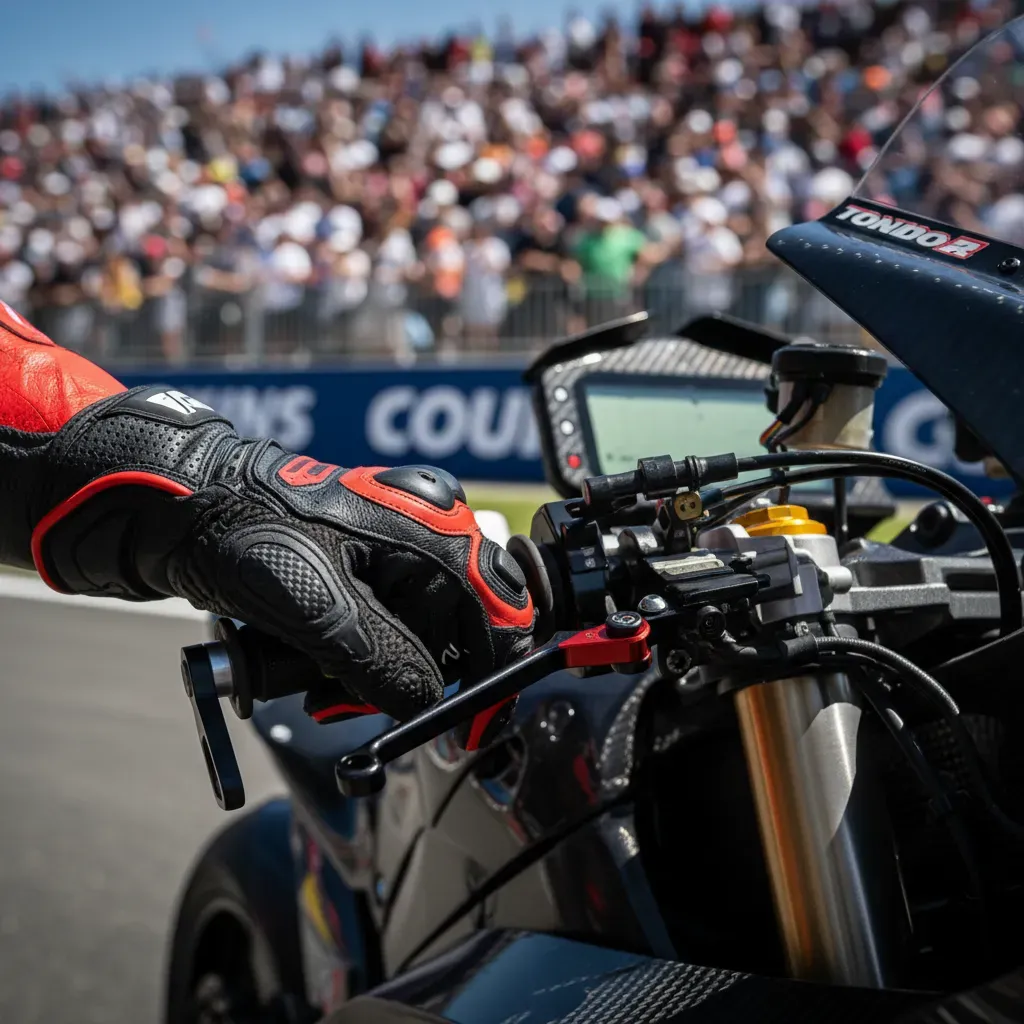
Think of it as a ‘squat’ button for the bike. Before the race begins, you’ll see riders fiddling with levers or buttons on their handlebars. They are engaging the holeshot device, which mechanically compresses and locks the rear suspension (and often the front, too) into a much lower position.
This makes the whole motorcycle sit closer to the ground, ready for that explosive start. Once the rider brakes hard for the first corner, the force of the braking automatically deactivates the system, and the bike’s suspension returns to its normal height and behaviour.
Why Lowering the Bike is So Important
It’s all about managing weight and power. When you accelerate aggressively on a motorcycle, the weight transfers to the back, causing the front wheel to lift off the ground. This is called a wheelie.
While a wheelie looks cool, it’s the enemy of acceleration in a race. A bike’s sophisticated electronics, known as traction control, see the front wheel lifting and instantly cut the engine’s power to bring it back down. Less power means slower acceleration.
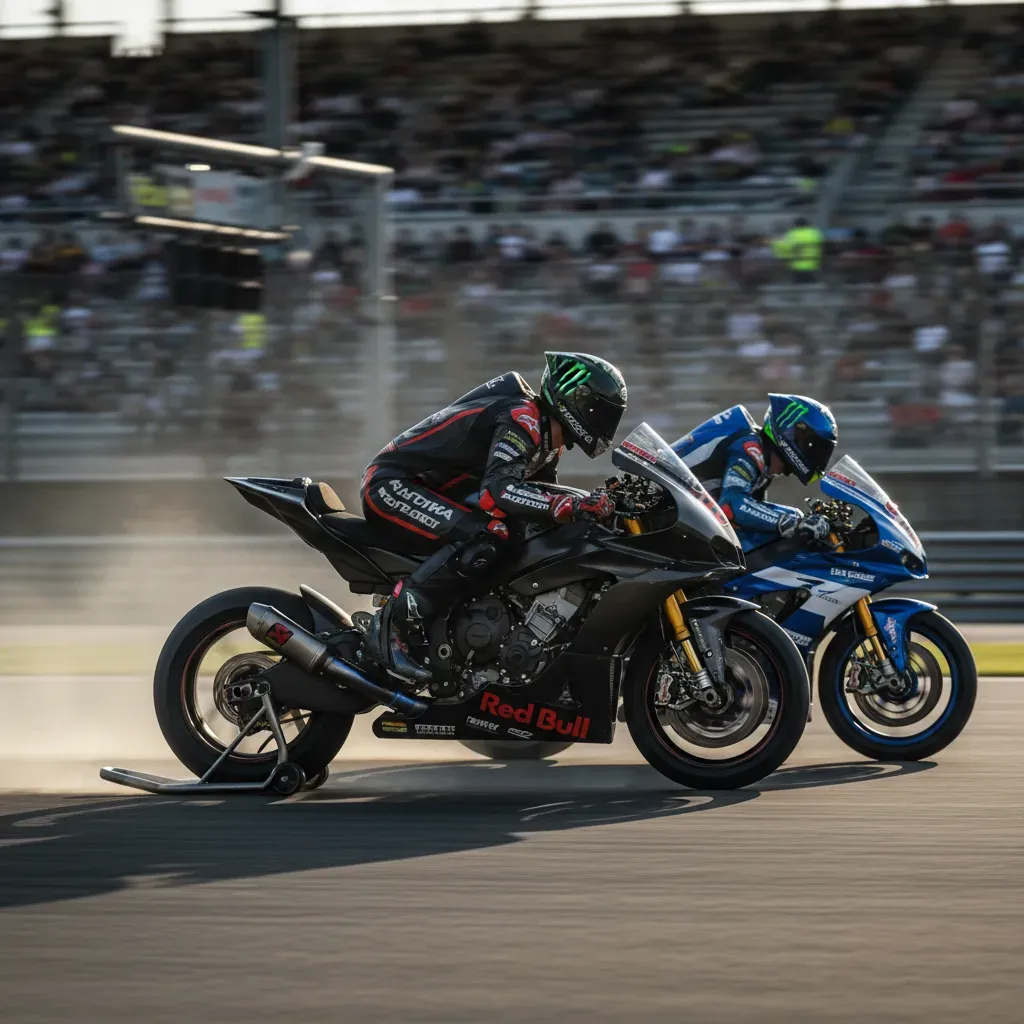
By lowering the bike with the holeshot device, the bike’s centre of gravity (its main balance point) is also lowered. A lower centre of gravity makes the bike much more stable and far less likely to do a wheelie. This allows the rider to use full throttle, unleashing all 300 horsepower and converting it into pure forward motion instead of wasting energy lifting the front tyre into the air.
From Start-Line Trick to In-Race Weapon
The technology was so effective that engineers quickly figured out how to use it during the race, not just at the start. This evolution is often called a ‘Ride-height deviceA system that lowers the bike on corner exit and straights for better drive and lower drag.Read the full guide →’.
Using a button on their handlebar, riders can now lower the rear of the bike as they exit a corner and accelerate down a straight. Just like at the start, this lowers the centre of gravity, prevents wheelies, and helps them put more power down for incredible drive onto the next corner.
What started as a clever mechanical trick for the perfect getaway has become a crucial part of a rider’s toolkit for every single lap. It’s a perfect example of the constant, clever innovation that defines MotoGP.
Quick Takeaways
- A holeshot device is a system that lets a rider mechanically lower their bike’s suspension before the start of a race.
- Lowering the bike helps prevent the front wheel from lifting (a wheelie) under hard acceleration.
- By stopping wheelies, the device allows the rider to use more of the engine’s power for a much faster launch off the line.
- The same technology, often called a ride height device, is now used during the race to improve acceleration out of corners.