Jargon Buster
MotoGP Tech: What is a Ride-Height Device?
Ever see a MotoGP bike squat down on a straight? That’s the ride-height device. Learn how this simple-sounding tech gives riders a huge speed advantage.
The Squat and Rocket
You’re watching a MotoGP race, and as a rider blasts out of a slow corner, you see the back of their bike suddenly drop down. It looks like the suspension has collapsed for a second before the bike rockets down the straight like it’s been fired from a cannon. What you’ve just seen is the single most important piece of modern MotoGP technology in action: the ride-height device.
A ride-height device is a system that allows a rider to temporarily lower the rear of their motorcycle during a race. By dropping the bike’s overall height, it gains a massive advantage in acceleration, fundamentally changing how riders get their power to the ground.
It All Started with the Holeshot
To understand the ride-height device, we first have to talk about its ancestor: the Holeshot deviceA gadget that squats the bike down at the start for a harder launch off the line, then releases.Read the full guide →. For years, engineers have been fighting one major problem at the start of a race: the wheelie. A wheelie is when the front wheel lifts off the ground under hard acceleration. While it looks spectacular, it’s the enemy of a fast start.
To combat this, teams invented the HoleshotGetting to the first corner in the lead off the start line.Read the full guide → device, a simple mechanism used only for the race launch. Before the lights go out, a mechanic or the rider manually compresses the front and/or rear suspension and locks it in place. This lowers the bike’s centre of gravity (the imaginary point where the bike’s total weight is balanced). A lower centre of gravity makes the bike much more stable and far less likely to wheelie, allowing the rider to use full throttle for a perfect getaway. The device would then automatically disengage the first time the rider braked hard for Turn 1.
From One-Time Trick to All-The-Time Weapon
For a while, that was it. A clever gadget for the start. But then, engineers at Ducati had a game-changing idea: what if the rider could use that ‘squatting’ effect not just at the start, but during the race?
This led to the creation of the modern, dynamic ride-height device. Instead of being a one-use-per-race tool, it became a system the rider could activate multiple times every single lap. The target was no longer just the start line, but the exit of every slow corner leading onto a straight.
How Does It Actually Work?
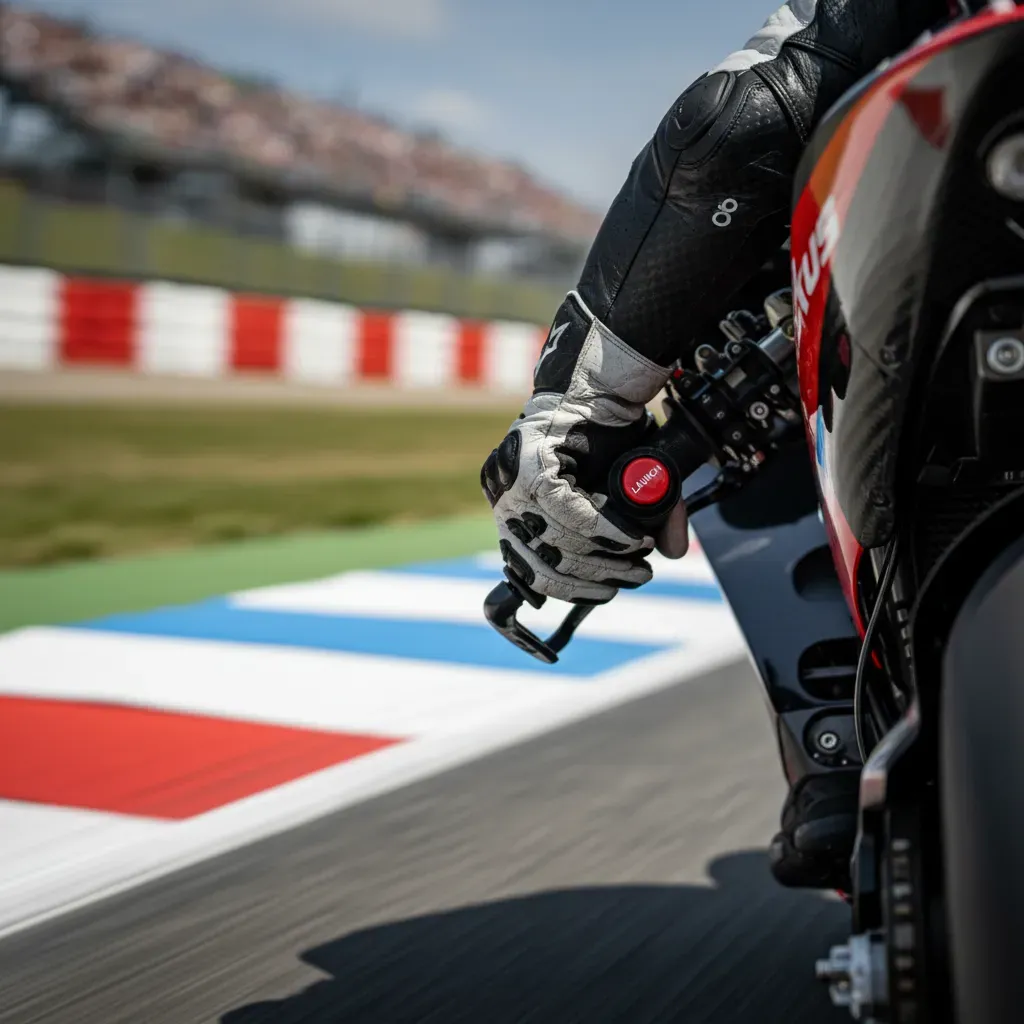
The system is surprisingly straightforward in principle. The rider has a button or a small lever on the left handlebar. As they prepare to exit a corner, they activate it. This engages a hydraulic or mechanical system that allows the rear suspension to compress and then locks it in that lowered position.
The bike stays ‘squatted’ as the rider unleashes the engine’s full power down the straight. When it’s time to slow down for the next corner, the simple act of braking hard is enough. The immense force of deceleration on the suspension automatically releases the lock, and the bike pops back up to its normal ride height, ready to handle the corner.
Why Is It Such a Big Deal?
The benefit is all about defeating the wheelie. A modern MotoGP bike has over 300 horsepower, and the main thing stopping a rider from using it all is the front tyre’s relationship with the tarmac. The bike’s onboard computer, or Engine Control Unit (ECU), has sophisticated anti-wheelie software. When it detects the front wheel lifting, it cuts engine power to bring it back down. This keeps the bike safe, but it also slows the rider down.
The ride-height device is a brilliant mechanical workaround. By lowering the rear of the bike, it physically changes the bike’s geometry and lowers its centre of gravity, making it much harder to wheelie in the first place. Because the bike is now less prone to lifting its front wheel, the anti-wheelie electronics don’t have to intervene as much. The rider can apply the throttle more aggressively and earlier, getting a huge advantage in acceleration onto the straight. It’s free performance, and in a sport decided by thousandths of a second, it’s an absolute game-changer.
How to Spot It on TV
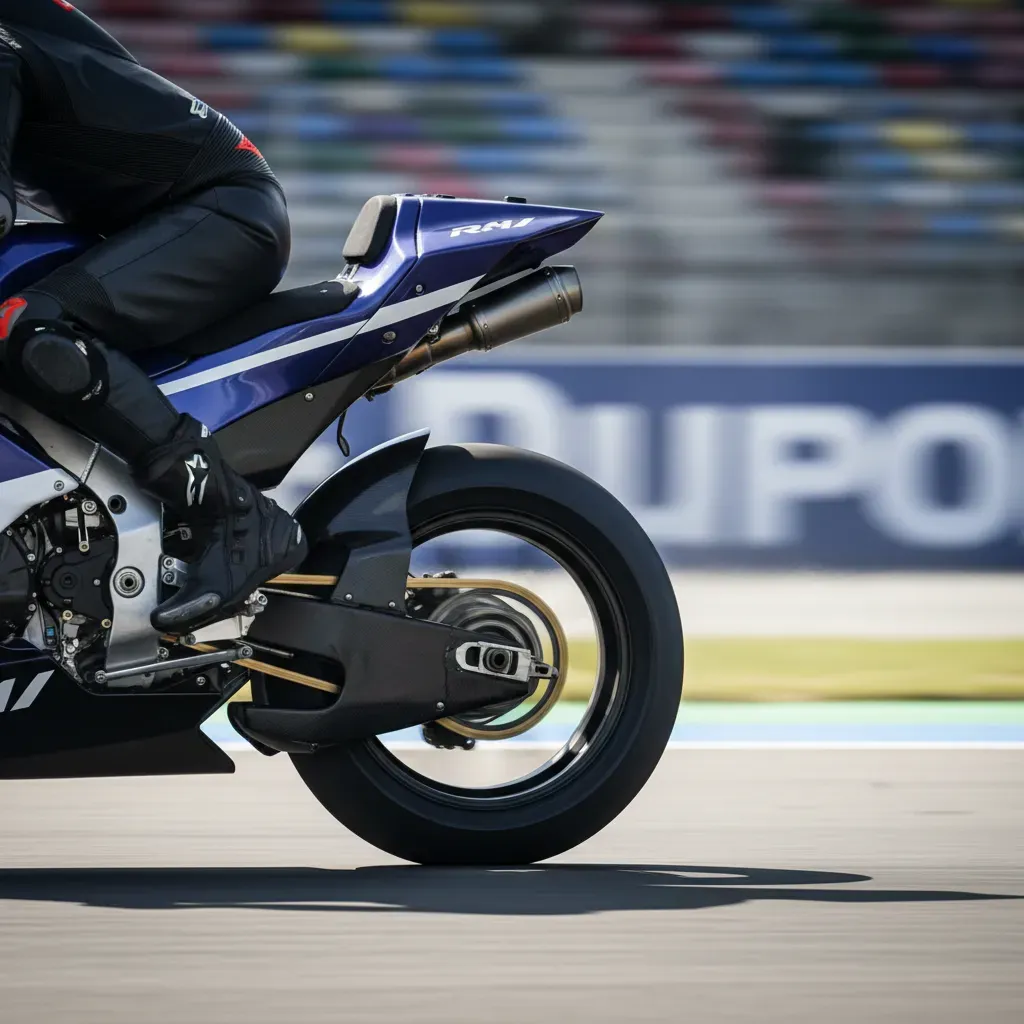
Next time you watch a race, focus on a rider as they come through the final, slow corner before a long straight. Look closely at the gap between the rear tyre and the tail unit of the bike. As the rider straightens up and gets on the power, you will see that gap shrink in an instant. The entire rear of the bike will visibly drop, and it will stay low all the way down the straight. It’s a subtle but defining visual of modern Grand Prix racing.
Quick Takeaways
- A ride-height device lowers the rear of the bike to prevent wheelies and allow for harder acceleration.
- It evolved from the ‘holeshot device’, which was only used for the start of the race.
- Riders activate it with a handlebar button when exiting corners to get a massive speed advantage on the following straight.
- The device automatically disengages under braking, returning the bike to its normal height for cornering.
- It’s one of the most significant technological developments in recent MotoGP history.