Jargon Buster
What is a Holeshot in MotoGP?
Ever heard commentators scream ‘holeshot’ and wondered what it means? We break down this crucial race-start term in simple, jargon-free English.
What is a Holeshot in MotoGP?
The holeshot is when a rider gets the best start from the grid and leads the entire pack of riders into the very first corner of the race. It’s the ultimate launch, a split-second combination of skill and nerve that sets the tone for the entire Grand Prix.
Think of it as the explosive 100-metre Sprint raceA short Saturday race over half the distance, awarding points to the top nine finishers.Read the full guide → at the beginning of a marathon. It doesn’t guarantee a race win, but it puts the rider in the perfect position to control everything that follows. When the lights go out, this is the first, crucial battle.
When Will I Hear This Term?
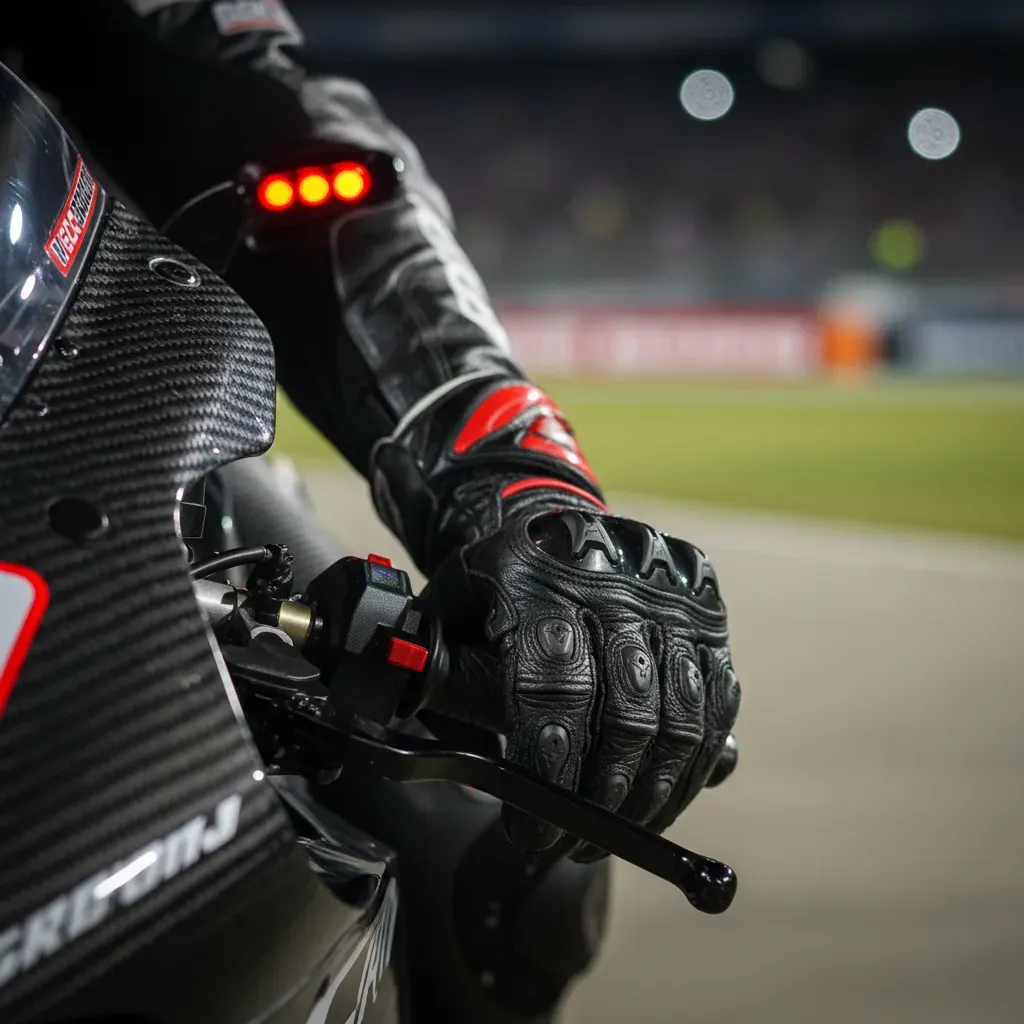
You’ll hear commentators shout “holeshot!” in the very first, frantic seconds of every single race. As the five red lights extinguish and twenty-plus 1000cc beasts scream off the grid (the starting line-up for the race, organised from fastest to slowest based on QualifyingThe timed sessions that set the starting order, split into Q1 and Q2 for the front rows.Read the full guide → times), all eyes are on that first corner.
The broadcast will focus intensely on who reacts quickest, who gets their bike’s power transferred to the tarmac perfectly, and who emerges from that initial chaotic drag race in first place. That rider is the one who has “grabbed the holeshot,” a term borrowed from off-road motocross racing where it describes the first rider through a hole in the fence or marker at the start.
Why Does the Holeshot Matter So Much?
Getting the holeshot is a massive advantage, and it’s about so much more than just the glory of being in the lead for a few seconds. It’s about taking immediate control and escaping the inevitable chaos of the pack.
Leading into turn one means you have a clear, unobstructed track ahead of you. There’s no one in front to block your path or force you to adjust your speed. You get to ride your own race, choose the perfect, fastest Dry lineThe strip of track that dries first as rubber and warmth build up, giving the most grip.Read the full guide → (the ideal path through a corner to maintain maximum speed) without any interference. Commentators call this having ‘clean air’.
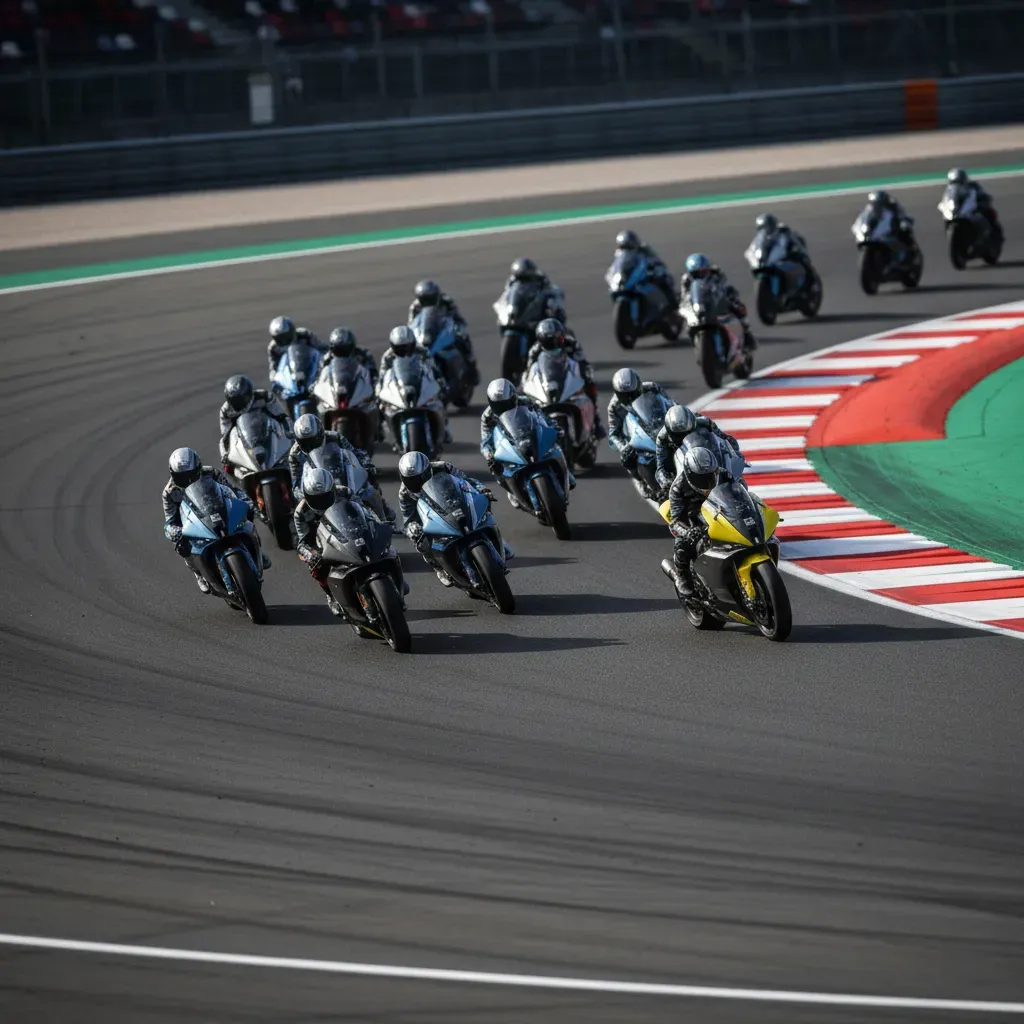
Behind the leader, the situation is the complete opposite. The pack is a frantic, compressed mess of bikes and riders. Everyone is bunched up, fighting for the same tiny piece of tarmac, braking as late as possible and jostling for position. It’s the most dangerous part of the race and where accidents are most likely to happen. Nailing the holeshot means you are safely ahead of all that danger, allowing you to focus purely on hitting your marks and building a gap.
Imagine a rider who secured Pole positionFirst place on the starting grid, earned by the fastest qualifying lap.Read the full guide → (the very first spot on the grid, earned by being the fastest in qualifying). If they nail the holeshot, they can immediately start to dictate the pace of the race. They can manage their tyres and fuel from the front, without pressure from rivals trying to overtake them at every corner. Their race strategy can unfold exactly as planned.
It’s Not Just About Power
You might think the rider with the most powerful bike or the one starting from pole position is guaranteed the holeshot. But it’s far more complicated and nuanced than that. The race start in MotoGP is a delicate and difficult art form.
It’s a brutal test of rider skill, combining several key elements in a single, fluid motion:
- Reaction Time: Riders have to release the clutch at the precise instant the lights go out. A fraction of a second too early results in a ride-through penalty (a costly trip through the Pit laneThe slow lane beside the track where teams work on the bikes and riders enter and exit.Read the full guide →); a fraction too late and you’re swallowed by the bikes behind you.
- Clutch Control: Unlike a car, riders manually control the clutch with a lever on their left handlebar. They have to feed the bike’s 300 horsepower to the rear tyre with immense precision. Too much power and the front wheel will lift into a dramatic wheelie (lifting the front wheel off the ground), which looks cool but wastes precious forward momentum. Too little power, and the bike will bog down, losing vital time.
- Body Position: You’ll see riders hunched as low as possible over the fuel tank. This is to keep weight over the front wheel, preventing it from lifting, and to make themselves as small and aerodynamic as possible.
This complex balance is why a rider can launch from fifth or sixth on the grid and still snatch the holeshot. Contrast the pole-sitter’s perfect scenario with a rider known for aggressive starts from the second row. While the rider on pole has a slightly hesitant getaway, perhaps with a little too much wheelie, our aggressive starter gets everything perfect. They slice through the front row before anyone can react and dive into the first corner in the lead, completely rewriting the script for the opening lap.
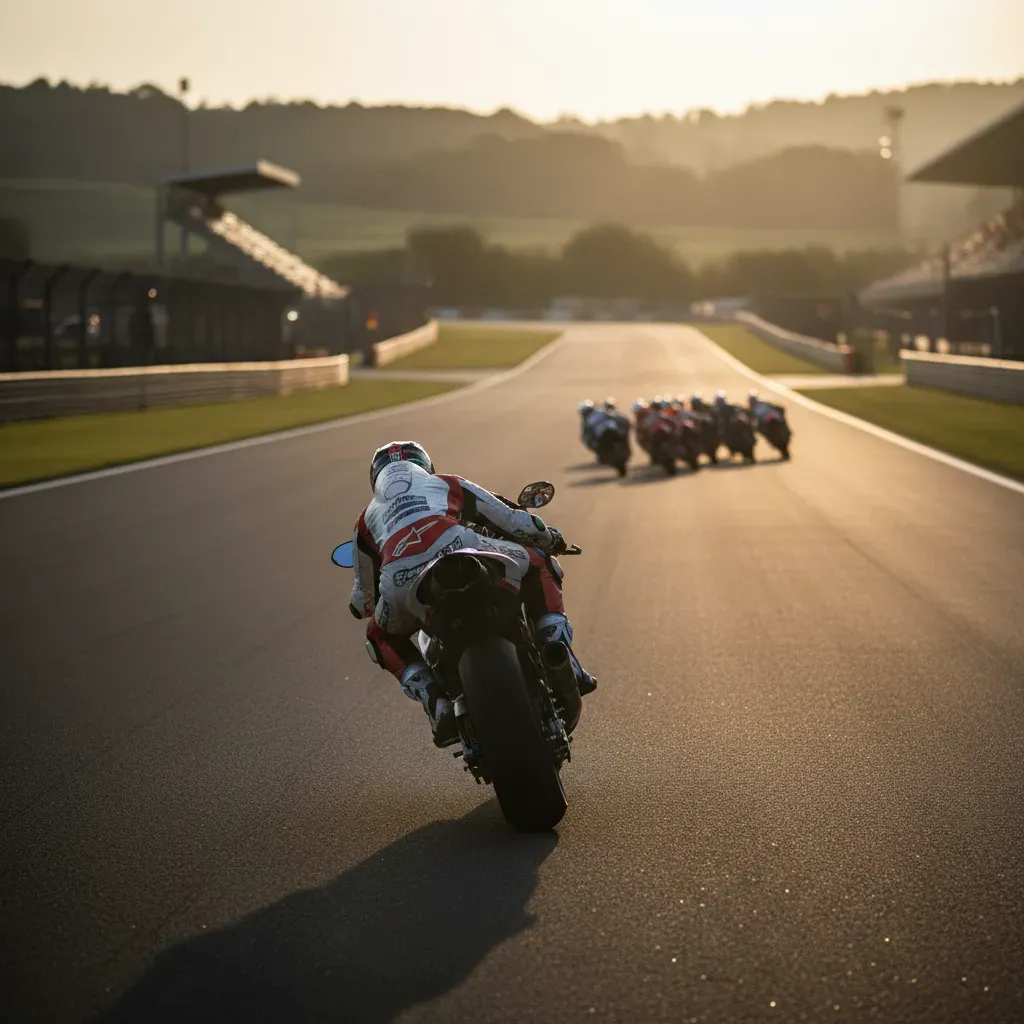
On the flip side, a rider on pole can have their race ruined by a poor start. If they get bogged down, they can find themselves shuffled back to fifth or sixth place by the time they reach the first corner. Their race has just become infinitely harder, as they now have to fight their way back through a field of the world’s best and most determined riders, using up their tyres in the process.
The holeshot is a pure display of a rider’s skill under immense pressure. It’s the first battle in a long war, and it can set the tone for the entire Grand Prix, making it one of the most exciting moments in all of motorsport.
Quick Takeaways
- The holeshot is about leading the entire pack of riders into the very first corner of the race right after the start.
- It’s a huge advantage, as it allows the rider to escape the dangerous midfield pack and ride in ‘clean air’ on their own terms.
- Nailing the holeshot is a skill based on perfect reaction time and clutch control, not just having the fastest bike or starting from pole position.
- A great start can make a rider’s race, while a poor one can ruin it before the first lap is even over.