Tracks
Mandalika Guide: Your First Look at the Indonesian GP
Your jargon-free guide to the Indonesian GP. Discover MotoGP’s tropical paradise at Mandalika, its key corners, and what to watch for in the race.
Indonesian Grand Prix
Mandalika Circuit
A spectacular seaside circuit on the island of Lombok — a flowing, modern layout raced in fierce tropical heat, where staying cool and managing the tyres is half the battle.
Schematic layout · not to scale
Watch the braking into Turn 1. Down the long front straight the bikes hit top speed, then stop hard for a tight right — the main overtaking spot, and the point where the searing heat starts to bite. Follow that corner.
Welcome to Paradise, Welcome to MotoGP
Imagine the world’s fastest motorcycle racers swapping chilly European PaddockThe fenced-off working area behind the pits where teams, hospitality and motorhomes are based.Read the full guide → for a sun-drenched tropical island. That’s the Indonesian Grand Prix. Held at the stunning Mandalika International Street Circuit on the island of Lombok, this race is a vibrant, colourful, and utterly unique stop on the MotoGP calendar.
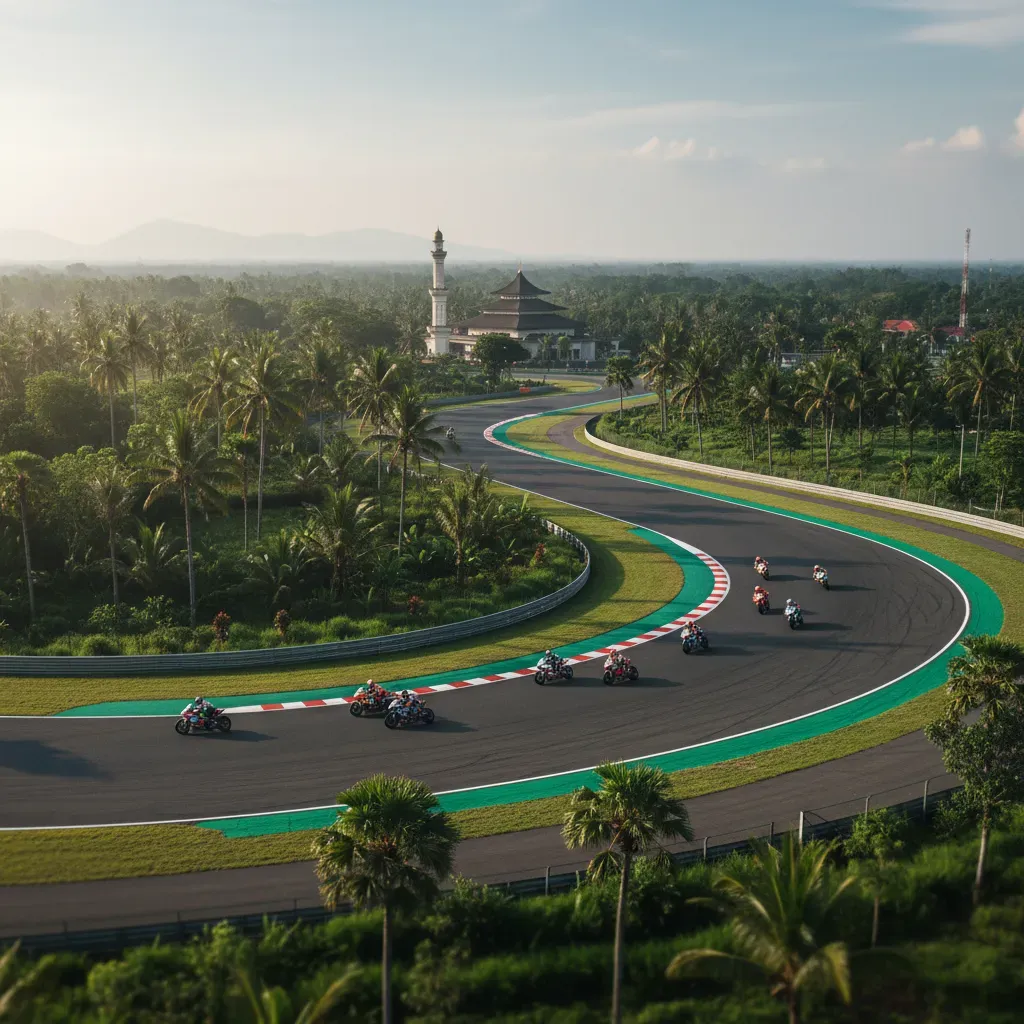
Forget everything you think you know about traditional race tracks. Mandalika is different. It’s a purpose-built circuit that winds through a resort area, with palm trees and breathtaking coastal views. It combines the speed of a permanent track with the feel of a special event, and the local fans bring an energy that is simply off the charts.
Location and Atmosphere: More Than Just a Race
Lombok is an island east of Bali, known for its pristine beaches and lush green hills. The circuit is part of a larger tourism development, meaning the facilities are brand new. But the real soul of this event comes from the Indonesian supporters, whose passion for MotoGP is legendary.
The moment the teams arrive, they are greeted like rock stars. The grandstands are a sea of colour and noise from Friday PracticeSessions before qualifying where riders set up the bike; the combined times decide who goes straight to Q2.Read the full guide → right through to the Sunday race. This isn’t just a sporting event; it’s a national celebration.
The Circuit: Fast, Flowing, and Fiercely Hot
Mandalika is what’s known as a ‘street circuit’, but it’s not like Monaco with its tight, slow streets. It was designed from the ground up for motorcycle racing, featuring wide sections, extensive run-off areas for safety, and a layout that encourages high speeds and flowing lines.
The track is 4.3 kilometres (about 2.7 miles) long and features 17 corners. Its defining characteristic is its fast, sweeping nature. Riders spend a lot of time leaned over at incredible speeds, testing the limits of their tyres and their own courage. The surface itself can be a major talking point, as its location means dust and dirt can settle on it between events, making the early practice sessions a slippery affair.
Key Corners to Watch
While every corner is a challenge, a few sections at Mandalika really stand out. These are the places where races can be won or lost, and where you can truly see the skill of a MotoGP rider.
The Ultimate Test: Turns 5, 6, and 7
This is a breathtakingly fast sequence of right-hand corners that demands absolute precision. Riders enter this section at high speed and must maintain their momentum, flowing from one corner to the next in a seamless, elegant dance. There’s no time to rest.
Watch how the riders use their whole body to guide the bike, making tiny adjustments to stay on the perfect Dry lineThe strip of track that dries first as rubber and warmth build up, giving the most grip.Read the full guide → (the fastest, most efficient path through a corner). Getting this section right is crucial for a good lap time; a small mistake here can cost valuable tenths of a second.
The Overtaking Hotspot: Turn 1
After blasting down the long start-finish straight, riders have to slam on the brakes for the sharp right-hander at Turn 1. This is a classic heavy braking zone, where a bike decelerates from over 300 km/h to under 100 km/h in just a few seconds. It’s one of the best places on the track to see overtaking moves.
A brave rider can dive down the inside of a rival here, but they have to be careful. Braking too late means they’ll run wide and lose the position, or worse, cause a collision. It’s a game of nerve and judgement.
The Final Big Stop: Turn 10
Similar to Turn 1, Turn 10 is another hard braking zone at the end of a fast straight. This corner is critical because it leads into the final, more technical part of the lap. It’s another prime opportunity for a last-gasp overtake.
The challenge here is that riders are braking hard while also preparing to turn. It’s a point of huge stress for the front tyre, and you’ll often see the rear wheel lift slightly off the ground under the extreme braking forces. It’s a spectacular sight.
Typical Race Characteristics
Racing in Indonesia isn’t just about speed; it’s about survival. The conditions here push riders and machines to their absolute limits.
The Heat and Humidity
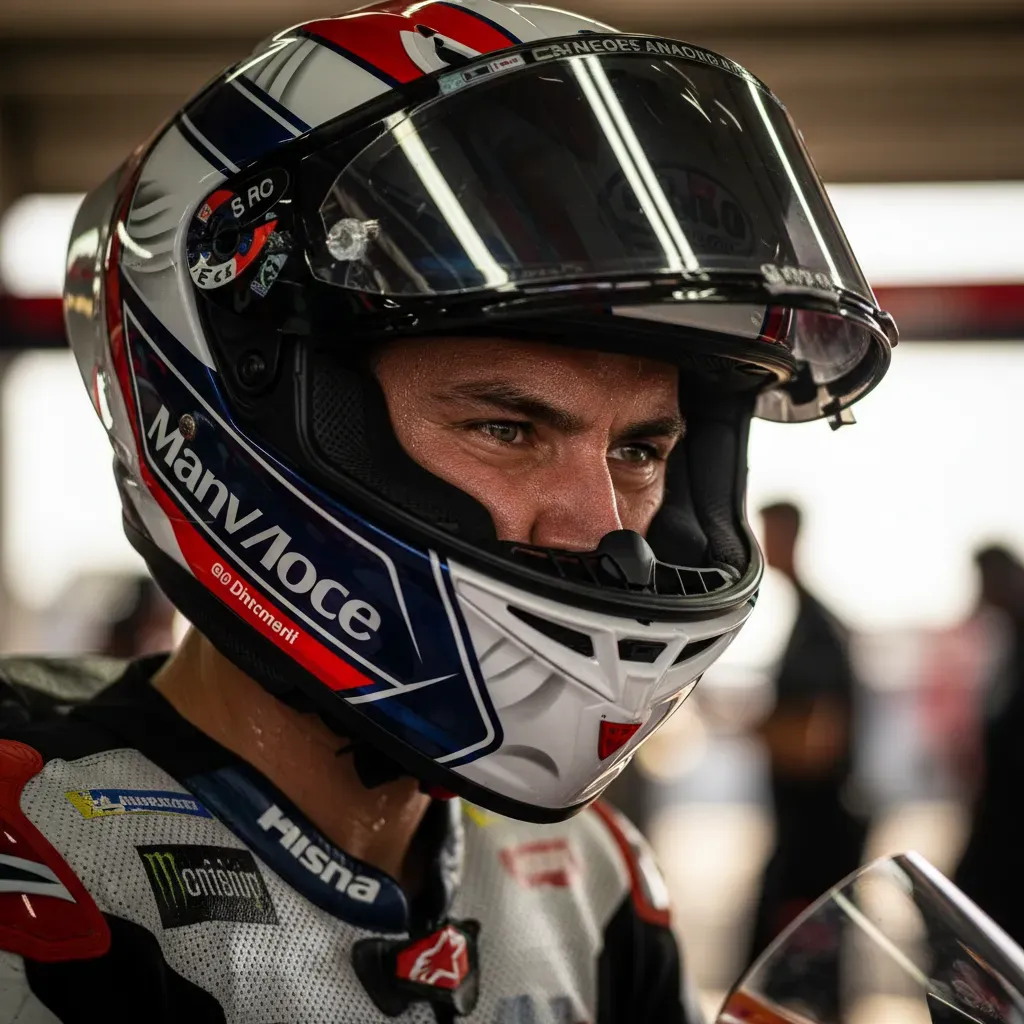
The biggest factor at Mandalika is the oppressive heat and humidity. Track temperatures can soar above 50°C, and inside their thick leather suits, riders can lose several litres of sweat during a race. This extreme physical demand can lead to fatigue and mistakes in the closing laps.
This heat also has a huge effect on the bikes, especially the tyres. High temperatures cause tyres to wear out faster, a process called Tyre degradationThe gradual loss of grip as a tyre wears and overheats through a race.Read the full guide →. Managing the tyres, and making sure they still have grip at the end of the race, is a key part of the strategy.
Sudden Tropical Downpours
Being in the tropics means the weather can change in an instant. A bright, sunny day can turn into a torrential downpour with little warning. If it rains during a race, it will be declared a ‘wet race’, and riders may be allowed to enter the Pit laneThe slow lane beside the track where teams work on the bikes and riders enter and exit.Read the full guide → and switch to a bike fitted with special Wet tyresGrooved tyres that channel water away so the bike can grip a wet track.Read the full guide →.
This chaos, known as a Flag-to-flagA race where the weather changes and riders pit to switch bikes without the race stopping.Read the full guide → race, can completely shuffle the order and often leads to surprise winners. It adds a thrilling layer of unpredictability to the weekend.
A Story to Follow: Marquez and Mandalika
Every circuit has its stories, and for Mandalika, one of the biggest involves superstar rider Marc Marquez. It was here that he suffered a monumental crash in 2022, a high-speed accident that had major consequences for his season and career.
Whenever he returns, all eyes are on him. Watching how a rider tackles a circuit that holds such a dramatic memory adds a powerful human element to the race. It’s a story of courage, psychology, and the will to overcome adversity.
Beginner-Friendly Viewing Tips
When you watch the Indonesian GP, here are a few things to look out for:
- Focus on Turns 1 and 10: Watch the riders’ braking markers on the side of the track. See who dares to brake the latest to make a pass.
- Appreciate the Flow: During QualifyingThe timed sessions that set the starting order, split into Q1 and Q2 for the front rows.Read the full guide →, watch how smoothly the top riders navigate the fast Turns 5-7 section. The best make it look effortless.
- Check the Sky: Keep an eye on the weather reports and the clouds. If rain threatens, listen for the commentators talking about team strategy and tyre choices.
- Rider Body Language: In the final laps, look for signs of fatigue. A rider who looks ragged or is making small errors is likely struggling with the intense heat.
Quick Takeaways
- MotoGP in Paradise: The Indonesian GP is held at the stunning coastal Mandalika circuit on the tropical island of Lombok, with an incredibly passionate fanbase.
- Fast and Flowing: The track is known for its high-speed, sweeping corners which test rider bravery and precision, especially the sequence from Turn 5 to 7.
- Overtaking Hotspots: The heavy braking zones into Turn 1 and Turn 10 are the primary places for riders to make a move on their rivals.
- Survival of the Fittest: The biggest challenges are the extreme heat and humidity, which punish riders and tyres, and the constant threat of sudden tropical rain showers.