Jargon Buster
MotoGP’s Long Lap Penalty Explained
Ever seen a rider take a strange detour during a MotoGP race? We explain the Long Lap Penalty, MotoGP’s version of a ‘time out’ for minor rule breaks.
MotoGP’s Version of a ‘Time Out’
Imagine watching a thrilling MotoGP race. The leaders are battling, swapping paint at 200 mph, when suddenly one of them peels off the main track and takes a strange, scenic route around the outside of a corner before rejoining the pack. What just happened? You’ve just witnessed a Long Lap Penalty.
Think of it as MotoGP’s version of a ‘time out’ corner. It’s a clever way for officials to penalise a rider for a minor mistake without completely destroying their race. It’s designed to be a firm but fair punishment that fits the crime.
What Exactly is a Long Lap Penalty?
Long Lap Penalty: A punishment where a rider must ride through a specially designed loop, off the normal Dry lineThe strip of track that dries first as rubber and warmth build up, giving the most grip.Read the full guide →, costing them a few seconds.
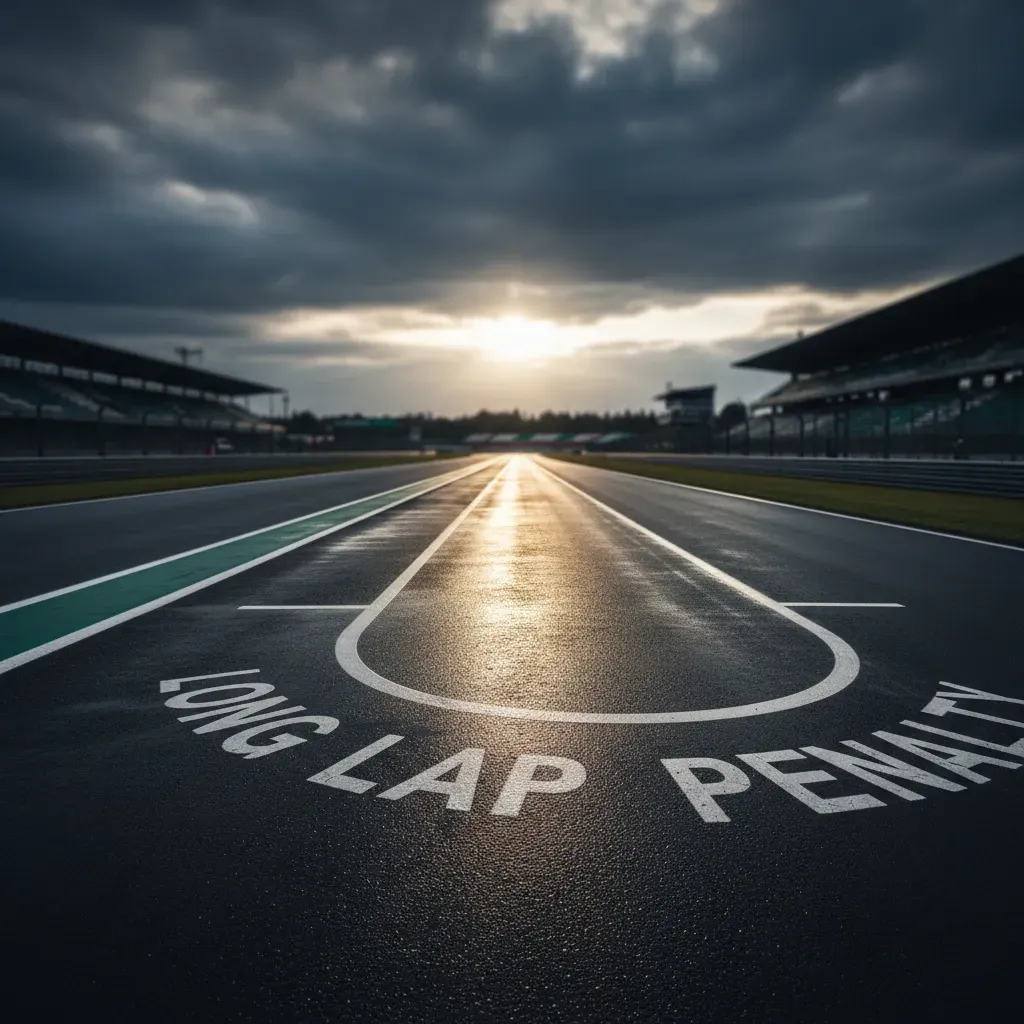
At most circuits on the MotoGP calendar, there is a designated ‘Long Lap Penalty’ loop. This is an extra section of tarmac, usually painted with white lines, on the outside of a slow or medium-speed corner. It’s designed to be a few seconds slower than the normal route, which is called the ‘racing line’ (the fastest, most efficient way around the track).
When a rider is given this penalty, they have to navigate this detour. The tighter corners and longer distance mean they automatically lose time to their rivals, often dropping one or two positions in the process.
Why Do Riders Get Them?
The Long Lap Penalty is reserved for smaller racing sins. It’s not for dangerous, race-ending crashes, but for rule-breaking where a simple warning isn’t enough. The decision is made by a group of officials called Race Direction, who act as the on-track referees.
You’ll most often hear it mentioned for these infractions:
- Exceeding Track limitsThe painted edges of the track; running beyond them can cancel a lap time or earn a warning.Read the full guide →: This is the most common reason. Riders are meant to keep their tyres within the white lines bordering the circuit. If they repeatedly run wide to gain an advantage, Race Direction will step in.
- Irresponsible Riding: This covers overly aggressive moves. If a rider makes a lunge that forces another competitor off the track but doesn’t cause a crash, a Long Lap Penalty might be deemed the appropriate punishment.
- Jump Starts: Sometimes, if a rider moves just before the lights go out, this penalty can be used instead of a more severe ‘ride-through’ of the Pit laneThe slow lane beside the track where teams work on the bikes and riders enter and exit.Read the full guide →.
How it Works in a Race
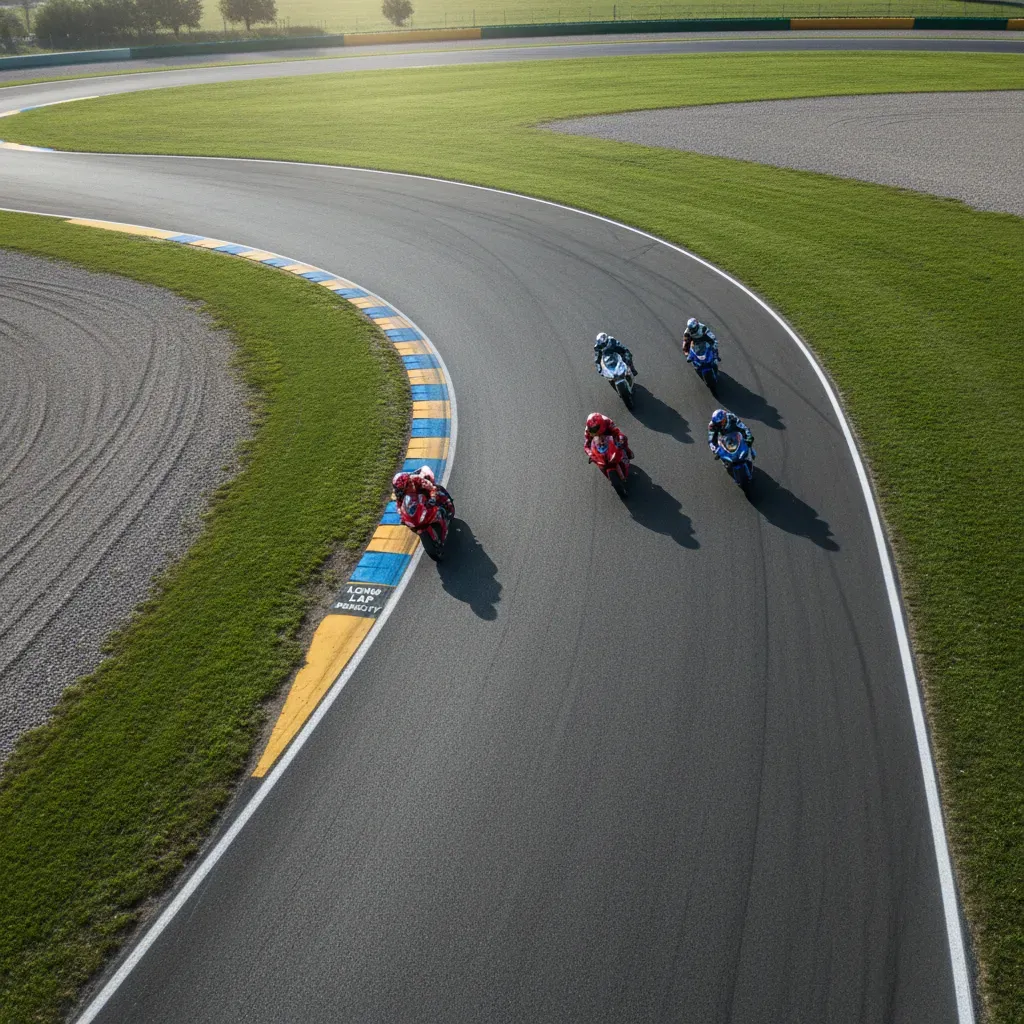
When Race Direction issues the penalty, the rider is notified in two ways: a message appears on their bike’s dashboard, and their team will show them a message on a Pit boardA hand-held board teams hang out at the track wall to signal gaps and messages to their rider.Read the full guide → as they fly down the main straight. From that moment, they typically have three laps to serve the penalty.
Let’s imagine a scenario. Say a rider at the British GP at Silverstone is judged to have been a bit too forceful while overtaking. Race Direction issues a Long Lap Penalty. The rider sees the signal and knows they have three laps to take the detour loop located at one of Silverstone’s corners.
They must complete the loop safely, without interfering with other riders. If they fail to take it within the three-lap window, the penalty gets upgraded to something much harsher, like two Long Lap Penalties or a ride-through penalty, which would be a massive blow to their race.
A Fairer Form of Justice
Before the Long Lap Penalty was introduced in 2019, the punishments were often more severe. A rider might have been forced to drop a position or get a time penalty added at the end of the race, which always felt a bit unsatisfying. The Long Lap Penalty is visible, immediate, and the punishment is served and done with during the race.
It creates a fascinating strategic element. A rider can choose the best moment within their three-lap window to take it, perhaps waiting for a small gap in the traffic. It costs them time, yes, but it doesn’t end their chances. They can still fight back, making for an even more exciting spectacle for us fans.

Quick Takeaways
- The Long Lap Penalty is MotoGP’s ‘time out’ for minor infractions like exceeding track limits or aggressive riding.
- It involves riding through a specially designed, slower loop on the outside of a corner, costing the rider 2-4 seconds.
- Riders are given a few laps to serve the penalty, and it’s seen as a fairer punishment than older, more race-altering options.
- The penalty is decided and issued by Race Direction, the official referees of the Grand Prix.