Jargon Buster
MotoGP Track Limits Explained
What are MotoGP track limits? Our jargon-free guide explains the white lines, green paint, and penalties like the Long Lap for absolute beginners.
The Invisible Walls of a Racetrack
When you watch a MotoGP race, you see bikes screaming around a ribbon of tarmac at over 200 mph. It might look like organised chaos, but there are strict rules governing where a rider can and cannot go. The most important, and often most controversial, of these rules is about ‘track limits’.
Think of it like tennis or football – the ball has to stay within the lines to be in play. In MotoGP, the bike has to stay within the lines for a lap to count. It’s a simple concept that creates incredible drama and can decide championships.
So, What Exactly Are Track Limits?
Track Limits: The defined edges of the racing circuit that riders must stay within for their lap or overtake to be legal.
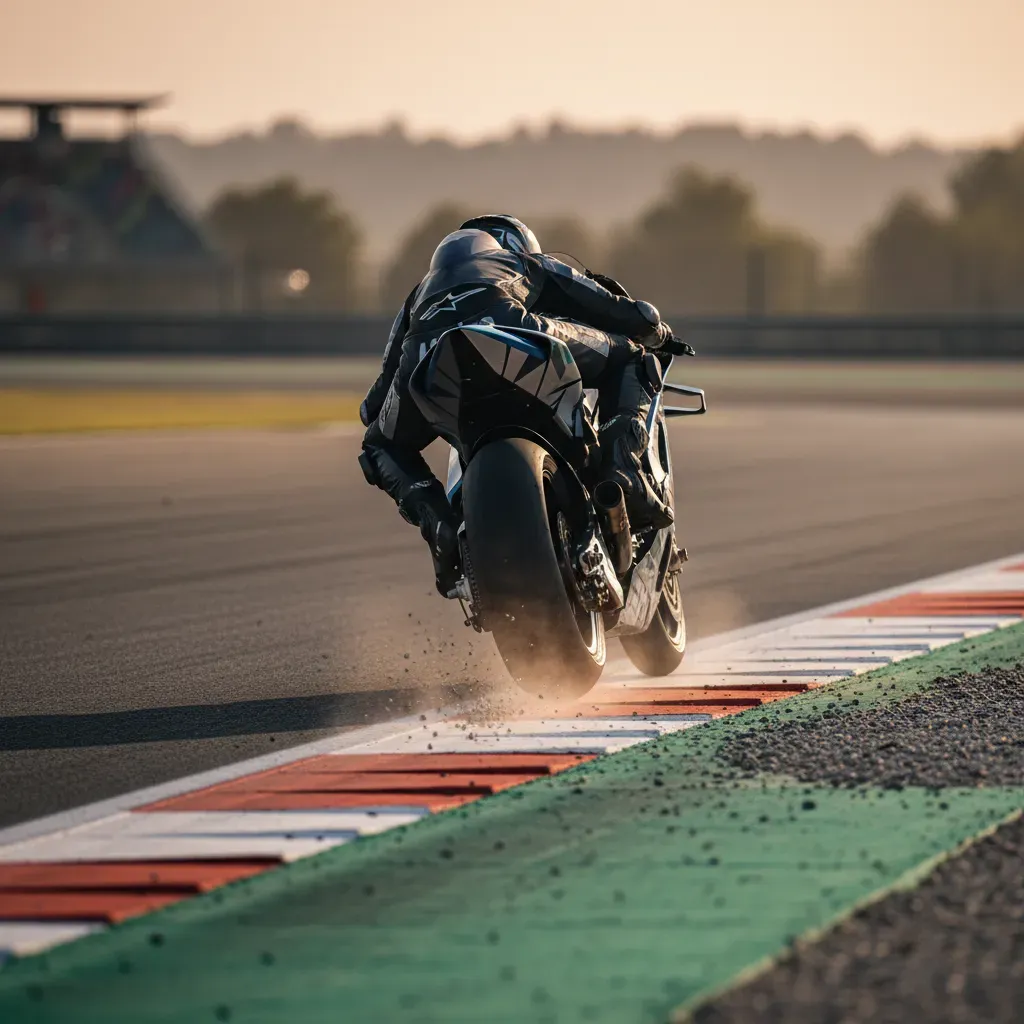
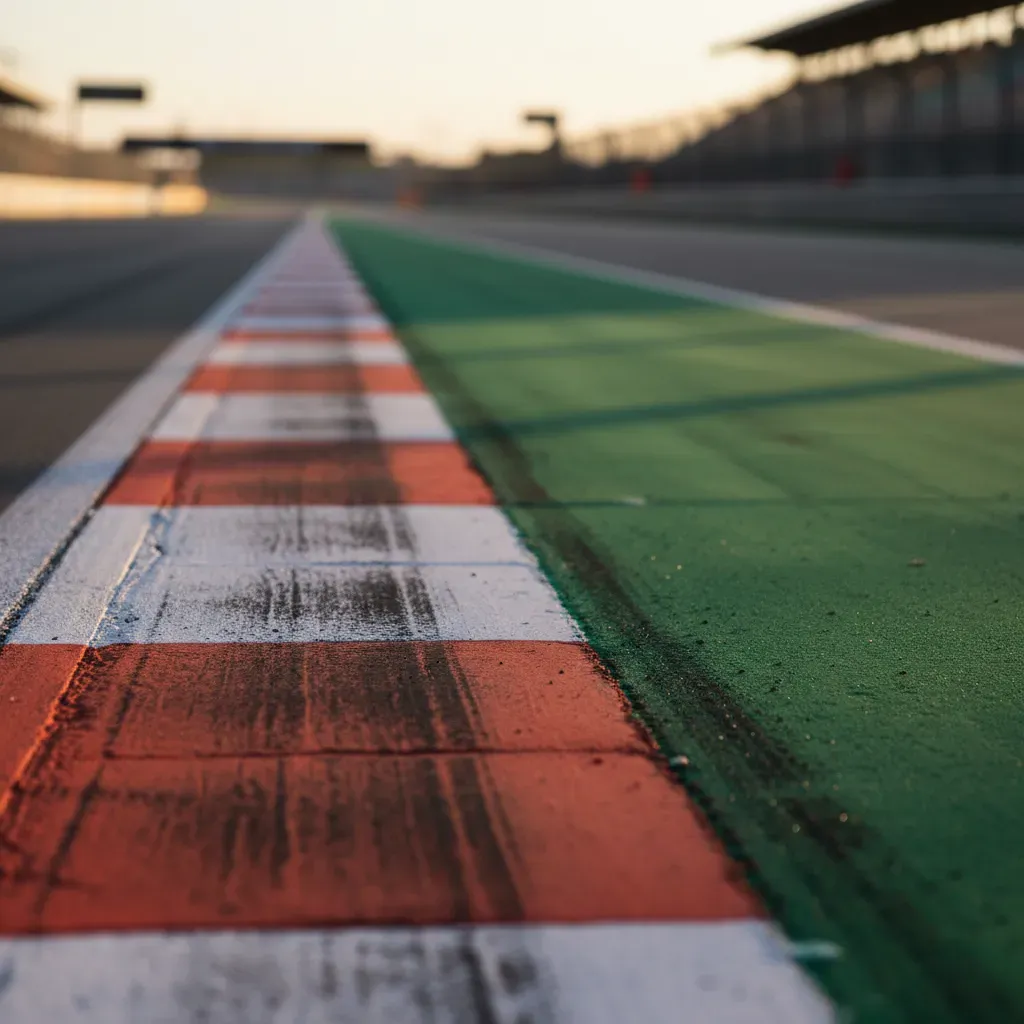
The boundary of a racetrack is usually marked by a white line painted on the tarmac. Just outside this line, you’ll often see the kerbs – those colourful, serrated strips of concrete that line the corners. For a rider to be ‘in bounds’, at least some part of one of their tyres must be in contact with this area (the track surface or the kerb).
The area just beyond the kerbs is the crucial bit. It’s often painted green to make it easy to see on television. This green zone is effectively ‘out of bounds’. If both of a rider’s tyres are on the green, they have exceeded track limits.
Why Do They Matter So Much?
Track limits exist for one simple reason: fairness. Without them, riders could gain an advantage by running wide out of a corner to carry more speed, or by cutting a chicane (a slow S-shaped corner) to make up time. The limits ensure everyone is racing on the same piece of road.
It’s also a matter of safety. The track surface is designed for maximum grip, while the runoff areas beyond are not. The rules encourage riders to stay on the safest part of the circuit.
The Penalties: What Happens When You Cross the Line?
Crossing the line isn’t an instant disqualification. The consequences depend on when and how it happens. Race Direction, the sport’s referees, have a few different penalties they can use.
Lap Time Cancellation
This is the most common outcome during PracticeSessions before qualifying where riders set up the bike; the combined times decide who goes straight to Q2.Read the full guide → and QualifyingThe timed sessions that set the starting order, split into Q1 and Q2 for the front rows.Read the full guide → sessions. If a rider exceeds track limits at any point during a lap, that specific lap time is deleted from the timing screens. This can be devastating for a rider who has just put together the perfect lap to get Pole positionFirst place on the starting grid, earned by the fastest qualifying lap.Read the full guide →, only to lose it for running a few centimetres too wide.
The Long Lap Penalty
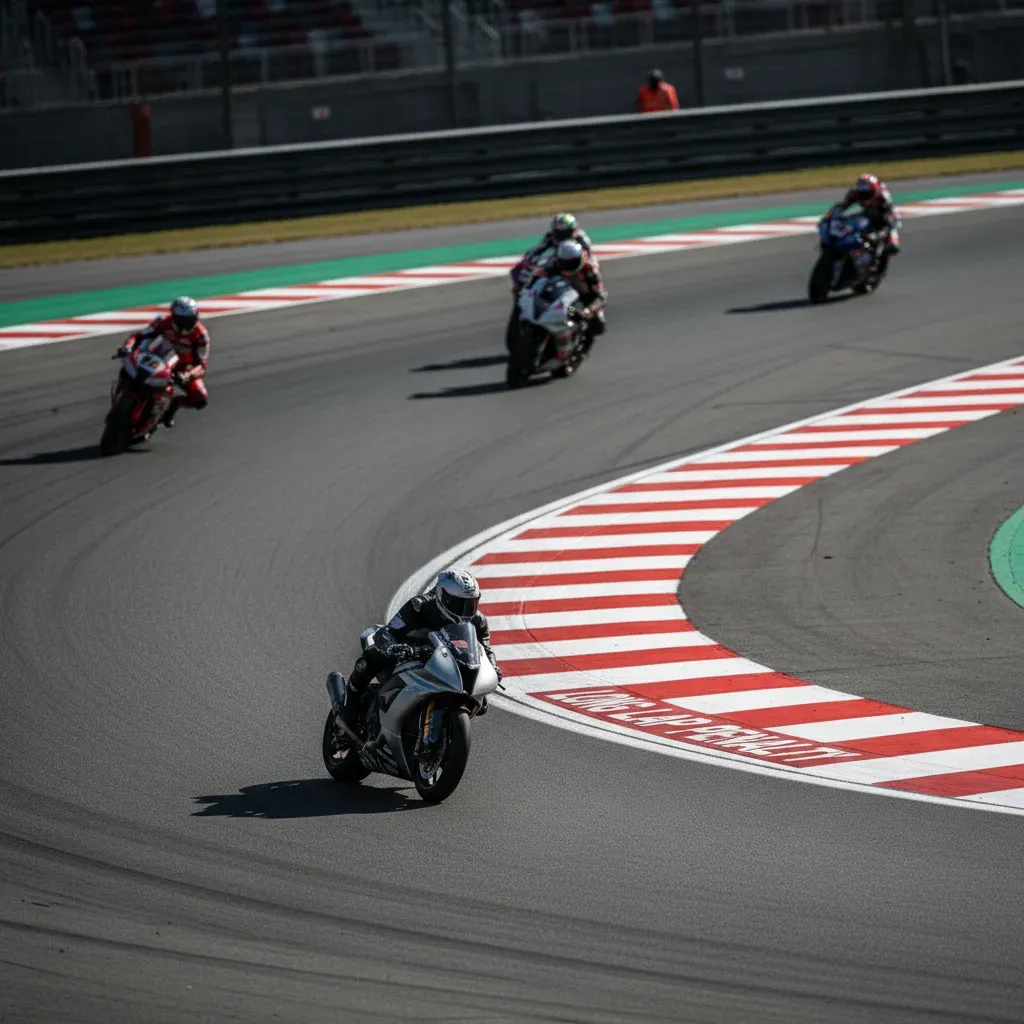
Long lap penaltyA penalty that sends a rider through a longer detour off the racing line, costing a second or so.Read the full guide →: A punishment where a rider must take a specially marked, slower detour on the outside of a corner, costing them several seconds.
If a rider repeatedly exceeds track limits during the race, they’ll get a warning first. If they do it again, they’ll be handed a Long Lap Penalty. They have a few laps to serve it by riding through a designated loop painted on the tarmac, well off the normal Dry lineThe strip of track that dries first as rubber and warmth build up, giving the most grip.Read the full guide →. It’s designed to be a significant time loss that forces riders to respect the boundaries.
Position Demotion
This is the most dramatic penalty, and it usually happens on the very last lap of the race. If a rider runs onto the green area while battling for position and is seen to gain a clear advantage, they can be forced to drop one place after the chequered flag. Imagine leading a race for 25 laps, only to lose the victory because your front tyre strayed onto the green paint in the final corner. It happens!
A Constant Source of Drama
Policing track limits is a high-tech affair, with sensors embedded in the kerbs to automatically detect infringements. But it remains one of the most debated topics in the sport. Riders and fans often argue about how consistently the rule is applied and whether a tiny error deserves such a harsh punishment.
Certain circuits are famous for causing track limit headaches. The Lusail International Circuit in Qatar, for example, has wide, sweeping corners with lots of runoff that tempt riders to push the boundaries, often leading to a flurry of penalties that can shake up the final race result.
Quick Takeaways
- Track limits are the edges of the circuit, defined by the track surface and the painted kerbs.
- The green painted area just outside the kerbs is ‘out of bounds’.
- To be legal, a rider must keep at least part of one tyre in contact with the track or kerb.
- Penalties for exceeding track limits include cancelled lap times, Long Lap Penalties, or being demoted a position.
- It’s a controversial rule that is strictly enforced and can often decide the outcome of a race.